De-Sovietization of Philosophy
Published in Social Sciences, Arts & Humanities, and Philosophy & Religion


This autumn, I attended the annual conference of the Society for European Philosophy (SEP) in Manchester, where I had the opportunity to present a paper on philosophy in Latvia under Soviet rule, alongside nearly a hundred other papers. In my view, one of the main themes of the conference was the relationship between philosophy, ideology, and decolonization. Discussions concerning the decolonization of philosophy were also held during the most recent World Congress of Philosophy. It was at this congress that Professor Evert van der Zweerde called for the de-Sovietization of Russian philosophy. This call raises a number of questions: What does the de-Sovietization of philosophy actually involve? Is this concept limited to the Russian intellectual landscape, or can the de-Sovietization of philosophy be understood as an unfinished task on a broader scale, particularly in relation to the former Soviet republics? This question came to mind when Lea Cantor, a lecturer at King’s College London, and Josh Platzky Miller, a lecturer at the University of the Witwatersrand, gave a presentation in Manchester offering a critical analysis of “Western philosophy”. Their talk featured a somewhat humorous world map that categorized different parts of the world in relation to “Western philosophy”, with the Baltic region appearing within that category and a question mark placed over Russian territory. However, as a scholar of philosophy in Latvia, I did not find the inclusion of the Baltic region to be quite so obvious. Why? One possible answer may lie in the way Latvian philosophers have described their relationship to Western philosophy. They have often presented themselves as following, aligning with, or seeking to establish connections with Western philosophical traditions. Yet, to establish a connection with Western philosophy, one must in some way view oneself as being separate from it. This point may highlight one of the objectives of de-Sovietization. Throughout the period of Soviet occupation in Latvia, as in other parts of the Soviet Union, the study of Western philosophical thought was institutionally sanctioned and, in certain contexts, encouraged, but largely within the framework of the “critique of Western philosophy”. This raises another interesting research question: In what manner was “Western philosophy” constructed under Soviet ideology, and how did its description change over time?
My paper, “De-Sovietization as Metanoia: Rewriting the History of Philosophy in Latvia”, examines how the interpretation of the Western philosophical heritage within the Latvian intellectual sphere transformed after the fall of Soviet rule. The paper explores the potential application of Boris Groys’s notion of “metanoia” to Latvian philosophical discourse, suggesting that the groundwork for moving towards Western-oriented thought was already being established throughout the Soviet period. Groys observes that the Soviet system maintained a continuous dialectical connection to capitalism, acting as its counterforce. Therefore, the collapse of the Soviet Union may be seen as the end of the communist project. Could Soviet philosophy also be viewed in this manner, as a completed philosophical endeavour?
The article argues that the de-Sovietization of philosophy in Latvia should be understood as a gradual process of intellectual reorientation. Rather than representing a complete break with the past, it constituted a form of metanoia in which elements of the Soviet philosophical tradition were transformed, reinterpreted, or selectively forgotten in the course of constructing a new philosophical culture.
This article is part of the ongoing research project “Conversions and Ruptures: Epistemic Strategies in Latvian Philosophy during the Soviet Period (1944–1991)” (No. lzp-2024/1-0650). More about the project: Conversions and ruptures: epistemic strategies in Latvian philosophy during the Soviet period (1944-1991) - Latvian Academy of Culture
Dr Lea Cantor and Dr Josh Platzky Miller (2026) ‘The Idea of “Western Philosophy”: A Critique’
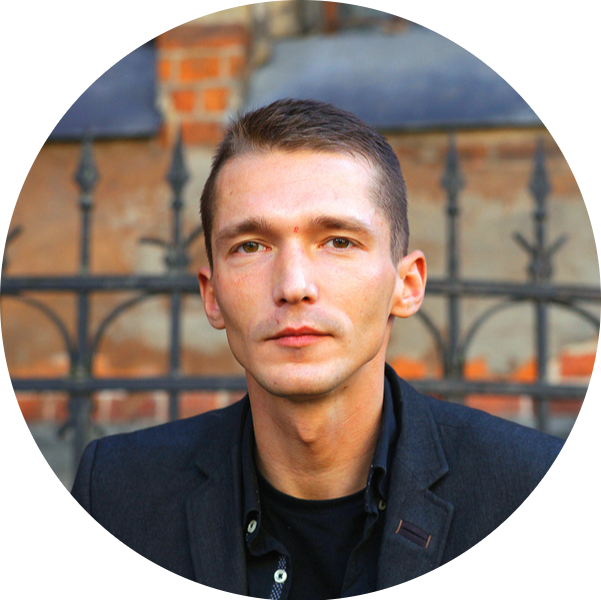
Andris Hiršs is a philosopher and intellectual historian specializing in Latvian philosophy, personalism, Soviet philosophy, and the history of ideas. He is Associate Professor and Leading Researcher at the Latvian Academy of Culture. His research focuses on how philosophical traditions emerge, develop, and transform under changing intellectual and political conditions, with particular attention to the Baltic region and the reception of European philosophy.
He is Principal Investigator of the project Conversions and Ruptures: Epistemic Strategies in Latvian Philosophy during the Soviet Period (1944–1991).
Follow the Topic
-
Studies in East European Thought
This is a scholarly platform focusing on the philosophical thought and intellectual history of East and Central Europe, Russia, and post-Soviet states.

Introducing the Palgrave Macmillan Campaign for the Humanities
At Palgrave Macmillan we publish cutting-edge humanities research that has real-world impact. This research community brings together the voices of our authors and editorial team to highlight and publicize the value of the humanities and humanities research in our world today.
Continue reading announcementRelated Collections
With Collections, you can get published faster and increase your visibility.
War and Contemporary Philosophy
This Special Issue examines the profound impact of twenty-first-century warfare on contemporary philosophical thought, exploring transformations across diverse philosophical schools and traditions, with particular attention to Eastern European thought and Russia. From historical, theoretical, and comparative perspectives, the contributors analyze how new forms of conflict challenge and reshape philosophical paradigms and practices.
Central to this issue is an inquiry into the boundary between philosophies of war and anti-war positions. The papers address themes such as propaganda and public discourse, the commodification of war in consumer societies, loneliness and existential political theory, and the role of philosophers in war-torn contexts. The issue also investigates tensions within global philosophical discourse amid shifting civilizational boundaries and escalating armed conflicts—developments that raise pressing questions about humanitarian ethics, personal responsibility, bioethical implications, and the crisis facing international humanitarian law.
Taken together, these contributions offer a comprehensive and nuanced exploration of how contemporary philosophy navigates, critiques, and evolves in response to the stark realities of war, while providing critical insights into philosophical responses to ongoing global conflicts.
Publishing Model: Hybrid
Deadline: Ongoing
A Life that Spanned an Epoch: Commemorating the Legacy of Aza Takho-Godi
The special issue will consist of essays by an international group of scholars devoted to the achievements and legacy of Aza Alibekovna Takho-Godi. In addition to being a remarkably productive classicist in her own right, Takho-Godi, who passed away in September 2025 in her 103rd year, was the widow and collaborator of Aleksei Losev (1893—1988). After Losev’s death she dedicated her extraordinary energies and expertise to promoting his legacy and became his biographer. The special issue will include reminiscences by her former students, reflections on her scholarly accomplishments from her former colleagues, and commentary on her role as the keeper and promulgator of Losev’s massive legacy. The aim is to lay the initial foundation for assessing Takho-Godi’s contribution to the evolution of Russian philosophical, theological, and literary culture in the late twentieth and early twenty-first centuries.
Publishing Model: Hybrid
Deadline: Ongoing