Discovering a self-determined pathway to sustainable spiritual growth
Published in Education, Arts & Humanities, and Philosophy & Religion





Empirical Article Blog
An award winning, multiyear action research PhD project and resultant published article has shown how heutagogical learning, sometimes called self-determined learning, can bolster spiritual growth in Christian contexts when utilised in a carefully designed non-directive mentoring model.
By engaging nine participants for nine months in a bespoke non-directive mentoring process over 9 months, the research analysed 143 qualitative data sets comprising of over 5,500 minutes of recorded engagement and over 700,000 words of transcribed material, highlighting the depth and scale of the study.
The data was analysed via reflexive thematic analysis using NVivo software. In vivo coding preserved participants’ exact language, followed by open, evaluative, and magnitude coding to identify patterns and determine prominence. Codes were then organised into sub-themes and synthesised into the five major themes.
The bespoke non-directive mentoring model, called the MENTOR model, involved monthly mentoring sessions with each of the nine participants over a nine-month period. Figure 1 illustrates how the heutagogical process drove initiative, ownership and positive accountability in spiritual formation.
At the centre of the model sit the researcher’s open-ended questions. Rather than directing participants towards preset answers or prescribing a fixed pathway, the mentoring process invited them to think, reflect, and respond from within their own lived experience. The direction of desired growth was not externally imposed but owned from within. Each participant was free to follow their own perceived direction of the Holy Spirit’s leading.
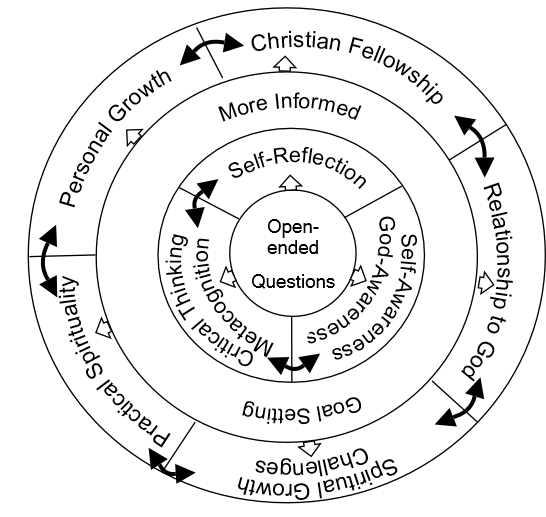
Figure 1: The non-directive mentoring process utilised in the action research project
Open-ended questioning stimulated self-reflection, self-awareness, God-awareness, critical thinking, and meta cognition. These heutagogical dynamics shifted agency to the particpants, helping them recognise what was happening in their spiritual life, why, and what needed to change. Such freedom to reflect and target areas of greatest need generated participant-owned goal setting, making growth overtly relevant, rather than merely aspirational. Figure 1 thus presents spiritual growth not as a linear, teacher-led sequence, but as a dynamic and self-determined movement from reflection to action. By the end of the research period, an astonishing 85% of all goals set were achieved.
Importantly, as the model shows, this was not an individualistic process detached from God or others. The reflective cycle fed directly into five interconnected outcomes: practical spirituality, personal growth, relationship with God, spiritual growth challenges, and Christian fellowship. Open-ended questioning acted as the catalyst stimulating holistic and personally meaningful growth. Participants grew in ownership of their growth, accountability, and intentional spiritual and personal growth, while also becoming more aware of God’s activity and more responsive to the realities of everyday discipleship. The result was spiritually grounded growth that is authentic, context-sensitive, and sustainable over time. As Vivienne commented in her photo-voice submission of a road map, “I am no longer just a passenger in my spiritual growth.”
The article contributes to the body of adult-education literature by demonstrating how heutagogy can support durable, context-sensitive spiritual growth in faith-based community settings, with transferability beyond Australia and Christian traditions. More notably, in many churches across the western world, church numbers and commitment are continuing their 50-year decline. Churches are rapidly becoming obsolete in society. Heutagogical mentoring may present a way forward for Christian disciples to turbo charge their spiritual growth and find relevancy in an increasingly complex world.
Hukkinen, E., Luetz, J.M., & Dowden, T. (2026). Heutagogy and spiritual growth: evidence from multi-year action research. Journal of Religious Education. 1–22. https://doi.org/10.1007/s40839-026-00291-w
Bottom of Form

Esa Hukkinen is a pastor, researcher, educator, and coach whose work sits at the intersection of Christian discipleship, spiritual growth, and personal development. He completed his PhD at Alphacrucis University, where his research explored the impact of heutagogical principles and practices on spiritual growth. His academic work reflects a long-standing interest in how self-determined learning, mentoring, and Christian formation can work together to foster deep and lasting transformation.
Alongside his research, Esa brings several decades of pastoral and teaching experience within Australian church contexts. He has served in senior pastoral leadership, planted and led churches, developed training and mentoring programs, and preached and taught regularly for more than 25 years. His ministry has consistently centred on helping people grow in Christ through the faithful preaching of God’s Word, intentional discipleship, and practical structures that support spiritual maturity.
Esa is especially passionate about promoting spiritual and personal development in ways that are biblically grounded, relationally rich, and accessible to everyday believers. His work includes writing and delivering mentoring resources, discipleship programs, marriage and coaching materials, and church-based equipping initiatives designed to move people beyond passive learning into active growth and service.
Through both scholarship and ministry, he seeks to encourage people, churches, and Christian educators to pursue mature faith, purposeful living, and a deeper engagement with the transforming truth of Scripture.
Follow the Topic
-
Journal of Religious Education
This is a refereed publication for the academic exploration of the task of religious education in contemporary society and in particular faith-based schools.