Embracing Multiple Ways of Knowing for Coastal and Fisheries Management

The weaving of diverse knowledge systems is an increasingly adopted approach in scientific research. Despite documented successes, skepticism among scientists and decision-makers persists, leaving unaddressed gaps.
Like

Share this post

Choose a social network to share with, or copy the URL to share elsewhere

This is a representation of how your post may appear on social media. The actual post will vary between social networks

Explore the Research

SpringerLink
SpringerLink SpringerLink

The gifts of multiple perspectives: a Two-Eyed Seeing approach to Gumegwsis (Cyclopterus lumpus) ecology in inner Mawipoqtapei (Chaleur Bay), Eastern Canada - Environmental Biology of Fishes

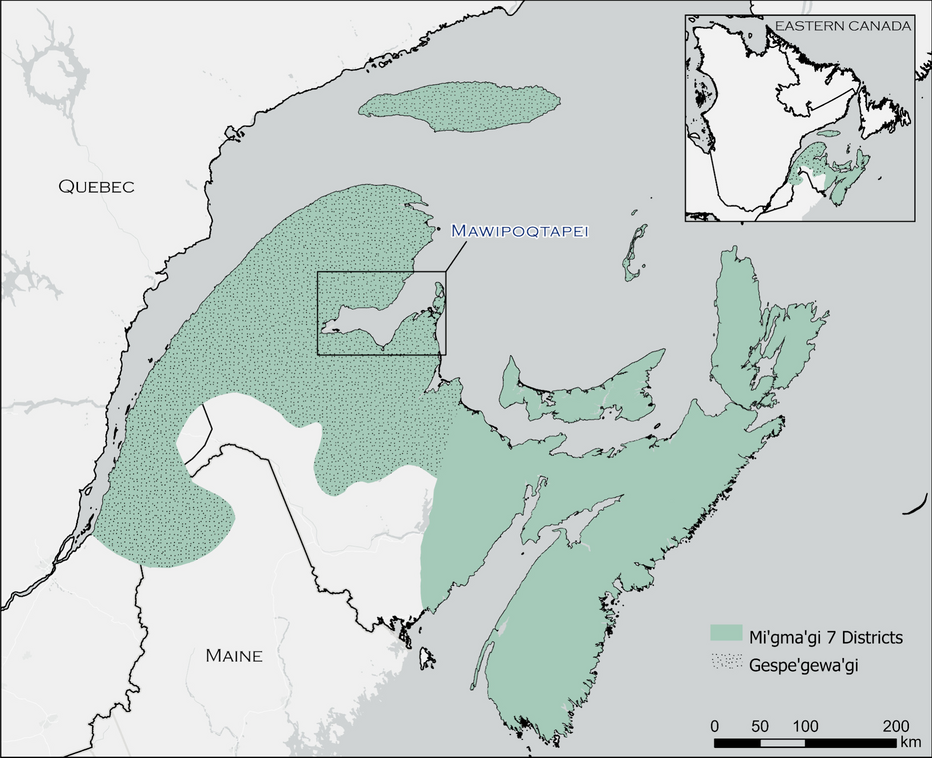
The weaving of diverse knowledge systems, including Indigenous, Local, and Western Knowledge, is an increasingly adopted approach in scientific research and is perceived as a promising path towards advancing knowledge and management of coastal areas and fisheries management in Canada. Despite documented successes, skepticism among scientists and decision-makers persists, leaving unaddressed gaps. Here, in response to concerns voiced by fishers from the Mi’gmaw community of Ugpi’ganjiq, the Gespe’gewa’gi Institute of Natural Understanding (GINU) co-created a project to improve understanding of the ecology and state of the threatened Gumegwsis (i.e. Cyclopterus lumpus, common lumpfish) in inner Mawipoqtapei (Chaleur Bay, Eastern Canada). Through a Two-Eyed Seeing approach, we combined semi-structured interviews with five Knowledge Holders with a literature review, mapping, and temperature monitoring. Utilizing this Mi’gmaw framework, we learned about Gumegwsis life history in inner Mawipoqtapei, its significance to local fishers, changes in abundance over time, threats to the species, and identified potential areas for spawning and nursery habitats. Prior to our project, the Committee on the Status of Endangered Wildlife in Canada (COSEWIC) assessment asserted “There are no indications of any ceremonial uses of Lumpfish in Canada and there is no ATK (Aboriginal Traditional Knowledge) information available”. In contrast, our study reveals the distinctive relationship and comprehension of Gumegwsis held by Mi’gmaw fishers, underscoring the significance of embracing multiple ways of knowing towards understanding species ecology, and presenting a compelling case for co-creation of species recovery strategies and collaboration in fisheries research.

Bridging Knowledge Systems to Enhance Understanding of the Gumegwsis

In the picturesque waters of inner Mawipoqtapei (Chaleur Bay, Eastern Canada), a collaborative research initiative is reshaping how we approach scientific inquiry and fisheries management. Led by the Gespe’gewa’gi Institute of Natural Understanding (GINU), this groundbreaking project centres on the threatened Gumegwsis (Cyclopterus lumpus, commonly known as the lumpfish). This initiative stands out by employing the Two-Eyed Seeing approach, an innovative framework that braids Indigenous, Local, and Western knowledge systems.

The project began in response to concerns from the Mi’gmaw community of Ugpi’ganjiq, who noticed changes in the Gumegwsis population. Historically, the Gumegwsis has not only been a crucial part of the local ecology but also holds significant cultural value for the community. Contrary to the Committee on the Status of Endangered Wildlife in Canada (COSEWIC) assessment, which previously noted no ceremonial uses of Lumpfish and a lack of Aboriginal Traditional Knowledge (ATK) information, our findings paint a different picture.

Through a series of semi-structured interviews with five esteemed Knowledge Holders from the community, complemented by extensive literature reviews, mapping exercises, and temperature monitoring, our team has gathered profound insights into the life history of Gumegwsis in Mawipoqtapei. We documented vital information about their spawning and nursery habitats, significant changes in their abundance over time, and identified threats to their survival.

These insights not only challenge existing assessments but also highlight the critical gaps in our understanding when traditional scientific approaches are employed in isolation. The Mi’gmaw framework, which underpins our methodology, has proven instrumental in bridging these gaps, offering a richer, more comprehensive understanding of Gumegwsis ecology.

The skepticism that often surrounds the integration of diverse knowledge systems in scientific research persists among some scientists and decision-makers. However, our project demonstrates the undeniable value of such braiding. By combining different ways of knowing, we not only enrich our understanding but also foster more inclusive, effective management and conservation strategies.

As we move forward, the importance of co-creating knowledge with Indigenous communities cannot be overstated. The success of the Gumegwsis project serves as a testament to the potential of collaborative research in addressing complex ecological issues. It presents a compelling case for the necessity of incorporating multiple knowledge systems in the co-creation of species recovery strategies and in broader fisheries research.

This initiative is a clarion call to researchers, policymakers, and stakeholders in fisheries management across Canada and beyond to embrace a more holistic approach in their practices. By doing so, we can ensure that the management and protection of fisheries are as comprehensive and effective as possible, honouring both the scientific and cultural dimensions of biodiversity.

Stay tuned for further updates as we continue to explore and advocate for the integration of Indigenous, Local, and Western knowledge in advancing the stewardship of coastal areas and fisheries. Join us in championing a more inclusive and effective approach to environmental research and management.

Please sign in or register for FREE

If you are a registered user on Research Communities by Springer Nature, please sign in

Follow the Topic

Indigenous Education
Humanities and Social Sciences > Society > Sociology > Sociology of Education > Indigenous Education
Earth Sciences
Physical Sciences > Earth and Environmental Sciences > Earth Sciences
Moral Philosophy and Applied Ethics
Humanities and Social Sciences > Philosophy > Moral Philosophy and Applied Ethics

Related Collections

With Collections, you can get published faster and increase your visibility.

Sustaining Life Below Water: Conserving, managing, and protecting our marine and freshwater resources

In support of the UN Sustainable Development Goal SDG14 we are calling for submissions for this new collection on Sustaining Life Below WaterPlastic waste, overfishing, ocean acidification, increasing eutrophication are some of the major threats endangering our oceans, rivers and lakes. With this collection we aim to create a cross-disciplinary home for research articles, perspectives, and emerging topics addressing the conservation and sustainability of the use of our marine and freshwater resources. By putting scholarship supporting this UN Goal in the spotlight we hope to increase the scientific knowledge and awareness of the targets and indicators set by the UN Goal such as reducing marine pollution, strengthening resilience, restoring coastal ecosystems, minimizing the impacts of ocean acidification, reducing destructive fishing practices, providing access for small-scale fishers to marine resources and markets and more.

We call for submissions on (but not limited to) the following topics:

•Biotelemetry and bio-logging

•Dam removal policy and development

•Economic benefits to Small Island developing States and least developed countries through sustainable management of fisheries, aquaculture and tourism

•Effects of reef degradation on ecosystem goods and services

•Environmental DNA and RNA

•Environmental flows

•Fish migration and passage

•Fisheries-induced evolution

•Floodplain management

•Hydropower mitigation

•Links between reef health and human health

•Methods and case studies and their scientific assessment, to manage, protect, and restore wetlands, to prevent and significantly reduce wetland pollution, in particular from land-based activities, including sedimentation from poor land-use, plastic and nutrient pollution

•Physiology and health of wild fish

•Preventing and reducing (plastic) pollution/waste in particular from land-based activities, including marine debris and nutrient pollution

•Policy development in river and lake management

•Reducing/minimizing ocean acidification

•Regulating harvesting, ending of overfishing and destructive fishing practices, and science-based management plans to restore fish stocks

•Restoration goals in lake management River and lake restoration

•Strengthening resilience and restoration of coastal ecosystem Understanding and improving sustainable use of coral reef resources.

How to submit? Please use the Submit to this journal link from the participating journals. These journals can be viewed in the right menu. During submission you will be asked if you would like your article to be included in a Topical Collection. Select ‘Yes’ and select the name of this collection from the drop down menu: TC: Sustaining Life Below WaterSubmissions to the collection may be original research articles, perspectives or review articles. Please read the submission guidelines for each journal before submitting. Each submission will undergo thorough and rigorous peer review according to each journal’s peer review editorial policy. Accepted articles will be published in their respective journal and will benefit from being cross-linked as well on the collection page.

The following journals are participating in this collection:

•Aquatic Ecology

•Aquaculture International

•Aquatic Sciences

•Coral Reefs

•Environmental Biology of Fishes

•Estuaries and Coasts

•Fish Physiology and Biochemistry

•Fisheries Science

•Hydrobiologia

•Journal of Applied Phycology

•Journal of Coastal Conservation

•Journal of Ocean University China

•Limnology

•Marine Biology

•Marine Biotechnology

•Maritime Studies

•Ocean Science Journal

•Reviews in Fish Biology and Fisheries

•Thalassas: An International Journal of Marine Sciences

•Wetlands Ecology and Management

Publishing Model: Hybrid

Deadline: Ongoing