European Public Health Week 2026 - investing for sustainable health and well-being
Published in Sustainability and Public Health
European Public Health Week (EUPHW), led by the European Public Health Association (EUPHA), brings people together across Europe to focus on public health. Each year, organisations and individuals take part from across research, policy and practice, including national institutions, universities, local groups and schools. Taken together, these contributions create space for shared learning and reflection, whilst reinforcing the role of public health as a vital foundation for social, economic and democratic well‑being.
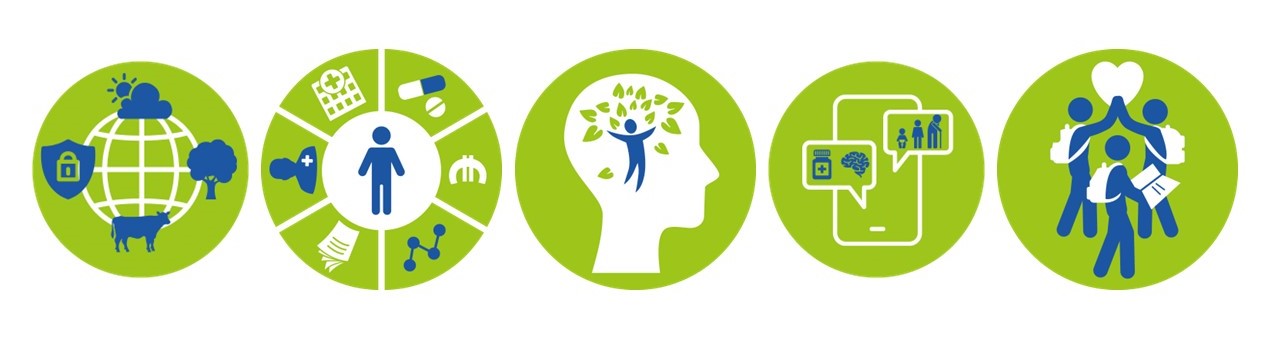
This year’s theme, investing for sustainable health and well-being, is explored by five daily themes, including:
Aligning all policies with public health
Prioritising equity through public health investments
Mental health at the crossroads: investing across public health, primary health care and communities
Protecting public health and democracy: tackling disinformation, strengthening accountability, and building trust
Strengthening and supporting the health workforce
We hope you enjoy this selection of contributions from across our publishers, brought together in support of this year’s themes and our ongoing commitment to the Sustainable Development Goals, with particular focus on SDG 3: "Ensure healthy lives and promote well-being for all at all ages." We also encourage you to explore the wider European Public Health Week campaign and learn more about the work of EUPHA, including the events and resources taking place across Europe throughout the week.
Open Access Books & Chapters
Several book chapters focus on the systems and policies that shape sustainable public health. Health Data with the European Health Data Space (EHDS), by Kurt Höller and Lisa Walter, and European Union Artificial Intelligence Act (EU AI Act): Implications for Digital Health and Care, by Elke‑Luise Müller and Ute Irene Wiedemann, both examine how data, digital tools and regulation intersect with public health priorities, including accountability, transparency and trust.
Both chapters are available in Advancements in Digital Health and Care: Empowering Healthcare Through Innovation, Strategies and Ethical Considerations.

Other chapters explore the practical foundations of effective and equitable public health. Epidemiological Framework: The Role of Surveillance by Enrico Ricchizzi underlines the role of surveillance in prevention and preparedness, while Safer Care: Shaping the Future (Liam Donaldson) highlights the importance of safe systems and sustained investment in the health workforce. Asking Existing Data the Right Questions (Velizar Shivarov) brings a wider equity perspective, showing how better use of existing data can support more sustainable and inclusive public health approaches.
These chapters can be found in Infections in Surgery, Textbook of Patient Safety and Clinical Risk Management , and Improving Oncology Worldwide respectively.
Research Publications and Ongoing Studies
From our journals, articles from BMC reflect key priorities for public health across Europe and beyond.
Research in BMC Nutrition looks at how cross‑sector collaboration in Norway, involving government, industry, researchers and civil society, can support healthier and more sustainable food systems. A study published in BMC Public Health uses European survey data to show how obesity is driving avoidable hospitalisation across Europe, reinforcing the need for stronger prevention‑focused public health investment. From a global perspective, a widely cited BMC Medicine article examines progress towards cervical cancer elimination, highlighting remaining gaps and the importance of sustained public health action in line with Agenda 2030 goals.
Further journal articles reflect public health challenges linked to mobility, access and resilience. In BMC Global and Public Health, a study of cross‑border vaccination behaviour highlights how population movement within the EU shapes prevention efforts and calls for better policy coordination. Research published in the International Journal of Health Geographics proposes a practical framework for identifying “medical deserts”, supporting more equitable planning and investment in primary care access. Articles in Conflict and Health and Globalization and Health focus on Ukraine, examining how community‑based psychosocial support and the work of professional health associations contribute to protecting mental health and strengthening health systems under pressure, with broader lessons for public health resilience in crisis settings.

In addition, BMC’s own clinical trial registry, ISRCTN, reports ongoing studies that address public health challenges across Europe. These include:
- The MentBest study, which is testing a community‑based programme to prevent depression and suicide, with a focus on vulnerable groups across several European countries
- A study exploring ways to support healthier lifestyles and reduce the risk of chronic disease in underserved urban communities across Europe
- A study evaluating new rules in England that limit the marketing of less healthy foods, and assessing how these changes affect health and behaviour
Open Collections
Our journals are also currently welcoming submissions that align with the themes of EUPHW, including collections on:
- Advancing the Measurement of Social Connection for Population Health: New Evidence, Metrics, and Global Priorities (Population Health Metrics)
- Women’s Health and Cancer (Cancer Causes & Control)
- Emerging risk factors for self-injury in youth in the current milieu of growing mental health crisis (Injury Epidemiology)
- Health Inequities’ Lethal Impact & Racism and Health (International Journal for Equity in Health)
- Advancing research and management of menopause (BMC Medicine)
- Nutritional interventions to prevent non-communicable diseases in the aging population (BMC Nutrition)
Springer Nature Research Communities
You can find more blogs and discussion on public health, across Europe and globally, elsewhere on the Springer Nature Research Communities website. The platform brings together posts from researchers and practitioners, and the search function can help you explore related content and ongoing work in the field.

I am a Senior Editor in the BMC Series at Springer Nature, and Lead Editor for BMC Primary Care and BMC Oral Health. My work focuses on open access publishing, research integrity, and strengthening reproducibility in health research through transparency, robust reporting, and data sharing. I also contribute to Springer Nature’s SDG 3 working groups, supporting and advancing research that addresses global health and wellbeing.
Follow the Topic
-
BMC Global and Public Health
An open access, transparent peer review journal publishing outstanding and influential research and opinion of broad interest to all professional communities involved in global and public health research, policy-making, implementation and delivery worldwide.
-
BMC Medicine
This journal publishes outstanding and influential research in all areas of clinical practice, translational medicine, medical and health advances, public health, global health, policy, and general topics of interest to the biomedical and sociomedical professional communities.
-
BMC Nutrition
BMC Nutrition is an open access, peer-reviewed journal that considers articles on all aspects of nutritional sciences.
-
ISRCTN: The UK’s Clinical Study Registry
A primary clinical trial registry recognised by WHO and ICMJE that accepts studies involving human subjects or populations with outcome measures assessing effects on human health and well-being, including studies in healthcare, social care, education, workplace safety and economic development.
-
BMC Public Health
An open access, peer-reviewed journal that considers articles on the epidemiology of disease and the understanding of all aspects of public health.
-
Injury Epidemiology
This journal aims to be the premier venue for communicating epidemiologic studies of unintentional and intentional injuries and is dedicated to advancing the scientific foundation for injury prevention and control through timely publication and dissemination of peer-reviewed research.
-
Globalization and Health
This is a pioneering transdisciplinary journal that situates public health and well-being within the dynamic forces of global development.
-
International Journal for Equity in Health
This journal presents evidence relevant to the search for, and attainment of, equity in health across and within countries and publishes research which improves the understanding of issues that influence the distribution of health and healthcare within populations.
-
Population Health Metrics
Population Health Metrics aims to advance the science of population health assessment, and welcomes papers relating to concepts, methods, ethics, applications, and summary measures of population health.
-
International Journal of Health Geographics
This is fully dedicated to publishing novel, high quality and internationally significant manuscripts on all aspects of geospatial information systems and science applications in health and healthcare.
-
Conflict and Health
This is a highly-accessed, open access journal documenting the public health impacts and responses related to armed conflict, humanitarian crises and forced migration.
-
Cancer Causes & Control
This is a fully open access general oncology journal that aims to provide a unified forum for researchers and clinicians. The journal spans from basic and translational science, to preclinical, clinical, and epidemiology, and welcomes content that interfaces at all levels of cancer research.












📢 Introducing: # Mental Health
Mental Health is a Topic created to increase visibility and impact of research in this area and facilitate exchange amongst researchers.
Continue reading announcementRelated Collections
With Collections, you can get published faster and increase your visibility.
Racial and ethnic disparities in cancer in the US
Publishing Model: Hybrid
Deadline: Ongoing
Women's Health and Cancer
Publishing Model: Hybrid
Deadline: Ongoing