"Every Child Belongs": What Adoptive Families and Educators Taught Me About Early Childhood Education
Published in Social Sciences and Education

Now imagine doing the same as an adoptive parent — wondering whether the teacher will understand your family's unique story, whether the classroom books will feature any family that looks like yours, and whether anyone will know how to respond if your child's classmates start asking questions.
This is the reality for thousands of adoptive families in Türkiye every single day. And until very recently, researchers had almost entirely overlooked this experience.
Why Does This Matter?
Adoption is not a rare event. In Türkiye alone, thousands of children grow up in adoptive families — yet if you open the national Early Childhood Education Program (the framework that guides what happens in every preschool classroom across the country), you will not find the word "adoption" even once.
That absence might seem like a small technical gap. But for a four-year-old who has already experienced loss, change, and the long journey of finding a family, it is anything but small. Early childhood — roughly ages zero to six — is the most formative period of human development. The relationships children build with their teachers, and the relationships teachers build with their families, shape everything: emotional security, language, social confidence, the capacity to trust.
When those early years go well, children flourish. When the adults around them are unprepared or uninformed, the consequences can follow children for a very long time.
What We Did — and Why
I set out to answer two deceptively simple questions. First: how do adoptive families and early childhood educators in Türkiye actually experience their relationships with each other? Second: does the Turkish national preschool curriculum support them in building those relationships?
To find out, I conducted in-depth interviews with seven adoptive parents and eight preschool teachers — all connected to the same early childhood settings — and I also analysed the national curriculum document itself.
What I heard surprised me, moved me, and, honestly, strengthened my resolve to keep working in this field.
What Adoptive Parents Told Me
The parents I spoke with were, by and large, deeply grateful for the warmth they had encountered in preschool settings. Teachers had been patient, curious about their children, and willing to communicate often. One parent described her daughter's teacher as someone who approached the child "with great dedication and sensitivity to her emotional needs." Another said her child's teacher "always tried to understand us and guided us correctly."
These are not small things. For an adoptive parent navigating the delicate question of when and how to share their child's story with others, having a teacher who is genuinely empathetic is enormously protective.
But parents also shared moments of pain. A comment from another parent at the school gate — "I didn't pick up my child from the street like you" — landed like a slap. A teacher, attempting to explain a child's emotional reaction, said "institution children are often angry like this." These remarks were not made with cruelty, but they reflected something important: that adoption is still surrounded by misconceptions, and that the school community — not just the classroom — shapes whether an adoptive family feels welcome.
Parents also carried a kind of invisible labour: the constant calculation of who to tell, when to tell them, and how to prepare their child for questions that would inevitably come.
What Teachers Told Me
The educators I interviewed were thoughtful, committed professionals who genuinely cared about the children in their classrooms. But almost every single one said the same thing: they had received no training — none — on adoption, diverse family structures, or trauma-informed approaches to teaching.
When I asked where they had learned what they knew about supporting adopted children, the answer was humbling: from the families themselves. As one teacher put it, "What I learned from the family was very valuable. They provided awareness as if it were a school of adoption."
Think about what that means in practice. The burden of educating the very professionals entrusted with their child's care was falling on adoptive parents — people who were already carrying significant emotional weight. Teachers wanted to do better. They simply had nowhere to turn.
Teachers also identified another challenge that rarely makes it into policy discussions: the wider parent community. When other parents asked intrusive or insensitive questions about an adopted child — framed as curiosity, but felt as exposure — teachers found themselves in an uncomfortable position, trying to protect a family's privacy while managing a room full of adults with their own assumptions and anxieties.
What the Curriculum Said — and Didn't Say
When I turned to the 2024 Turkish Early Childhood Education Program itself, the picture became even clearer.
The curriculum says many good things. It emphasises inclusion. It stresses the importance of family involvement. It speaks of every child's right to belonging and dignity.
But it does not mention adoption. It does not mention diverse family structures. It provides no guidance — not a sentence, not an example — for how a teacher might respond when a child's family looks different from the nuclear mother-father-child model that is implicitly assumed throughout.
This is what researchers call a policy-practice gap. The values are present; the tools to enact them are missing. And when tools are missing, individual teachers are left to improvise — which means that the quality of support an adopted child receives depends almost entirely on the particular human luck of ending up with an informed, curious, empathetic teacher rather than on any structural guarantee.
Why Every Child Deserves Better
Children who have been adopted have often experienced disruption before they ever enter a classroom. Early instability, changes in caregiving, or time in institutional care can affect how they form relationships, how they manage transitions, and how quickly they learn to trust. This does not make them fragile — the teachers I spoke with consistently described adopted children as competent, sociable, and resilient. But it does mean that the adults around them need specific knowledge and skills that current training programmes simply do not provide.
When teachers are equipped with that knowledge, the effects are visible. Children settle more quickly. Parents feel less alone. The classroom becomes, in the fullest sense, a place where every family is seen.
What Needs to Change
This research points to three clear priorities.
Curricula need to change. National early childhood education frameworks should explicitly name diverse family forms — including adoptive families — and provide teachers with concrete guidance for navigating the conversations that arise from that diversity.
Teacher education needs to change. University programmes and ongoing professional development must include adoption, trauma-informed practice, and sensitive communication as core competencies — not optional extras.
School communities need to change. Inclusive classrooms exist within schools, and schools exist within neighbourhoods. Building genuine belonging for adoptive families requires engaging the whole community: not just teachers, but other parents, support staff, and school leaders.
None of this is simple. But the cost of inaction is borne by children who have already asked a great deal of themselves simply by finding their families.
A Personal Note
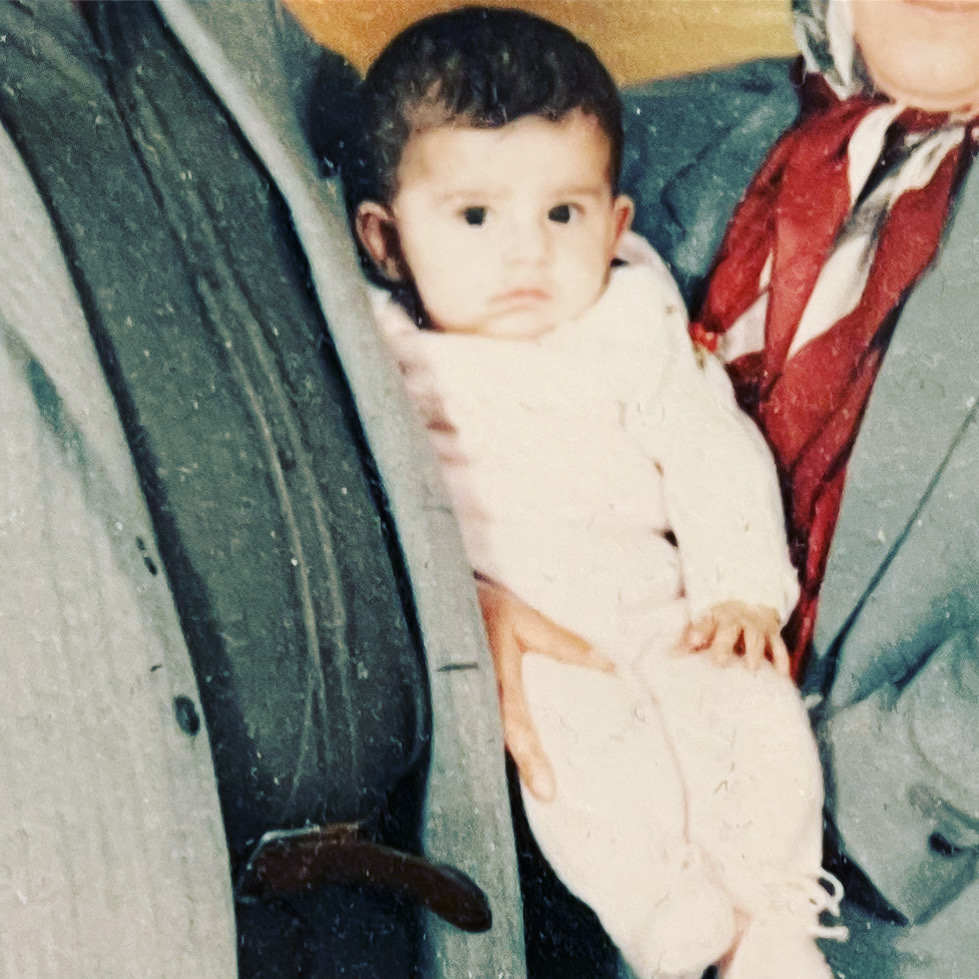
I came to this research not only as an academic but as someone who was adopted myself. I spent years noticing the silence around adoption in educational spaces — in textbooks, in teacher training, in policy documents — and wondering what it would mean to finally fill that silence with careful, honest, evidence-based work.
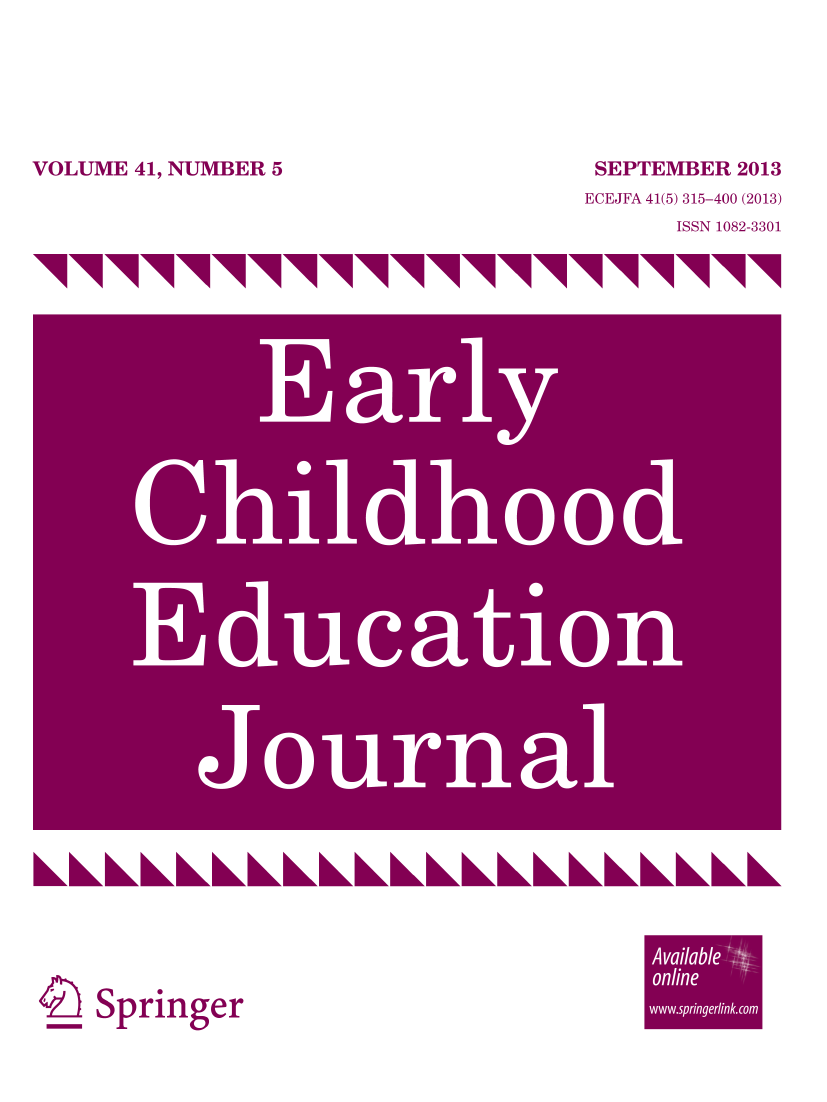
Today, that work has been published in the Early Childhood Education Journal. I wrote it for every family who has ever wondered whether their child would be truly seen. I wrote it for every teacher who wanted to do better but didn't know where to start.
And I wrote it because every child, regardless of the path that brought them to their family, deserves to walk into a classroom and find a world that has made room for them.
Full article: Bilir Seyhan, G. (2026). Inclusive Early Learning through Quality Interactions: Adoptive Families, Educators, and the Turkish Early Childhood Education Program. Early Childhood Education Journal. https://doi.org/10.1007/s10643-026-02214-8

I came to this research not only as an academic but as someone who was adopted myself. I spent years noticing the silence around adoption in educational spaces — in textbooks, in teacher training, in policy documents — and wondering what it would mean to finally fill that silence with careful, honest, evidence-based work.
Follow the Topic
-
Early Childhood Education Journal
This is a professional publication of original peer-reviewed articles that reflect exemplary practices in the field of contemporary early childhood education.