Farmer awareness of heavy metal contamination in urban roadside vegetables along the Accra–Tema motorway, Ghana
Published in Earth & Environment, Public Health, and Agricultural & Food Science


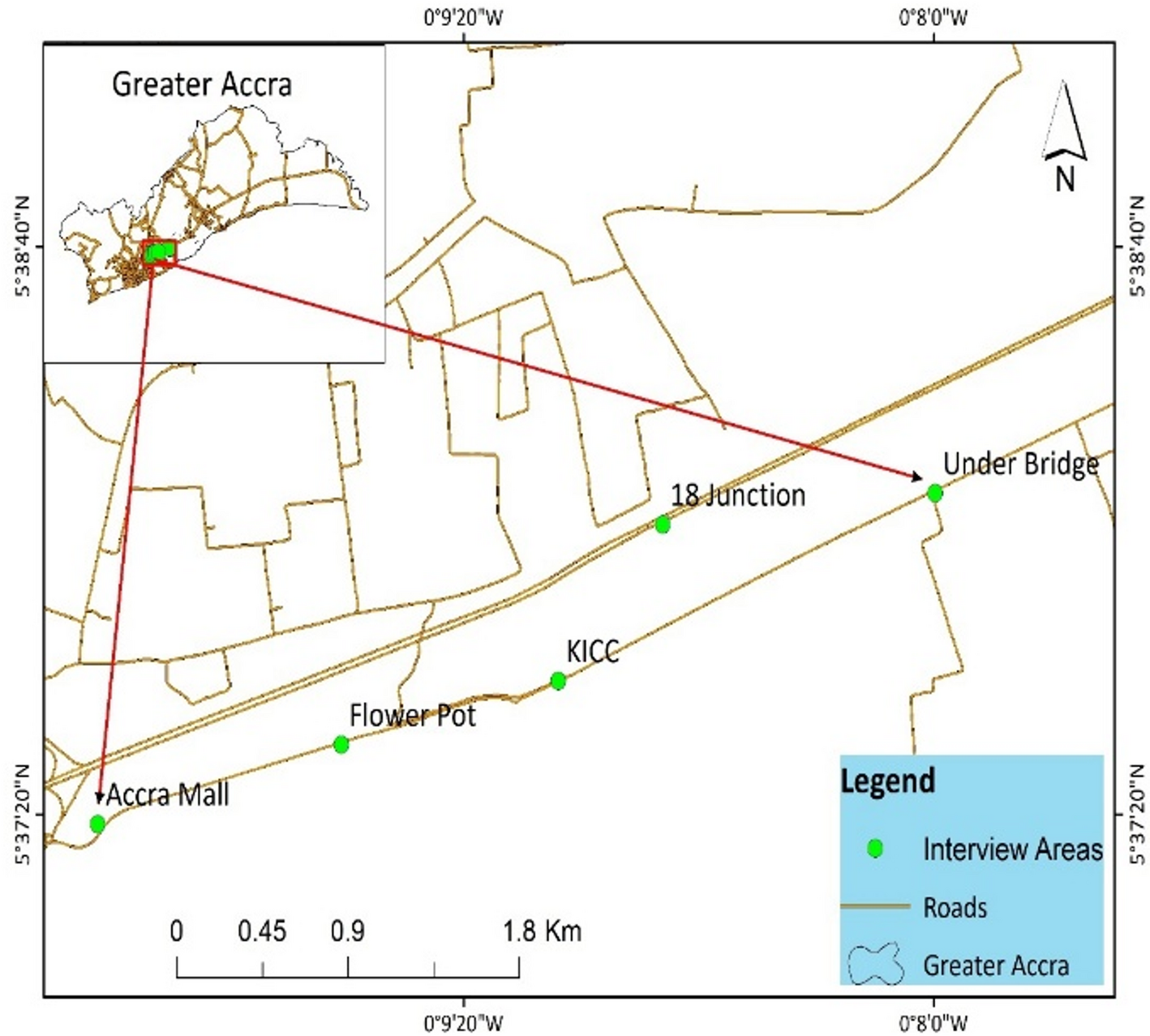

Urban agriculture has become an important part of the food supply in many fast-growing cities, especially in Africa, where population growth and limited land space push people to find innovative ways to meet food demand. In Accra, Ghana’s capital, roadside farming is common, and the Accra–Tema motorway has become one of the main areas where farmers cultivate vegetables. This practice provides affordable food to urban residents and income to farmers, but it comes with serious health and environmental risks. Roadsides are heavily exposed to vehicle emissions, industrial pollution, and runoff water that often carries dangerous substances, including heavy metals such as lead, cadmium, chromium, and zinc. These metals do not degrade in the environment, and once they enter the soil, they accumulate in vegetables and can eventually affect human health when consumed. Long-term exposure to such contamination is associated with kidney failure, neurological problems, developmental delays in children, and even cancer. Despite several scientific studies confirming high levels of heavy metals in soils and vegetables along this motorway, little is known about the awareness of farmers themselves. This is a serious knowledge gap, because farmers’ understanding, perceptions, and daily practices strongly influence whether contamination risks are reduced or worsened.
This paper addresses that problem by investigating the knowledge and awareness of vegetable farmers along the Accra–Tema motorway. The central question was simple but important: Do farmers understand that heavy metals from vehicle emissions and polluted water can contaminate their vegetables, and are they willing to change their practices if they learn about these dangers? To answer this, the study applied a quantitative approach. A total of 50 farmers, representing about half of all those actively cultivating along the motorway, were purposively selected for interviews. Structured questionnaires with closed-ended questions were used to collect information about their demographics, farming experience, sources of irrigation water, fertilizer use, training received, market access, and especially their knowledge of heavy metals. The survey also asked whether they would stop farming along the motorway if they discovered their soil was contaminated. Data were analyzed using descriptive statistics and chi-square tests to determine relationships between awareness, education, training, and willingness to change behavior.
The findings reveal a clear and worrying picture. First, all 50 respondents were men, mostly young, with the majority below the age of 35. Farming was their main livelihood, and most cultivated vegetables on small plots of 0.5 to 3 acres, often using land acquired informally. Nearly all relied on chemical fertilizers such as NPK, ammonium nitrate, and muriate of potash, with very little use of organic manure. Irrigation water was drawn from streams, gutters, dugouts, and rainwater, many of which are highly exposed to contamination from runoff and sewage. Most farmers had no formal training and depended only on personal experience or advice from peers. These conditions already highlight a vulnerability: intensive cultivation on contaminated land using unsafe water and chemical inputs, without adequate training or guidance.
When it came to awareness, the results were striking. Ninety-six percent of the farmers had no knowledge of heavy metals at all. Only two respondents had ever heard of them, and even those two could not link heavy metals to vehicle emissions or roadside pollution. None could provide examples such as lead or cadmium, and almost all had no idea that their vegetables could absorb toxic elements from soil or water. This confirms a major gap between scientific evidence and farmer knowledge.
However, when the farmers were informed about heavy metals and their health risks during the interview, their responses changed. Eighty percent said they would stop farming near the motorway if they discovered their soil was contaminated, even though this was their main livelihood. The remaining 20% said they would continue farming despite the risks, citing reasons such as economic dependence, lack of alternative land, and the need to survive. This shows that while awareness can influence behavior, structural barriers such as poverty and land scarcity limit farmers’ ability to adopt safer practices.
Statistical analysis confirmed that education made a difference. Farmers with at least basic or secondary education were more likely to have heard of heavy metals than those with no education at all. Surprisingly, farmers who had received informal training were no more aware of contamination than those without training, which suggests that current agricultural training does not adequately cover environmental health issues. This is a serious missed opportunity, since training programs could be an effective channel for spreading awareness about food safety.
The discussion of these findings points to several critical implications. First, the near-total lack of awareness among farmers is alarming, considering the established evidence of high heavy metal levels in soils and vegetables along the Accra–Tema motorway. This disconnect places both farmers and consumers at risk. Farmers often eat their own produce, meaning they are directly exposed, while consumers across Accra buy these vegetables from roadside markets without knowing their contamination levels. Second, the willingness of 80% of farmers to stop cultivation after learning about contamination risks demonstrates the power of education. Simple awareness campaigns could change behavior and reduce risks significantly. Third, the 20% who would continue farming despite knowing the risks reveal the role of economic necessity. For some farmers, the choice between health and survival is difficult, showing that education alone is not enough; structural solutions are needed.
Based on these findings, the study makes several recommendations. Policymakers, public health authorities, and agricultural extension services must prioritize targeted education programs for urban farmers. These should be delivered in local languages, using simple visuals and examples, so that even those without formal education can understand. Heavy metal contamination should also be incorporated into existing training curricula, ensuring that future farmers are better equipped with knowledge of environmental health. At the same time, structural interventions are crucial. Government agencies such as the Ministry of Food and Agriculture and the Environmental Protection Agency should provide farmers with access to safer land away from highways, ensure affordable access to clean irrigation water, and regulate the quality of fertilizers to minimize contamination. Subsidies and support programs may be necessary to help farmers transition away from risky roadside farming without losing their livelihoods. Finally, routine monitoring of soils and vegetables, combined with public food safety labeling, would empower consumers to make informed choices and reduce exposure risks.
In conclusion, this study provides valuable evidence on the human dimension of heavy metal contamination in urban agriculture. While scientists have long measured high levels of toxic metals in roadside vegetables, the people producing these vegetables, farmers themselves, are largely unaware of the risks. This lack of awareness exposes both farmers and consumers to health dangers, but the willingness of most farmers to change once informed offers hope. By combining education with structural support, Ghana can protect public health while sustaining the benefits of urban agriculture. The lessons from this case study extend beyond Accra, offering guidance to other cities in Africa and the developing world where urban farming is vital but environmental contamination is an increasing threat.
Get full article here: https://link.springer.com/article/10.1007/s44279-025-00285-6

Follow the Topic
-
Discover Agriculture
This journal covers basic science and applied research relating to the agricultural sector in areas such as crop and soil sciences, environmental science, and advances in relevant technologies.

Related Collections
With Collections, you can get published faster and increase your visibility.
Resilient Food Systems: Underutilized Crops, Improved Agricultural Practices, and Policy Levers for Food Security
The FAO's The State of Food Security and Nutrition in the World (SOFI) 2025 report indicates that approximately 2.3 billion people worldwide experienced moderate or severe food insecurity in 2024 – an increase of 335 million since 2019 (nearly 28% of the global population). This escalating crisis demands resilient and diversified food systems, as traditional agriculture faces pressures from climate change, land degradation, and volatile markets, disproportionately impacting vulnerable populations.
This research area focuses on enhancing food security by strategically integrating underutilized crops (teff, fonio, bambara groundnut, etc.), improved agricultural practices, and supportive policies. Underutilized crops offer a significant, untapped resource for diversifying food production and improving nutrition, as they are often nutrient-rich and well-adapted to local environments. Sustainable practices like agroforestry and climate-smart agriculture are crucial for resource efficiency and environmental resilience.
However, these advancements are insufficient without effective policy levers, particularly regarding land tenure security and market access. Policies supporting agricultural extension and R&D are also vital. This Collection aims to identify pathways to resilient, equitable, and sustainable food systems by exploring the interplay between underutilized crops, improved agricultural practices, and policy interventions.
The Collection addresses food insecurity exacerbated by climate change, biodiversity loss, and staple crop reliance. We explore solutions through: underutilized crops as climate-resilient alternatives; improved practices like agroecology for sustainable productivity; and policy levers to promote adoption. By integrating these, we can build resilient and diverse food systems ensuring food security and environmental sustainability.
This Collection explores pathways toward resilient food systems through underutilized crops, innovative agricultural practices, and effective policy frameworks. This Collection invite contributions addressing:
• Nutritional Composition & Bioaccessibility: Analyzing macro-and micronutrient content, bioavailability, and processing impacts on nutritional value in underutilized crops.
• Genetic Improvement & Breeding: Developing improved, climate-resilient varieties with enhanced yield and nutrition through breeding and genetic analysis.
• Optimizing Agronomic Practices: Enhancing productivity and sustainability in underutilized crop cultivation via efficient irrigation, soil management, nutrient use, and pest/disease control.
• Climate-Resilient Farming & Diversification: Evaluating climate-smart practices and diversified systems using underutilized crops to mitigate climate change impacts.
• Postharvest Handling & Value Addition: Investigating innovative technologies to reduce food loss, extend shelf life, and create value-added products from underutilized crops.
• Market Development & Consumer Acceptance: Researching consumer preferences and effective strategies to integrate underutilized crops into diverse diets and markets.
• Policy & Regulatory Frameworks: Analyzing policies (subsidies, incentives, labeling) to support the adoption, production, and commercialization of underutilized crops.
• Land Governance & Resource Rights: Examining land tenure security, resource rights, and equitable access for smallholders involved in underutilized crop cultivation.
• Socioeconomic Impacts: Assessing impacts on income, livelihoods, food security, and nutrition for vulnerable populations, with attention to gender and inclusion.
• Traditional Knowledge & Modern Science: Integrating traditional knowledge with modern science for sustainable and resilient systems using underutilized crops.
Keywords: Food Security, Resilient Food Systems, Sustainable Agriculture, Agricultural Policy, Climate Change Adaptation, Underutilized Crops, Livelihoods, Rural Development, indigenous crops
This Collection supports and amplifies research related to SDG 1, SDG 2, SDG 12, and SDG 13.
Publishing Model: Open Access
Deadline: Jan 31, 2027
Innovations in Sustainable Agriculture for Resilient Agroecosystems
Agriculture faces unprecedented challenges due to climate change and its associated impacts, including water scarcity, soil degradation, and the increasing incidence of pests and diseases. These pressures pose significant threats to food security and the stability of agroecosystems, highlighting the urgent need to develop and implement sustainable practices that enhance long-term resilience. This Collection invites contributions that advance the understanding of innovative and sustainable agricultural strategies, including soil and water management, plant breeding, climate-smart technologies, and other approaches that strengthen agroecosystem resilience. Submissions may include experimental research, case studies, and reviews that provide practical solutions for diverse cropping systems.
Keywords: Sustainable Agriculture, Agroecosystem Resilience, Climate Change Adaptation, Climate-smart Agriculture, Sustainable Practices, Innovative Practices
This Collection supports and amplifies research related to SDG 13.
Publishing Model: Open Access
Deadline: Jan 24, 2027