From a Small City in Patagonia to a Big Question: How Peripheral Neuromodulation Changed the Way I See Functional Pelvic Disorders
Published in Neuroscience and General & Internal Medicine


Where My Clinical Journey Takes Place
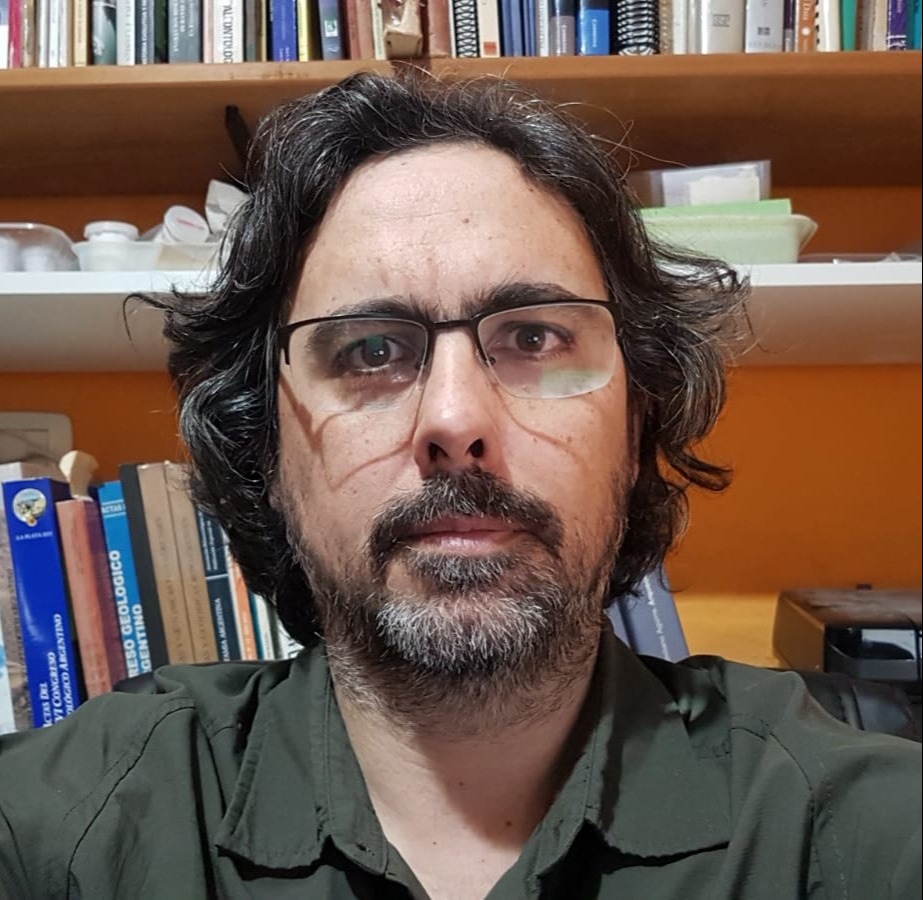
I work in Coyhaique, a small and remote city in southern Chile, surrounded by mountains, long distances, and limited resources. In this setting, patients are not brief encounters. They return over months and years, sharing their struggles, improvements, and setbacks. This continuity—imposed by geography more than design—became one of my most powerful tools as a clinician.
Most major medical discoveries happen in large academic centers with high-tech infrastructure. But working in a peripheral environment gave me something different: the opportunity to observe closely and compare what the literature says with what I actually see every day. This blog is the story of what emerged when those two worlds stopped matching.

How I First Encountered Neuromodulation
During my training in functional urology, I learned about tibial nerve stimulation—a simple, non-invasive technique that uses mild electrical pulses near the ankle to calm symptoms such as urinary urgency. The science behind it seemed reasonable, the risks were minimal, and the therapeutic potential was promising.
But in Coyhaique, implementing it required creativity. There were no physiotherapists specialized in pelvic floor rehabilitation and no available space in the hospital. So I bought basic stimulators online, taught patients how to use them at home, and lent the equipment at no cost. Many lived far from the hospital or had limited means; I didn’t want anyone to invest money in something I hadn’t seen working locally.
Then something unexpected happened.
When Patients Started Improving Too Early
Several patients came back telling me they felt better after the first night of use. They were urinating less, feeling more control, and experiencing fewer episodes of urgency. The published literature suggested improvements only after several weeks, so my first reaction was to assume placebo.
But the same story kept repeating. Different ages, different diagnoses, different expectations—yet similar early improvements.
At that point, I needed to understand whether this was real.
Testing the Observation During Urodynamics
A group of patients already scheduled for bladder studies (urodynamics) agreed to let me try something simple: apply tibial nerve stimulation at the moment they reported urgency, and observe the pressure patterns inside the bladder.
What we saw surprised me.
In several cases, a rising contraction—the hallmark of overactive bladder—stopped shortly after stimulation began. This was not a formal study, but the pattern was too consistent to ignore.
Colleagues pointed out valid limitations: we needed more structure, standardization, and a way to reduce bias. They were right. So I redesigned everything.
Building a More Controlled Approach
I included only patients with clear involuntary bladder contractions. We fixed the infusion speed, avoided provocative maneuvers, and most importantly: the stimulation was triggered only when the patient reported urgency, not when I observed something on the screen.
Under these stricter conditions, the same phenomenon reappeared. Patients felt urgency, but the bladder did not contract as expected. Their bladder capacity even increased. The sequence was consistent across men and women, young and old.
That was the moment I realized something deeper might be happening.
Expanding the Frame Beyond the Bladder
I began exploring research in other fields and found that the same type of stimulation had been used for fecal urgency, pelvic pain, and even chronic pain syndromes. These conditions often overlap with anxiety, stress, and mood disorders.
Everything pointed toward a shared mechanism—not strictly urological.
At first, I explored whether the bladder lining itself might be involved, focusing on chemical receptors. We designed a project to collect samples before and after stimulation, but ethical and financial barriers made it impossible. It wasn’t the wrong question—it was simply unfeasible in our setting.
So I changed levels—from the organ to the system.
Turning to the Autonomic Nervous System
The autonomic nervous system regulates functions we don’t consciously control: heart rate, digestion, bladder activity. One way to measure its balance is through heart rate variability (HRV), a non-invasive method that reflects the interplay between stress responses and relaxation responses.
Studies had already shown that people with overactive bladder, chronic pelvic pain, or irritable bowel syndrome often have altered autonomic regulation. This raised the possibility that neuromodulation might influence not only the bladder, but the entire regulatory system.
With help from colleagues in physiology and neurology, I learned to measure HRV and interpret autonomic responses—fields completely outside my initial training.
Running Controlled Tests in Real-World Conditions
To test this, we decided to study healthy volunteers rather than patients, to avoid confounding conditions. We standardized the sessions: fasting state, quiet rooms, same time of day, no stimulants. In a busy public hospital, this meant using lunch breaks, empty procedure rooms, and the goodwill of colleagues.
The results showed coherent, reproducible changes: tibial nerve stimulation shifted HRV toward a more relaxed, parasympathetic state. The changes were not dramatic, but they were consistent.
And they pointed to a bigger question.
A Larger Hypothesis Emerges
If a simple peripheral stimulus can shift autonomic balance in healthy individuals, could it also explain improvements in conditions traditionally treated as separate: urinary urgency, pelvic pain, irritable bowel syndrome, fibromyalgia, anxiety?
Perhaps these are not isolated disorders, but different expressions of a shared regulatory imbalance.
It is still a hypothesis, not a conclusion—but it has guided my research ever since.
Working From the Periphery: Challenges and Advantages
Critics have pointed out the obvious limitations of my studies: small sample sizes, lack of control groups, no blinding. These concerns are valid. But they also reflect the reality of working in a remote setting without formal research infrastructure.
At the same time, the periphery offers unique strengths: long-term follow-up, close relationships with patients, fast communication between specialties, and fewer bureaucratic barriers. These conditions make it easier to generate observations and refine ideas quickly, even if they cannot immediately be validated at scale.
What This Journey Has Led To
So far, this work has produced national and international publications, and more manuscripts are under review. But the true value of this journey is not the number of papers—it is the question that emerged:
Can a simple peripheral stimulus reveal something fundamental about how the body regulates itself?
My hope is that sharing this story encourages other researchers—especially those in remote or resource-limited settings—to trust the value of careful clinical observation. Sometimes the periphery sees things before the center does.

I am a urologist with a clinical and research focus on functional urology, neurourodynamics, and functional pelvic disorders, particularly conditions related to autonomic nervous system (ANS) regulation.
My work centers on tibial nerve neuromodulation, including both conventional intermittent protocols and urgency-activated transcutaneous tibial nerve stimulation (TTNS). Through clinical observation, advanced urodynamic evaluation, and physiological studies using heart rate variability (HRV), I investigate how peripheral neuromodulation may influence pelvic symptoms by modulating autonomic control mechanisms rather than acting solely at the organ level.
A key aspect of my research is the development of an integrative conceptual framework proposing that multiple functional pelvic conditions—such as overactive bladder, chronic pelvic pain, interstitial cystitis/bladder pain syndrome, and related disorders—may share a common substrate of functional dysautonomia rather than representing isolated pathological entities. This perspective arises from real-world clinical work in a resource-limited setting, where longitudinal patient observation plays a central role.
I have published clinical and urodynamic research in journals such as Continence and the Revista Chilena de Urología, and I have additional peer-reviewed manuscripts under evaluation that further explore neurourodynamic mechanisms and autonomic regulation in pelvic disorders.
My current interests lie at the intersection of clinical urology, autonomic physiology, and peripheral neuromodulation, with particular attention to urgency-driven stimulation paradigms and the future potential of closed-loop neuromodulation approaches grounded in rigorous experimental methodology.
I use research communities to share reflections, exploratory findings, and hypotheses, and to connect with clinicians and investigators interested in neuromodulation, autonomic control, and translational approaches to functional disorders.
Follow the Topic
-
ISRCTN: The UK’s Clinical Study Registry
A primary clinical trial registry recognised by WHO and ICMJE that accepts studies involving human subjects or populations with outcome measures assessing effects on human health and well-being, including studies in healthcare, social care, education, workplace safety and economic development.