From loess layers to molecular fossils
Published in Earth & Environment and Mathematics

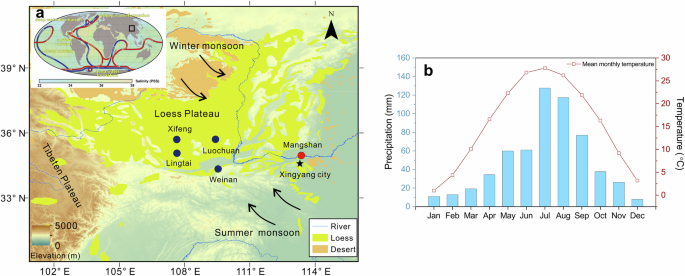

Before working with biomarkers, I studied environmental change in Chinese and Central Asian loess using conventional proxy records and climate simulations. Grain size and magnetic properties were familiar tools. When I joined Francien Peterse’s group at Utrecht University in late 2022, I began learning how to extract climate information from molecules preserved in the same sediments. Our work on loess deposits on the Chinese Loess Plateau became part of this transition.
In a project led by Francien, we set out to understand how monsoon rainfall in East Asia changed during past periods of warming. We used lipids preserved in the same loess samples to reconstruct growing-season temperature and annual rainfall separately, so we could compare when and how they changed. But the records also revealed a pattern we hadn’t set out to look for: events of pronounced cooling that coincided with drier conditions, both as ice ages began and while they were under way.
A question that land records could help answer
Marine sediments and ice cores have revealed repeated abrupt climate changes. On land, identifying their temperature and water components can be harder. Many conventional indicators combine the effects of temperature, precipitation and soil formation. If a record changes sharply, we need to understand which environmental conditions changed before asking what caused them.
The loess-paleosol sequence at Mangshan, on the southeastern Chinese Loess Plateau, offered an opportunity to examine these changes together. Windblown dust accumulated rapidly there, with soils developing during warmer intervals. The resulting sequence preserves a detailed climate archive from a region where summer monsoon rainfall is central to water availability. Our record spans about 250,000 years, with an average of about 900 years between samples.
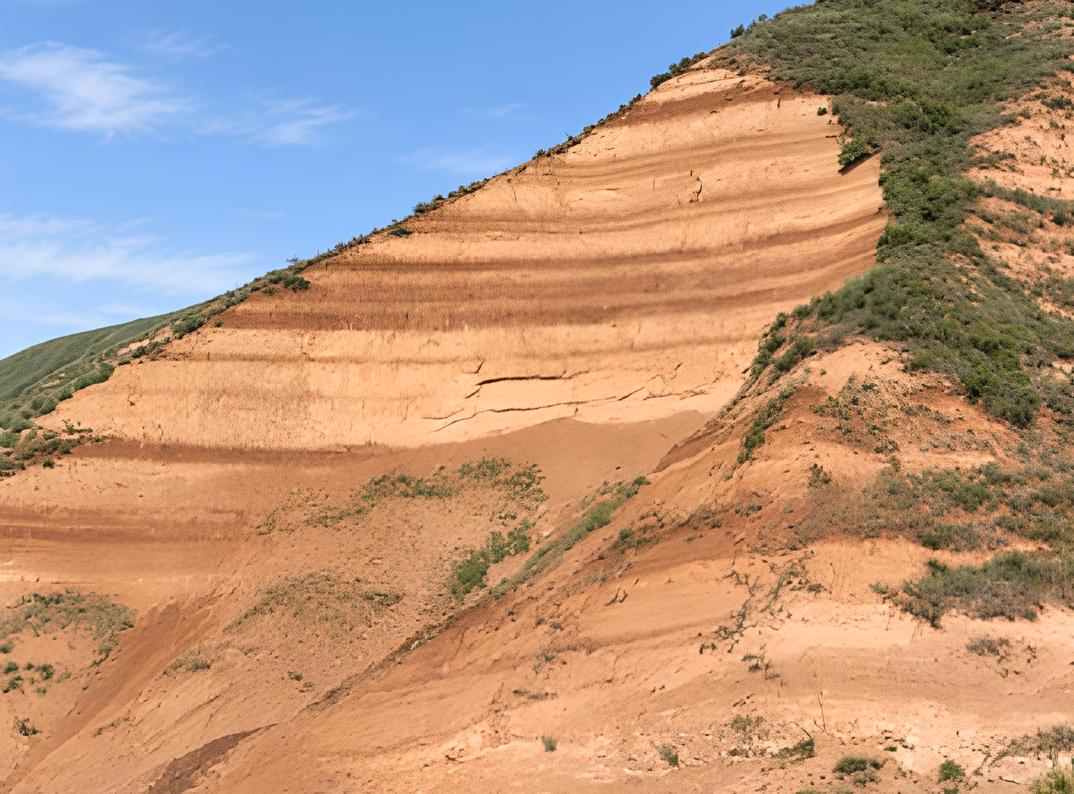
Fig. 1. A loess-paleosol sequence on the Chinese Loess Plateau. The yellowish loess layers are deposits of windblown dust that accumulated during colder glacial periods. The reddish paleosols are ancient soils that developed during warmer intervals.
Learning to work with molecular fossils
The molecules we analysed help form the cell membranes of soil bacteria. They can survive long after the organisms have disappeared. Differences in their molecular structures help us estimate temperatures during the growing season. Other structural features respond to soil chemistry linked to rainfall, allowing estimates of annual precipitation through a calibration developed in earlier work by our team.
For me, using these molecules meant learning a new experimental workflow, from lipid extraction and separation to interpreting molecular measurements. I encountered experimental difficulties along the way. Colleagues helped with extraction and sample preparation, and the technical team supported the laboratory work. Their help mattered while I developed practical skills in organic geochemistry. Francien’s expertise in interpreting these records also complemented my earlier experience with loess.
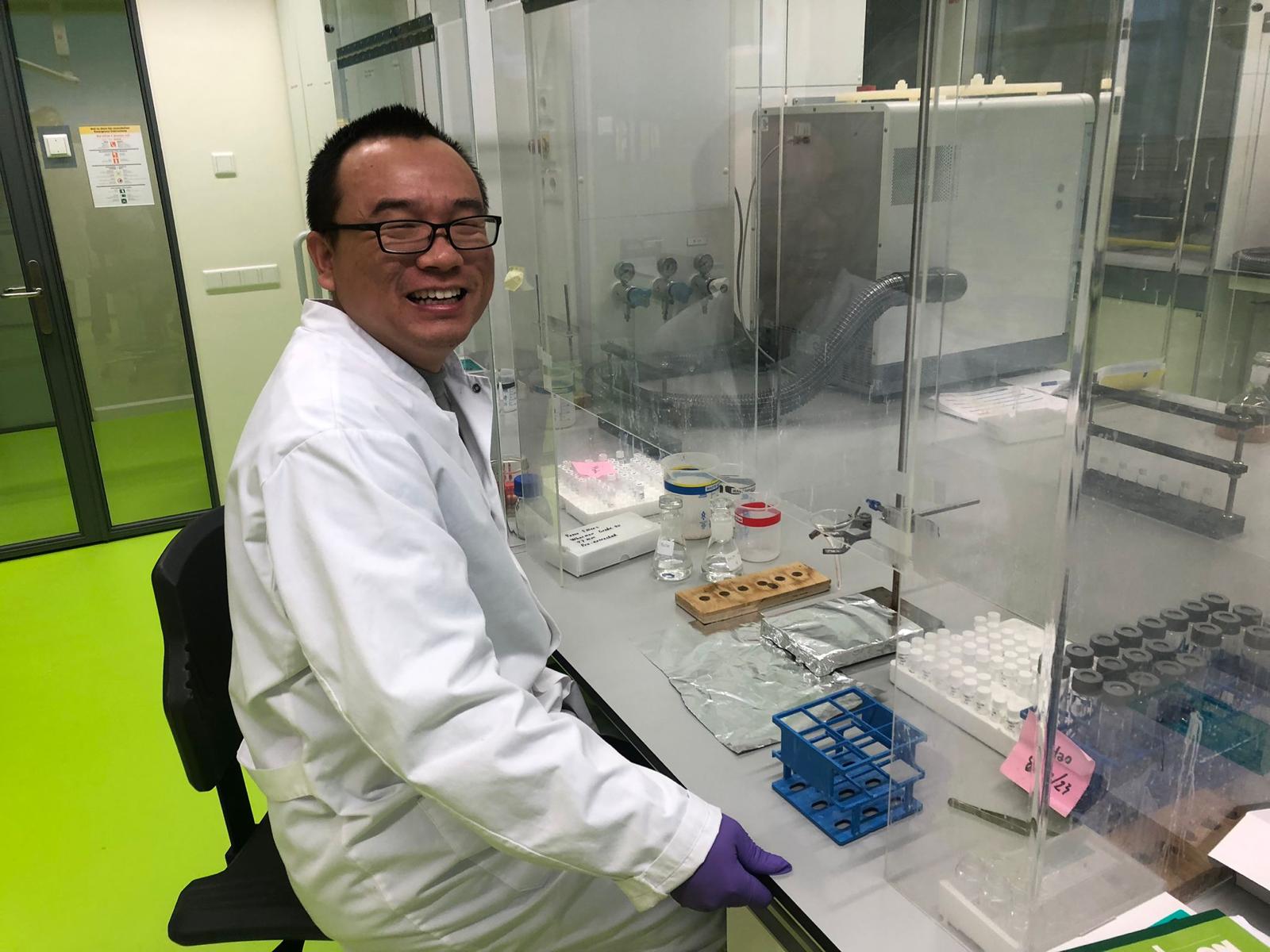
Fig. 2. Hao Lu preparing loess samples for lipid analysis at Utrecht University.
What the temperature and moisture records revealed
The long records showed a strong rhythm of roughly 20,000 years, consistent with changes in summer sunlight caused by Earth’s orbit. Temperature and rainfall often followed this rhythm, although warming sometimes preceded the recovery of rainfall.
We identified five episodes in which pronounced cooling coincided with evidence of drier conditions. Some occurred as the climate moved towards an ice age; others fell within glacial intervals. We also found dry intervals during deglacial warming, without comparable cooling.
A revealing complication was that annual rainfall did not show equally pronounced anomalies during the cold–dry episodes. The drying signal came from additional microbial lipid indicators that reflect effective moisture, or the balance between water inputs and losses. The amount of rain alone does not describe all aspects of drought. Its seasonal distribution and evaporation can also matter.
Bringing the records and models together
During my PhD visit to UCLouvain, I had learned about climate modelling and monsoon dynamics with Qiuzhen Yin. That training became useful again when we investigated the causes of the Mangshan extremes. Working with Qiuzhen and Zhipeng Wu, we compared the molecular records with transient climate simulations. One experiment varied Earth’s orbital configuration alone; another also included changing greenhouse-gas concentrations. Comparing the records with these experiments helped me use my earlier training to interpret the new molecular evidence.
Earlier modelling had identified a threshold in Northern Hemisphere summer solar radiation. Below it, interactions between sea ice and the ocean could abruptly weaken the Atlantic circulation that redistributes heat northwards. Changes in this circulation can influence East Asian climate through atmospheric connections.
Our cold–dry episodes broadly coincided with intervals of particularly low summer radiation. The model experiments also showed that greenhouse-gas concentrations could modulate the strength of the cooling. Low CO₂ could strengthen the response, while higher CO₂ could dampen it. Together, the records and simulations supported threshold behaviour shaped by orbital forcing and the background climate state.
What I take from this project
The study supports the idea that gradual forcing can be associated with much sharper continental climate responses. Its resolution and uncertainties mean that we are studying sustained episodes, rather than individual storms or cold spells. The glacial conditions were also very different from today’s human-driven warming.
It was discouraging when our early submissions were declined before peer review. Revising the paper helped us explain what the Mangshan record added to earlier modelling: evidence of when cooling and drying occurred together on land, which we could use to assess whether those episodes were consistent with a threshold response to changes in summer sunlight.
For me, the project connects two stages of my research. Learning to work with biomarkers broadened the questions I could ask of loess; my earlier modelling experience helped me explore the mechanisms behind those records. I hope the work encourages further comparisons with vegetation and ecological records to investigate what these prolonged cold and dry conditions meant for life on land.
Read the paper in Communications Earth & Environment: https://doi.org/10.1038/s43247-026-04060-3
Follow the Topic
-
Communications Earth & Environment
An open access journal from Nature Portfolio that publishes high-quality research, reviews and commentary in the Earth, environmental and planetary sciences.