From Pollutant to Profit: How Designer MOFs Are Turning Wastewater into Urban Mines
Published in Chemistry, Earth & Environment, and Ecology & Evolution
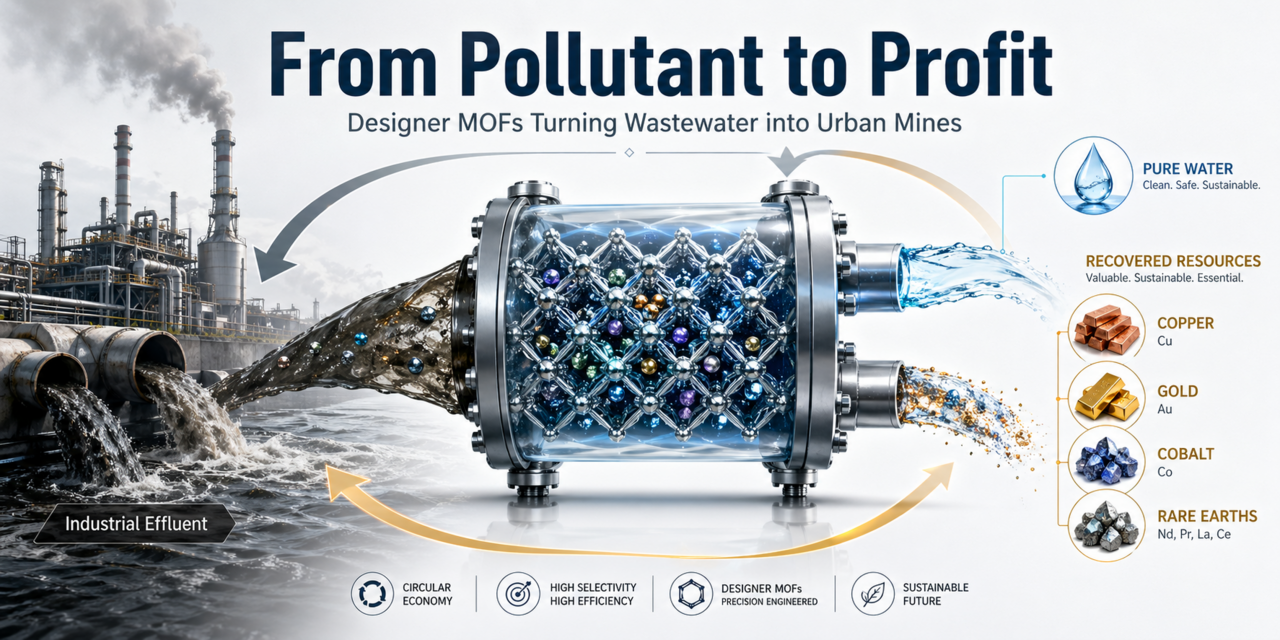
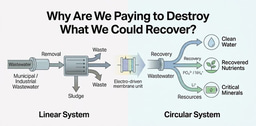
The Absurdity of the "Treat and Dispose" Paradigm
The future of wastewater treatment isn’t purification; it is extraction.
Every day, industries spend vast amounts of capital removing copper, nickel, cobalt, and rare earth elements from their effluents. Yet, through conventional techniques like chemical precipitation and coagulation, these high-value metals are converted into mixed, low-grade, toxic sludge.
We are simultaneously facing critical mineral shortages for the global clean-energy transition and burying recoverable value in landfills. We are paying to destroy potential feedstocks. That model made sense when disposal was cheap and resources were infinite. In an era defined by supply-chain vulnerability and decarbonization, it is an economic failure. Wastewater must stop being viewed as a liability and engineered as a strategic urban mine.
The Separation Bottleneck
The challenge today is no longer simply removing metals from water. It is removing the right metals, selectively, in the presence of massive concentrations of benign background ions (like sodium or calcium) and competing organics.
Traditional sorbents act as broad-spectrum sponges. To mine wastewater profitably, we don't need a better sponge; we need a molecular sniper rifle.
Why Designer MOFs Change the Rules
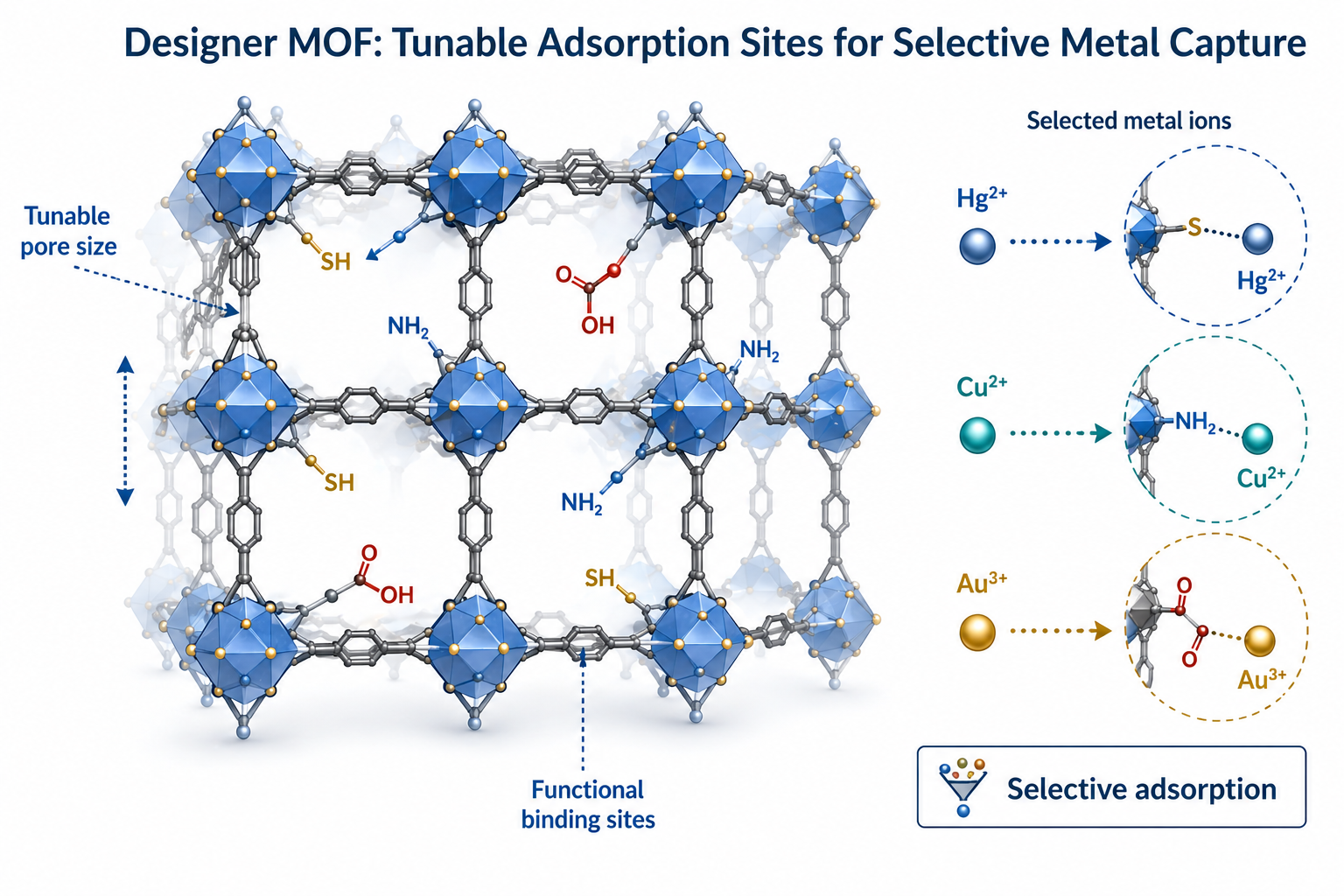
This is where Metal-Organic Frameworks (MOFs) transition from academic novelties to critical industrial tools. Their unparalleled surface area is impressive, but their true commercial advantage lies in tunability. MOFs can be engineered to discriminate.
Designer MOFs address the separation bottleneck through two specific mechanisms:
-
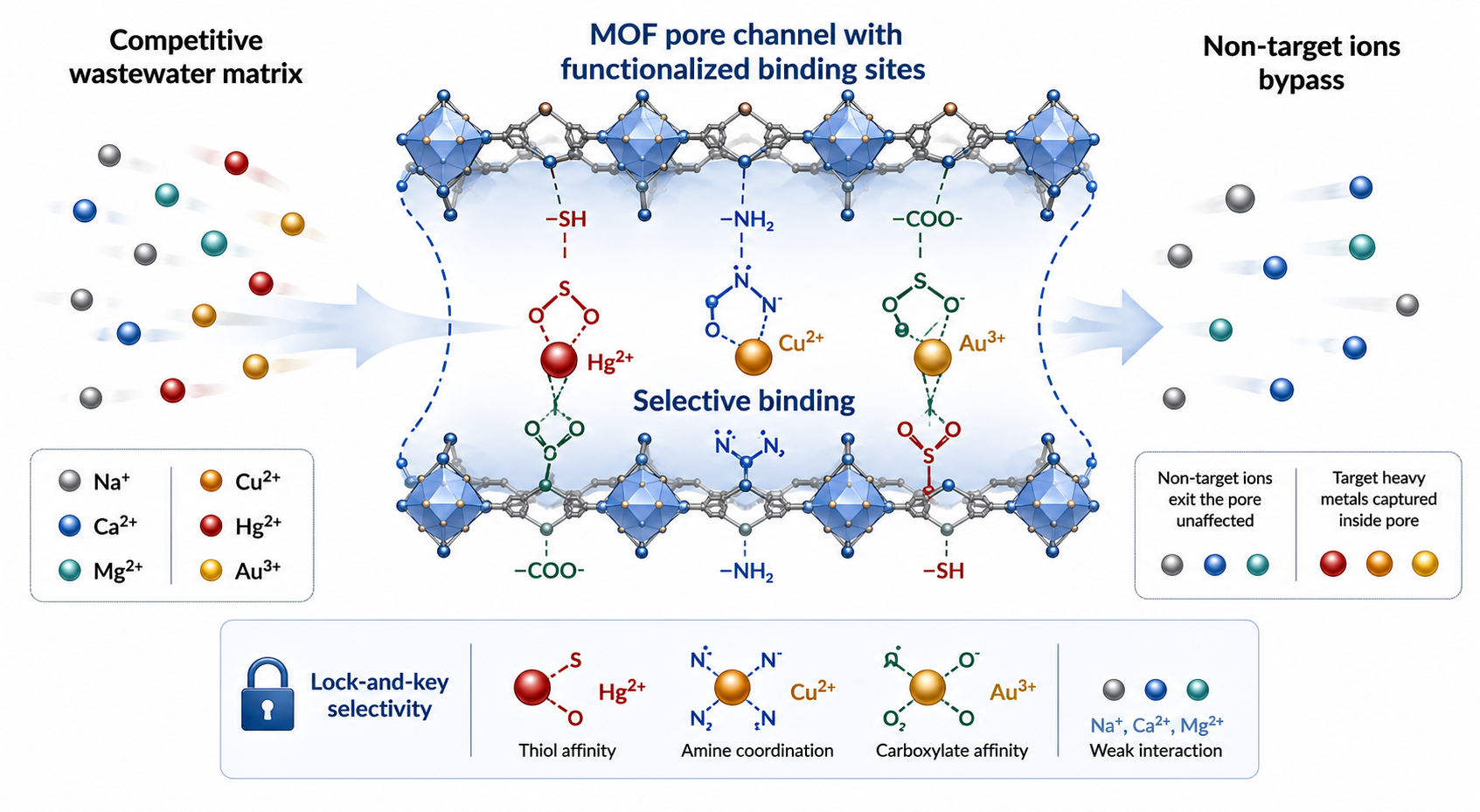
Sieving via Geometry: By manipulating linker length and framework topology, we can engineer sub-nanometer pore windows that physically permit only specific hydrated ions to enter, turning the matrix into a precise physical sieve.
-
Chemical Affinity (HSAB-Guided Design): Applying Hard-Soft Acid-Base (HSAB) principles, we can graft targeted functional groups directly onto the internal pore walls. Grafting soft Lewis bases, like thiol (-SH) groups, creates a massive thermodynamic affinity for soft heavy metals (Hg²⁺, Au³⁺), while amine groups can be optimized for Cu²⁺ or Pb²⁺.
When engineered correctly, target ions bind fiercely, while non-target ions wash through. That level of selectivity is where the economic value is unlocked.
From Capture to Recovery: The Economics of Desorption
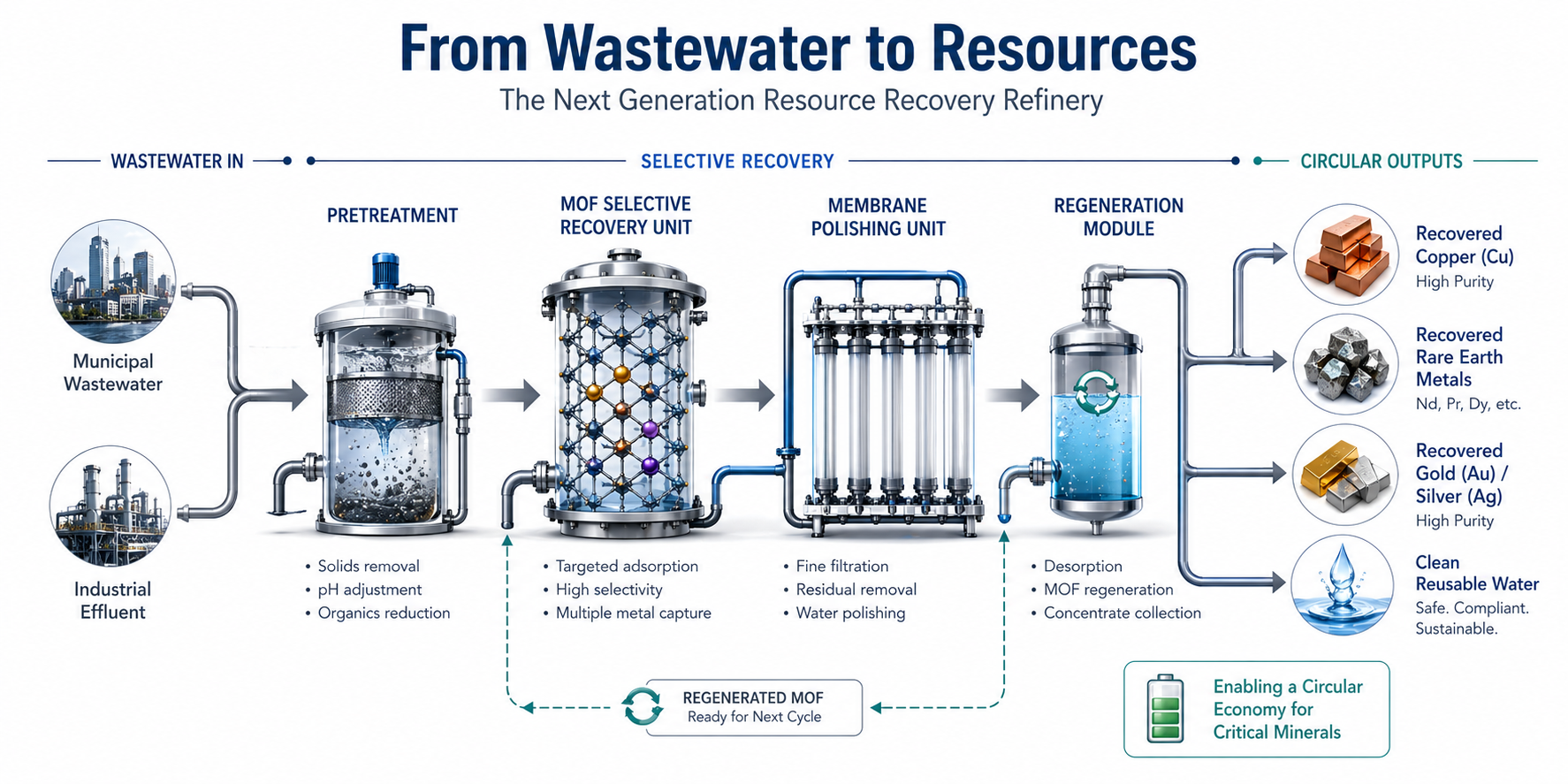
A material only matters commercially if it can release what it captures. Precipitation immobilizes metals permanently. MOFs, however, are built for reversibility.
Through controlled pH shifts or competitive eluents, loaded MOFs can release highly concentrated metal streams ready for direct integration into electrowinning, crystallization, or refining circuits. In this model, the wastewater treatment plant becomes a feedstock generator.
The Reality Check: Surviving the Industrial Scale
It is easy to report record-breaking adsorption capacities in pristine, laboratory-grade batch tests. But real-world deployment faces brutal engineering hurdles that the literature often ignores:
-
Hydrolytic Stability: Early MOFs melted in water. While robust zirconium-based systems (like the UiO-family) have largely solved this, durability across extreme pH fluctuations remains critical.
-
Process Integration: A powder that performs well in a beaker is useless in a municipal flow system. Translating MOFs into durable pellets, membrane coatings, or structured contactors without losing active surface area is a massive bottleneck.
-
Fouling: Real effluents contain oils, aggressive organics, and particulates that can blindly foul idealized pores.
Conclusion
We can no longer afford to bury strategic materials in sludge while mining virgin resources at massive environmental cost. The winners in the next decade of environmental engineering will not be those who simply remove the most contaminants; they will be those who recover the most value.
Designer MOFs, integrated into hybrid electro-membrane systems, are uniquely positioned to make that pivot possible.
To my peers in materials and environmental engineering: Which barrier do you think is currently the biggest roadblock to real-world MOF deployment—cost of linker synthesis, long-term hydrolytic durability, or macro-scale pelletization? Let's discuss below.

Dr. Akeem Adeyemi Oladipo is a globally recognized Research Professor of Materials and Environmental Chemistry at Eastern Mediterranean University. Ranked among the world's Top 2% Scientists, his expertise bridges nanotechnology, renewable energy, and electro-analytical chemistry. He specializes in advanced materials synthesis for wastewater treatment, highly sensitive electrochemical biosensors, and solar energy conversion. By integrating machine learning and artificial neural networks, his research drives scalable deep-tech innovations in environmental sustainability and energy storage.
Please sign in or register for FREE
If you are a registered user on Research Communities by Springer Nature, please sign in