From Simple Labels to Descriptive Sentences in Leukemia Image Classification
Published in Bioengineering & Biotechnology, Computational Sciences, and Immunology
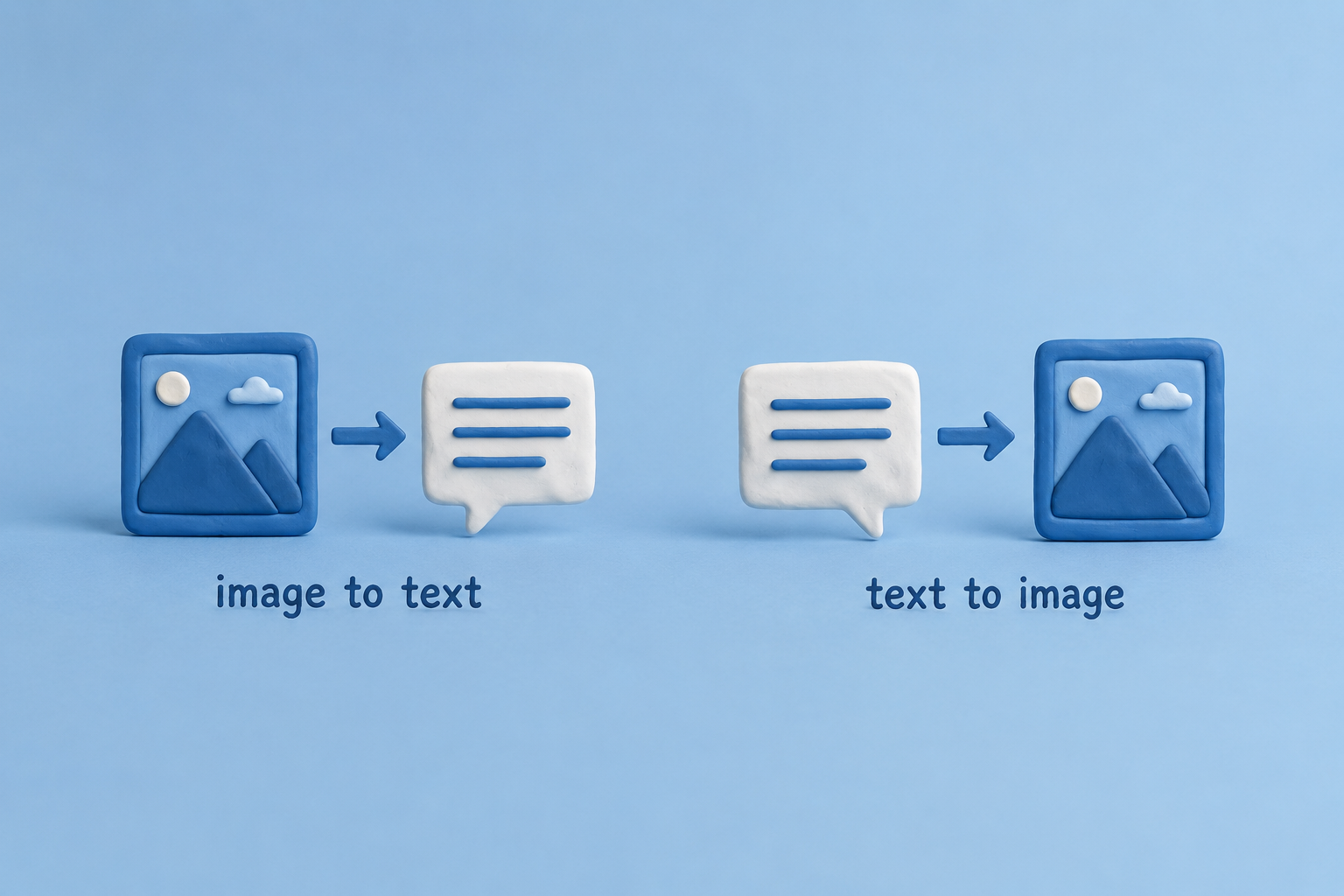






The idea of this paper was very simple. In traditional leukemia classification, each cell image is usually assigned to only one class such as AML, CML, ALL, or CLL. I thought this method is limited because a single label cannot describe the full meaning of a medical image.
So, we tried a different idea. Instead of assigning only one class label, we connected each image to a short descriptive sentence.
For instance:
AML → “Large immature blood cells with abnormal structure.”
CML → “High number of abnormal white blood cells in blood cells.”
ALL → “Fast-growing immature lymphocyte cells in the blood.”
CLL → “Small abnormal lymphocyte cells with slow progression.”
And other similar sentence like that.
In this work, we used both text-to-image and image-to-text learning. The model tried to understand the relation between medical images and written descriptions at the same time. We also used GAN-based methods to help balance the dataset because some classes had fewer images than others.
One challenge in this project was creating meaningful text descriptions that were simple but still useful for the model. Another challenge was the limited and unbalanced medical dataset. Training vision-language models also needed careful tuning and many experiments.
The model performance was evaluated using the metrics discussed in the paper. The final results were around the 70% range. This is not considered perfect or extremely high accuracy. However, the method is more practical and informative than traditional classification systems that only assign simple labels like 0, 1, 2, or 3.
I think the interesting part of this project was trying to make AI understand medical images in a more human-like way using language. This project showed that combining text and image understanding can open new directions in medical AI research.
In the future, this idea can be improved using larger datasets, better text descriptions, and stronger multimodal models. It may also help doctors better understand AI decisions instead of only seeing simple class outputs.
Link of paper: https://link.springer.com/article/10.1007/s44163-026-01239-7
Also links of other researches I contributed:
1- Advanced deep learning framework for automated hematological malignancy classification: Integrating FCMAE V2-WPAT with ACDB-GAN for enhanced leukemia subtype detection
https://doi.org/10.1007/s11760-025-05096-2
2- Constructive learning: A high-performance framework for fetal head circumference estimation
https://doi.org/10.1007/s11227-026-08293-z
3- Multimodal vision-language framework for text-guided leukemia classification using advanced deep learning architectures
https://doi.org/10.1007/s44163-026-01239-7
4- Advancing WBC classification: A hybrid ConvNeXtV2–Swin Transformer framework with R3GAN data balancing and CLAHE preprocessing

I hope to contribute to applied AI applications, even in a small way, to create useful things that make people happy and support nature and the environment.
Follow the Topic
-
Signal, Image and Video Processing
-
Discover Artificial Intelligence
This is a transdisciplinary, international journal that publishes papers on all aspects of the theory, the methodology and the applications of artificial intelligence (AI).
-
Journal of Imaging Informatics in Medicine
This journal enhances the exchange of knowledge encompassed by the general topic of Imaging Informatics in Medicine including, but not limited to, research and practice in clinical, engineering, information technologies and techniques in all medical imaging environments.



Related Collections
With Collections, you can get published faster and increase your visibility.
Transforming Education through Artificial Intelligence: Opportunities, Challenges, and Future Directions
Artificial Intelligence (AI) is rapidly changing the educational field by enabling personalized learning, intelligent tutoring systems, automated assessments, learning analytics, and administrative automation.
This collection invites original research, systematic reviews, and visionary perspectives on the transformative impact of AI in education. It aims to explore how AI technologies can enhance equity, inclusion, and efficiency in educational settings across different contexts, including higher education, K-12, vocational training, and lifelong learning. This collection will address technical, pedagogical, ethical, and policy aspects, fostering interdisciplinary perspectives and evidence-based insights.
This Collection supports and amplifies research related to SDG 4 and SDG 9.
Keywords: Artificial Intelligence, AI in Education, Educational Technology, Data Analytics, AI Ethics
Publishing Model: Open Access
Deadline: Nov 30, 2026
Foundation Models and Agentic AI: Multimodal Understanding, Adaptive Workflows, and Trustworthy Deployment
Aims and Scope
The Special Issue seeks original research addressing how foundation models and AI agents can advance the analysis, understanding, generation, and intelligent processing of signals, images, videos, and multimodal sensory information.
Particular attention will be given to research that moves beyond conventional single-task perception toward adaptive and autonomous processing workflows, where foundation models serve as general-purpose perceptual or reasoning components and AI agents coordinate multiple models, tools, data sources, and processing stages.
The Special Issue covers methodological developments as well as applications involving visual, acoustic, temporal, spatial, textual, and multimodal signals. Contributions are encouraged in areas such as multimodal representation learning, vision language understanding, video reasoning, signal-language modeling, autonomous perception pipelines, multi-agent collaboration, tool-augmented processing, efficient adaptation of foundation models, and trustworthy deployment.
Research addressing practical limitations, including computational efficiency, limited annotations, domain shifts, missing modalities, uncertainty, robustness, explainability, privacy, and real-time processing, is particularly encouraged.
Topics of Interest
Topics of interest include, but are not limited to:
• Foundation models for signal, image, audio, and video processing
• Vision foundation models and large-scale visual representation learning
• Vision-language and multimodal large language models
• Audio-language, video-language, and signal-language foundation models
• Multimodal representation, alignment, fusion, and reasoning
• Cross-modal retrieval, grounding, recognition, segmentation, and generation
• Multimodal temporal and spatial understanding
• Foundation models for video understanding and long-video reasoning
• Prompt learning, instruction tuning, and in-context learning for signal and visual tasks
• Parameter-efficient adaptation and domain adaptation of foundation models
• Few-shot, zero-shot, and open-vocabulary signal, image, and video processing
• AI agents for autonomous image, signal, and video analysis
• Multimodal agents for perception, reasoning, planning, and decision-making
• Foundation-model-powered agentic workflows
• Tool-augmented AI agents for signal and visual processing
• Agentic retrieval and knowledge-enhanced multimodal processing
• Multi-agent collaboration for complex perception and reasoning tasks
• Agent memory, reflection, self-evaluation, and iterative perception
• Dynamic model selection, routing, and orchestration
• Autonomous task decomposition and adaptive processing pipelines
• Human-agent collaboration for multimedia analysis
• Resource-efficient foundation models and lightweight multimodal agents
• Edge and real-time deployment of multimodal foundation models
• Model compression, pruning, distillation, quantization, and efficient inference
• Robust multimodal processing under missing, noisy, or corrupted modalities
• Domain generalization and cross-domain multimodal adaptation
• Uncertainty estimation and confidence-aware agentic reasoning
• Hallucination detection and mitigation in multimodal foundation models
• Explainable and interpretable multimodal foundation models and agents
• Security, privacy, fairness, and trustworthy deployment
• Benchmarking and evaluation of foundation-model-based and agentic systems
• New datasets and benchmarks for multimodal understanding and agentic processing
• Applications in remote sensing, medical imaging, industrial inspection, robotics, autonomous systems, intelligent transportation, agriculture, environmental monitoring, surveillance, and human-centered multimedia systems
Publishing Model: Hybrid
Deadline: Jul 01, 2027