From Transmission to Disability: A Fractional Perspective on HBV Dynamics
Published in Microbiology, Computational Sciences, and Biomedical Research


What if infectious disease models systematically underestimate long-term human suffering?
Infectious disease modeling should not stop at transmission dynamics. It must also capture the long-term health consequences that shape real-world impact.
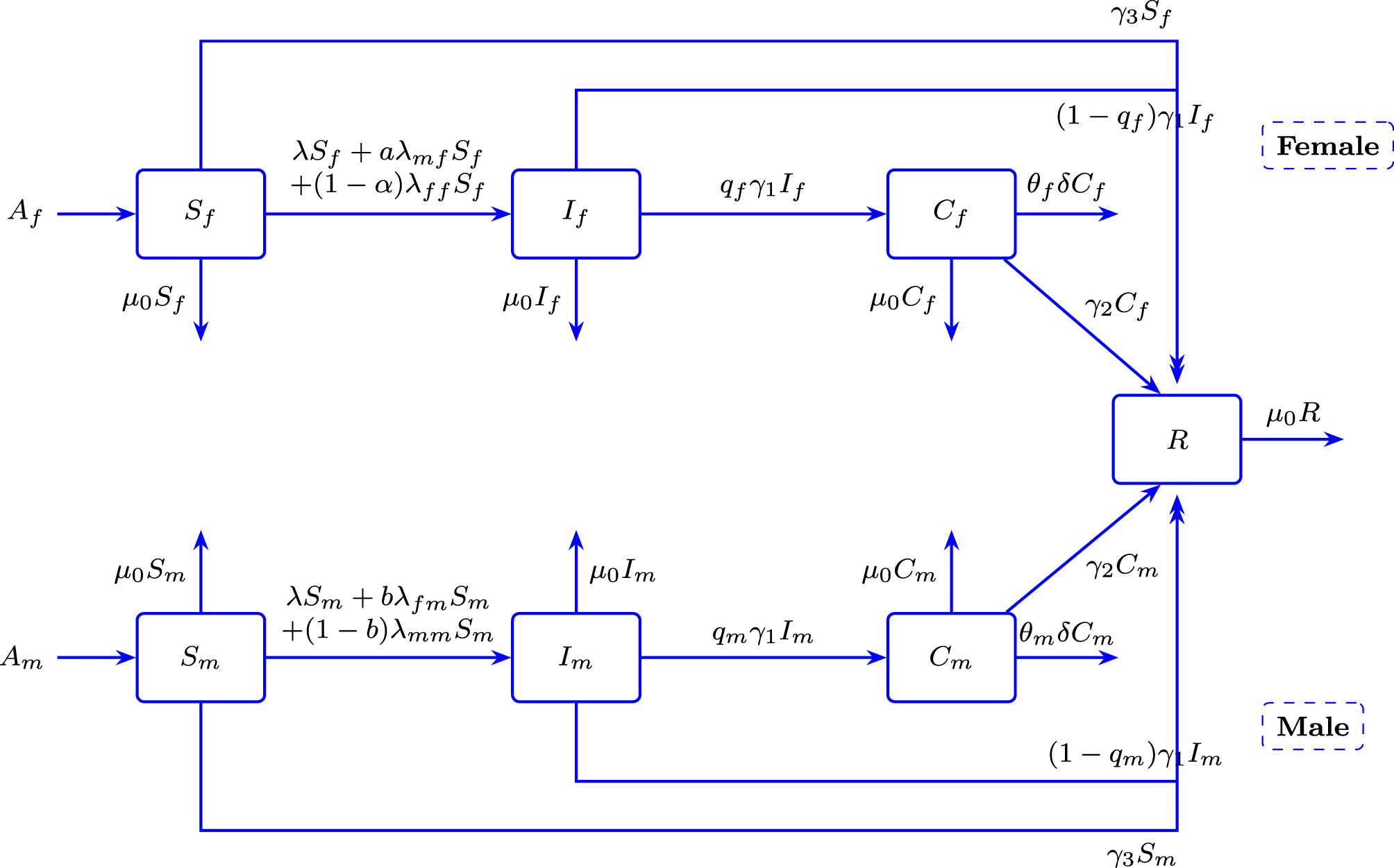
In our recent study published in BMC Infectious Diseases, we developed a fractional-order mathematical framework to model hepatitis B virus transmission across heterogeneous contact structures while explicitly incorporating disability burden into the system.
Unlike classical integer-order approaches, the model integrates memory effects using a Mittag–Leffler kernel, enabling a more realistic representation of disease progression and persistence over time.
A key contribution of this work is the introduction of disability-aware parameters that quantify long-term functional impairment among infected individuals. By incorporating metrics such as Years Lived with Disability and Disability-Adjusted Life Years, the model connects epidemiological dynamics with measurable health outcomes.
Through analytical and numerical investigations, including reproduction number analysis and sensitivity assessment, the results highlight the critical role of vaccination, transmission behavior, and carrier dynamics in shaping both infection spread and long-term disability burden.
This work contributes to a growing research direction that integrates mathematical modeling, artificial intelligence, and public health to support predictive, data-driven healthcare strategies.

Bridging engineering, artificial intelligence, and health systems, Prof. Kamel Guedri develops advanced computational frameworks to model complex physical and biological phenomena with real-world impact.
Prof. Kamel Guedri is a Full Professor of Mechanical Engineering at Umm Al-Qura University, Saudi Arabia. His research lies at the intersection of advanced heat transfer, multi-component nanofluids, and AI-assisted computational modeling for complex thermal and biomedical systems.
He specializes in the thermophysical characterization and numerical modeling of hybrid, tri-hybrid, and tetra-hybrid nanofluids, with a particular focus on entropy generation, non-Newtonian fluid behavior, and energy-efficient thermal management. His work integrates high-fidelity simulations with machine learning techniques to enhance prediction accuracy and optimize system performance.
A defining direction of his recent work lies in extending mathematical modeling beyond traditional boundaries. It incorporates memory-driven fractional dynamics and disability-aware epidemiological frameworks to better quantify long-term health outcomes. His contributions include integrating disability burden metrics such as DALYs and YLDs into infectious disease models, enabling a more comprehensive understanding of disease impact and supporting predictive, data-driven healthcare strategies.
Prof. Guedri leads and contributes to interdisciplinary research addressing real-world challenges in energy systems, biomedical engineering, and smart environments, including high-density and extreme scenarios such as Hajj and crowd-related systems.
With over 300 peer-reviewed publications and an h-index of 48, he actively collaborates on projects that bridge engineering, artificial intelligence, and societal applications. His research aims to advance sustainable, intelligent, and high-performance systems for next-generation engineering and health technologies.
Follow the Topic
-
BMC Infectious Diseases
This journal is an open access, peer-reviewed journal that considers articles on all aspects of the prevention, diagnosis and management of infectious and sexually transmitted diseases in humans, as well as related molecular genetics, pathophysiology, and epidemiology.

Related Collections
With Collections, you can get published faster and increase your visibility.
Personalized medicine in infectious diseases
BMC Infectious Diseases invites submissions for a Collection on Personalized medicine in infectious diseases.
The field of personalized medicine is rapidly advancing, particularly among infectious diseases, where the traditional ‘one-size-fits-all’ treatment approaches are increasingly inadequate. As our understanding of the genetic, environmental, and lifestyle factors influencing disease susceptibility and treatment response grows, this Collection aims to explore innovative strategies and technologies that can enhance the application of personalized medicine in combating infections.
Recent advancements in genomics, pharmacogenomics, and bioinformatics are transforming the application of personalized approaches for infectious diseases. These developments have enabled the identification of specific biomarkers that inform individualized treatment strategies, improving patient outcomes and minimizing adverse effects. In parallel, advances in molecular diagnostics and tailored antimicrobial therapies offer new opportunities to address the escalating challenge of antimicrobial resistance.
Improved understanding of host-pathogen interactions and the genetic determinants of infections may support the development of targeted antiviral and antimicrobial strategies that enhance their effectiveness, while limiting the emergence of resistance. Research in this area may also enable personalized antimicrobial dosing and optimized treatment guidelines that balance individual patient benefits with broader public health considerations.
This Collection welcomes original research articles on topics including but not limited to:
- Tailored antimicrobial therapy in infectious diseases
- Patient-specific interventions to improve clinical outcomes
- Personalized strategies to address antimicrobial resistance
- Precision medicine approaches in antiviral therapy
- Novel methodologies for disease modelling and therapeutic targeting
- Precision diagnostics, including biomarker validation and metagenomic sequencing
- Model-informed personalized dosing in infectious diseases
- Therapeutic drug monitoring in anti-infective therapy
This Collection supports and amplifies research related to SDG 3 (Good Health and Well-being).
All manuscripts submitted to this journal, including those submitted to collections and special issues, are assessed in line with our editorial policies and the journal’s peer review process. Reviewers and editors are required to declare competing interests and can be excluded from the peer review process if a competing interest exists.
Publishing Model: Open Access
Deadline: Dec 16, 2026
Tuberculosis and co-infections: diagnostics, management, and treatment
BMC Infectious Diseases invites submissions for a Collection on Tuberculosis and co-infections: diagnostics, management, and treatment.
Tuberculosis (TB) remains a leading cause of morbidity and mortality worldwide, particularly in regions with high prevalence rates and co-infections. The interplay between TB and various co-infections (including bacterial, viral, parasitic and fungal), complicates diagnosis and treatment strategies. Advances in molecular diagnostics and imaging techniques have improved our understanding of how these co-morbidities affect TB pathogenesis and treatment outcomes. However, the challenge of managing drug-resistant TB adds an additional layer of complexity, necessitating a comprehensive approach that integrates the latest research findings with clinical practice.
Research into TB of all stages and its co-infections is crucial for addressing the rising incidence of drug resistance and improving patient outcomes. Recent studies have identified critical biomarkers for early detection and prognosis, highlighting the role of rapid diagnostic tools in the clinical setting. Additionally, understanding the mechanisms of co-infections has led to tailored treatment regimens that maximize efficacy while minimizing adverse effects. Nonetheless, gaps remain in our knowledge of optimal management strategies for these complex cases, emphasizing the need for ongoing research in this field.
Future research endeavors should focus on the development of more effective diagnostic techniques and treatment protocols that consider the multifaceted interactions between TB and its co-infections. Innovations in personalized medicine may lead to targeted therapies that address specific pathogen interactions, ultimately enhancing patient recovery rates. Moreover, collaborative efforts between public health entities and research organizations could pave the way for comprehensive TB surveillance systems, fostering the identification of emerging trends in co-infection patterns.
This Collection welcomes original research articles on topics including but not limited to:
- Diagnostic innovations for Tuberculosis and co-infections
- Management strategies for drug-resistant Tuberculosis
- Interaction between Tuberculosis and HIV
- Tuberculosis and diabetes comorbidity
- Tuberculosis in the context of viral hepatitis and COVID-19
This Collection supports and amplifies research related to SDG 3 (Good Health and Well-being).
All manuscripts submitted to this journal, including those submitted to collections and special issues, are assessed in line with our editorial policies and the journal’s peer review process. Reviewers and editors are required to declare competing interests and can be excluded from the peer review process if a competing interest exists.
Publishing Model: Open Access
Deadline: Jan 27, 2027