From Waste Crisis to Circular Opportunity: Rethinking Municipal Solid Waste Governance in South Asia
Published in Earth & Environment and Law, Politics & International Studies


Municipal solid waste management has become one of the defining urban governance challenges of our time, especially in South Asia. Rapid urbanization, population growth, weak municipal infrastructure, and fragmented institutional arrangements have made it increasingly difficult for cities to manage rising volumes of waste effectively. A recent review article on urban governance and circular economy pathways for municipal solid waste management in South Asia offers a timely and important contribution to this debate.
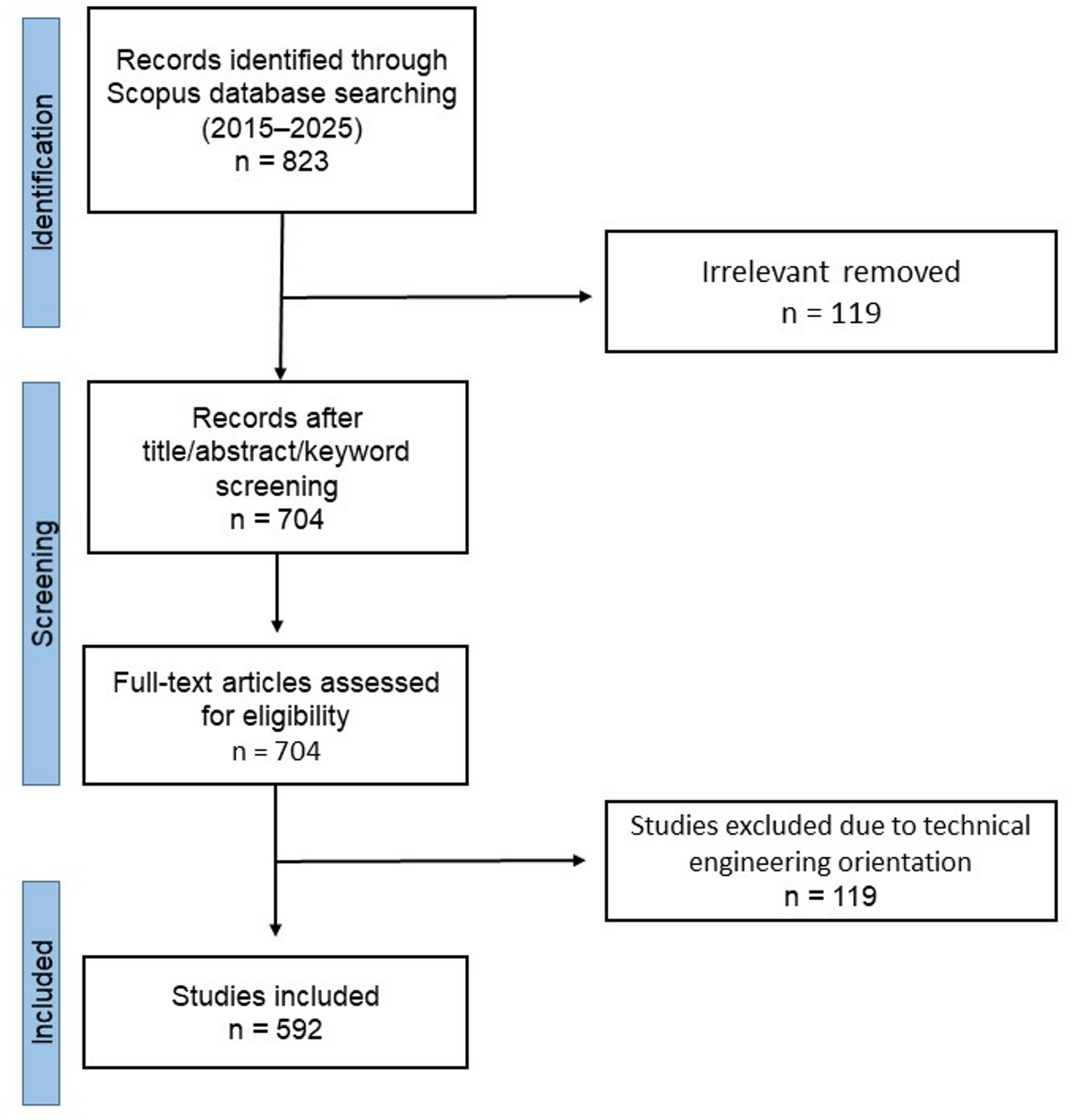
The article is based on a systematic and bibliometric review of 592 peer-reviewed studies published between 2015 and 2025. One of its clearest findings is that scholarly attention to this issue has grown rapidly over the past decade, increasing from fewer than 30 publications in 2015 to more than 130 in 2024. This sharp rise reflects a broader recognition that waste management is not just a technical issue. It is also closely tied to governance, sustainability, climate resilience, and public health.
A major insight from the review is that India, Bangladesh, and Pakistan account for more than 80% of municipal solid waste generated in South Asia, yet recycling rates remain low and open dumping is still widespread. The article argues that this is not simply the result of inadequate technology. Instead, it points to deeper structural issues such as weak policy coordination, limited financing, poor institutional capacity, and a lack of integration between national, municipal, and community-level actors.
The study also shows that the research landscape in South Asia is uneven. India and Bangladesh dominate publication output and institutional contributions, while countries such as Bhutan, Maldives, and Afghanistan remain underrepresented. This imbalance mirrors broader regional inequalities in research capacity, waste data systems, and governance attention. As a result, some of the countries facing unique waste management challenges are still not adequately reflected in the evidence base.
Another important contribution of the article is its discussion of a shifting policy and research agenda. Earlier work focused more heavily on disposal, landfills, and technical treatment methods. In contrast, recent studies increasingly emphasize circular economy approaches such as recycling, composting, waste-to-energy systems, stakeholder participation, and the inclusion of informal waste workers. This shift is significant because it reframes waste not as an end-of-pipe problem, but as part of a broader urban system tied to resource recovery, environmental protection, and livelihoods.
The central message of the article is clear: South Asia must move beyond fragmented and disposal-oriented waste systems toward governance models that are inclusive, integrated, and circular. That means better policy coherence, stronger local institutions, recognition of informal sector contributions, and greater alignment with sustainability goals such as SDG 11 and SDG 12. For policymakers, researchers, and urban practitioners alike, this review offers both a diagnosis of the current crisis and a roadmap toward a more resilient and sustainable future.
Full Article References
Hossain, I., Haque, A. A systematic and bibliometric review on urban governance and circular economy pathways for municipal solid waste management in South Asia. Discov Cities 3, 13 (2026). https://doi.org/10.1007/s44327-026-00195-2
Follow the Topic
-
Discover Cities
This is a fully open access, peer-reviewed journal that supports multidisciplinary research and policy developments across the field of urban science.

Related Collections
With Collections, you can get published faster and increase your visibility.
Green Spaces and Sustainability in Cities
In recent decades, with the rapid development of urbanization, it has brought about rapid economic development and convenient life, while it has also brought a series of environmental problems, including global warming, air pollution, ecosystem chaos, biodiversity decline and other environmental problems, which will also lead to the physical and mental health of residents in cities. Green spaces in cities plays multiple roles in the city of ecological, social and economic services, is an integral part of the urban ecosystem, and plays an indispensable role in improving environmental problems and promoting sustainable development in cities.
This series aims to discuss the role of green spaces in alleviating environmental problems in cities, as well as research on the use and management of green spaces in sustainable urban development. Through this series of studies, we will explore how to better play the ecological and social service functions of green spaces in cities and promote the sustainable development of cities.
The research collected in this series includes, but is not limited to, the following topics:
• Evaluation of green spaces and ecological services value in cities;
• Evaluation the accessibility and equity of green spaces in cities;
• The impact of green spaces on microclimate in cities;
• Green spaces and health in cities;
• Green spaces and resilient cities;
• Green spaces and social justice;
• Green spaces and the well-being of residents in cities;
• Governing, planning and management of green spaces in cities.
• Green spaces in smart cities;
• Sustainable development in cities.
Keywords: Green space; Environmental sustainability; Climate change; Social justice; Resilient cities; Smart cities; Health; Urban planning; Urban service
Publishing Model: Open Access
Deadline: Jan 31, 2027
Urban Futures: Strategies for Decarbonized, Resilient, and Equitable Cities
Cities stand at the forefront of the global sustainability challenge. This Collection explores how urban areas can become drivers of climate action, social equity, and systemic transformation. Drawing from contributions presented at the Urban Futures Symposium 2025 (hosted by the Urban Energy Systems Laboratory at Empa, Switzerland), this Collection brings together research, practice, and policy insights on how to build decarbonized, resilient, and equitable cities.
The articles cover a wide range of themes, including integrated urban energy systems, low-carbon mobility, participatory governance, just and equitable transitions, sufficiency-based planning, nature-based solutions, circularity, embodied emissions, digital urban innovations, financing and economics, and building and energy technologies. With case studies from cities across the Global North and South, and perspectives from both academic and practitioner communities, the Collection highlights interdisciplinary and cross-scale strategies for navigating urban complexity in a rapidly changing world.
We invite contributions that explore theoretical frameworks, empirical studies, modeling approaches, or co-designed solutions for shaping just, climate-compatible urban futures.
Keywords: Urban transitions; Urban resilience; Participatory urban planning; Justice, equity, and well-being; Urban governance and policy; Integrated energy systems and technologies; Sustainable mobility; Sufficiency strategies; Circular economy and resource flows; Materials and embodied emissions; Nature-based solutions; Urban ecology and environmental systems; Financing mechanisms and urban economics; Innovations in the built environment; Systemic innovation for urban sustainability.
This Collection supports and amplifies research related to SDG 11 (Sustainable Cities and Communities), SDG 7 (Affordable and Clean Energy), SDG 13 (Climate Action), SDG 12 (Responsible Consumption and Production), and SDG 10 (Reduced Inequalities).
Publishing Model: Open Access
Deadline: Dec 31, 2026