From Wastewater to Nanofactories: An Untapped Route to Sustainable ZnO Nanoparticles
Published in Bioengineering & Biotechnology, Materials, and Microbiology

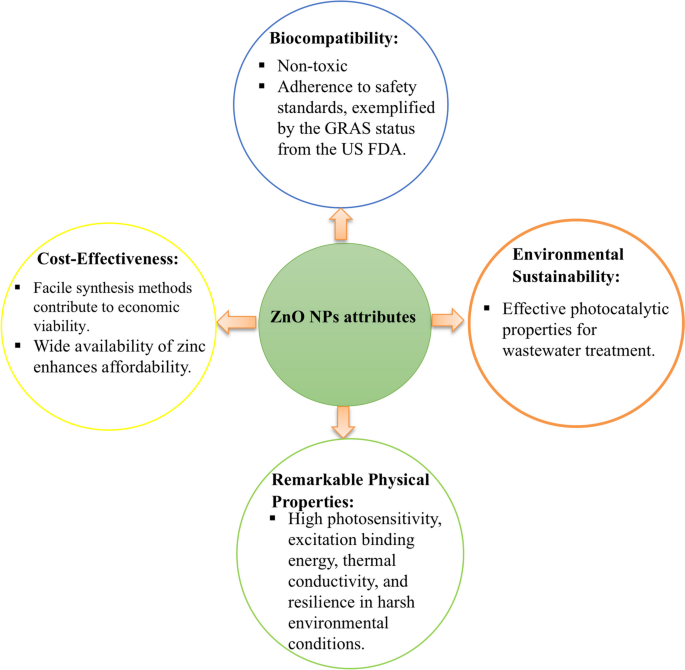

During our earlier experimental research, we studied two Weissella strains isolated from wastewater: Weissella cibaria UPM22MT06 and Weissella confusa UPM22MT04. These bacteria showed an unusual combination of properties. They could tolerate zinc ions, produce zinc oxide nanoparticles, and generate nanoparticles with antibacterial activity, including activity against methicillin-resistant Staphylococcus aureus (MRSA). These findings made us reconsider what wastewater environments might contain. Wastewater treatment plants are complex microbial ecosystems in which microorganisms are repeatedly exposed to metals, chemicals, and other environmental stresses. To survive, some bacteria develop mechanisms that allow them to bind, tolerate, transform, or reduce metal ions. Those same survival mechanisms may also provide the biological machinery required for nanoparticle synthesis. This connection became the foundation of our review. Research on wastewater microbiology, probiotic bacteria, heavy-metal resistance, nanoparticle biosynthesis, and antimicrobial applications often develops within separate scientific fields. We wanted to bring these areas together and show that they may be parts of the same scientific story. The term “probiotic bacteria” is commonly associated with fermented food products or digestive health. However, certain carefully selected probiotic and lactic acid bacteria possess cellular structures and biochemical capabilities that make them promising microscopic nanofactories. Their cell walls can attract metal ions, while enzymes and other biological molecules can help convert those ions into nanoparticles. Extracellular polymeric substances; the protective materials secreted around bacterial cells, may also capture metal ions and act as natural reducing, capping, and stabilising agents during nanoparticle formation. This biological process matters because conventional nanoparticle-production methods may require hazardous chemicals, high energy consumption, or specialised equipment. Microbial synthesis offers the possibility of producing nanoparticles under milder conditions while reducing the need for chemical reducing and stabilising agents. Bacteria are also relatively easy to cultivate, and their growth conditions can be controlled, making them attractive candidates for future scalable production. Zinc oxide nanoparticles are particularly interesting because of their wide range of potential applications. They have been investigated for antimicrobial activity, wound healing, drug delivery, anticancer treatments, food applications, and environmental remediation. Their antimicrobial potential is especially relevant as the world faces the growing challenge of antimicrobial resistance. Drug-resistant pathogens such as MRSA are becoming increasingly difficult to treat using conventional antibiotics alone. Zinc oxide nanoparticles can affect microbial cells through several mechanisms. They may damage cell membranes, release zinc ions, generate reactive oxygen species, and interfere with essential cellular processes. Their ability to attack bacteria through multiple routes makes them interesting candidates for further investigation, particularly against resistant pathogens and the protective biofilms they form. However, our review does not suggest that biosynthesised nanoparticles are ready to replace antibiotics. Important questions remain about their safety, effective concentration, stability, reproducibility, and effects on human cells and the environment. The size, shape, concentration, and surface characteristics of nanoparticles can greatly influence their biological activity. Researchers must therefore optimise the synthesis process and carefully evaluate both effectiveness and toxicity before clinical or industrial application. The broader implication is that wastewater treatment environments may be more than places for removing pollution. They may also serve as valuable discovery sites for microorganisms with useful biochemical capabilities. Instead of viewing wastewater only as waste, we can begin to consider it a source of microbial diversity that may support environmental remediation, sustainable manufacturing, and biomedical innovation. Writing this review changed how I understood our earlier experimental findings. The production of zinc oxide nanoparticles by two wastewater-derived bacterial strains was not simply an isolated laboratory result. It pointed towards a broader scientific possibility: microorganisms that have adapted to metal-contaminated environments may offer new tools for transforming metal ions into valuable nanomaterials. The most exciting questions now concern what remains undiscovered. How many other wastewater microorganisms possess similar abilities? Which enzymes and cellular components control nanoparticle formation? Can these processes be standardised and scaled without losing their environmental advantages? Could the resulting nanoparticles be safely developed into antimicrobial coatings, wound-care materials, or environmental technologies? Answering these questions will require collaboration across microbiology, nanotechnology, medicine, environmental science, and engineering. Our review is intended to encourage that collaboration and invite researchers to explore wastewater-derived probiotic bacteria as an untapped biotechnological resource. I would also welcome opportunities for research collaboration and postdoctoral work in probiotic bacteria, environmental microbiology, microbial biotechnology, and sustainable nanomaterials.
For me, this is the most important message of the paper: scientific value can sometimes emerge from places that are usually overlooked when researchers connect ideas across disciplines and remain curious. Sometimes scientific progress begins by looking again at something familiar. In this case, it began by looking at wastewater not merely as a problem to solve, but as an environment containing resilient microorganisms with the potential to become sustainable nanofactories.
Follow the Topic
-
Applied Microbiology and Biotechnology
This journal focuses on research regarding prokaryotic or eukaryotic cells, relevant enzymes and proteins, and applied genetics and molecular biotechnology.

Related Collections
With Collections, you can get published faster and increase your visibility.
Emerging Applications of Nanoparticles in Biotechnology and Medicine
Applied Microbiology and Biotechnology invites articles on nanoparticles and nanomaterials in biotechnology and medicine. Topics of interest range from nano-enabled diagnostics and drug delivery to enzymatic catalysts in bioreactors and nanoparticles for environmental and health applications. Medical and health-related articles should specifically address diseases caused by bacteria or viruses, or focus on therapeutics produced through biotechnological or enzymatic processes.
Nanoparticles, with their unique size-dependent properties, are transforming biotechnology and medical research. This collection highlights innovative applications of engineered nanoparticles in diagnostics, targeted drug delivery, biosensing, and catalytic bioprocesses. Contributions may include studies of nanoparticle design and functionalization, nanocarrier systems for drug, gene, or enzyme delivery, and nanoparticles as enzyme-immobilization supports to boost bioprocess efficiency. Emphasis is on how these nanoscale materials can improve processes from bio-production to therapeutics, highlighting the impact of nanobiotechnology on health and industrial biotechnology.
We invite contributions on novel nanoparticles and functionalized materials with biotechnological or medical applications. Potential topics include nanoparticle synthesis and engineering for targeted functions, nano-carriers for drug, gene or enzyme delivery, and nanomaterials for biosensors and diagnostics. Studies of nanoparticle applications in bioprocesses (e.g. catalysis in bioreactors, fermentation enhancement) and environmental biotechnology (e.g. pollutant sensing or degradation) are welcome. Works on antimicrobial or antiviral nanomaterials, nano-vaccines, and the safety/toxicology of nanotechnologies are also encouraged.
Topics of interest include, but are not limited to:
• Nanoparticle design and functionalization
• Nanocarriers for targeted drug, gene, or enzyme delivery
• Nano-enabled diagnostics, imaging, and biosensors for microbial and medical applications
• Nanoparticles in bioprocess engineering
• Antimicrobial, antiviral, and nano-vaccine technologies
• Environmental nanoparticle applications (bioremediation, bioenergy) and nanotoxicology studies
This collection supports and amplifies research related to SDG 3 (Good Health and Well-being).
Publishing Model: Open Access
Deadline: Nov 30, 2026
Cultivation of Microorganisms: New Media and Techniques
Applied Microbiology and Biotechnology invites articles on new approaches to cultivating microorganisms, focusing on novel culture media and techniques that bring previously difficult to culture microbes into the laboratory. Topics of interest include customized genome-informed media, microfluidic and high-throughput isolation systems, co-culture and in situ devices, and advanced bioreactor methods.
Culture media and cultivation methods are key to unlocking microbial diversity for biotechnology. Many microbes remain uncultured, highlighting the need for new approaches. Many organisms cannot grow on standard lab media and instead require tailored formulations mimicking their native habitats. This collection seeks novel methods to culture microorganisms, from optimized growth media to high-throughput platforms, including co-culture and in situ techniques. Emphasis is on expanding culturable diversity and enabling strain development for applied microbiology and industrial biotechnology.
We invite studies on cultivation methods and media that enable growth of previously uncultured or fastidious microbes. Innovative culture media topics include defined media guided by genome data or novel additives to mimic environmental niches. Contributions on advanced platforms – such as microfluidic or droplet-based high-throughput systems, diffusion chambers, and automated culturomics – are welcome. Also relevant are co-culture or continuous culture strategies, anaerobic and extremophile techniques, and improved protocols for culture reproducibility.
Topics of interest include, but are not limited to:
• Genome-informed and environmentally mimetic culture media
• High-throughput cultivation platforms
• Co-culture and community culture strategies to grow interdependent microbes
• In situ cultivation devices and methods
• Continuous and automated culture systems
• Specialized methods for anaerobic, microaerophilic, or extremophilic microorganisms
Publishing Model: Open Access
Deadline: Oct 15, 2026