Global Polar Change in Focus: APS Invites Submissions for Four Special Issues
Published in Astronomy, Earth & Environment, and Ecology & Evolution

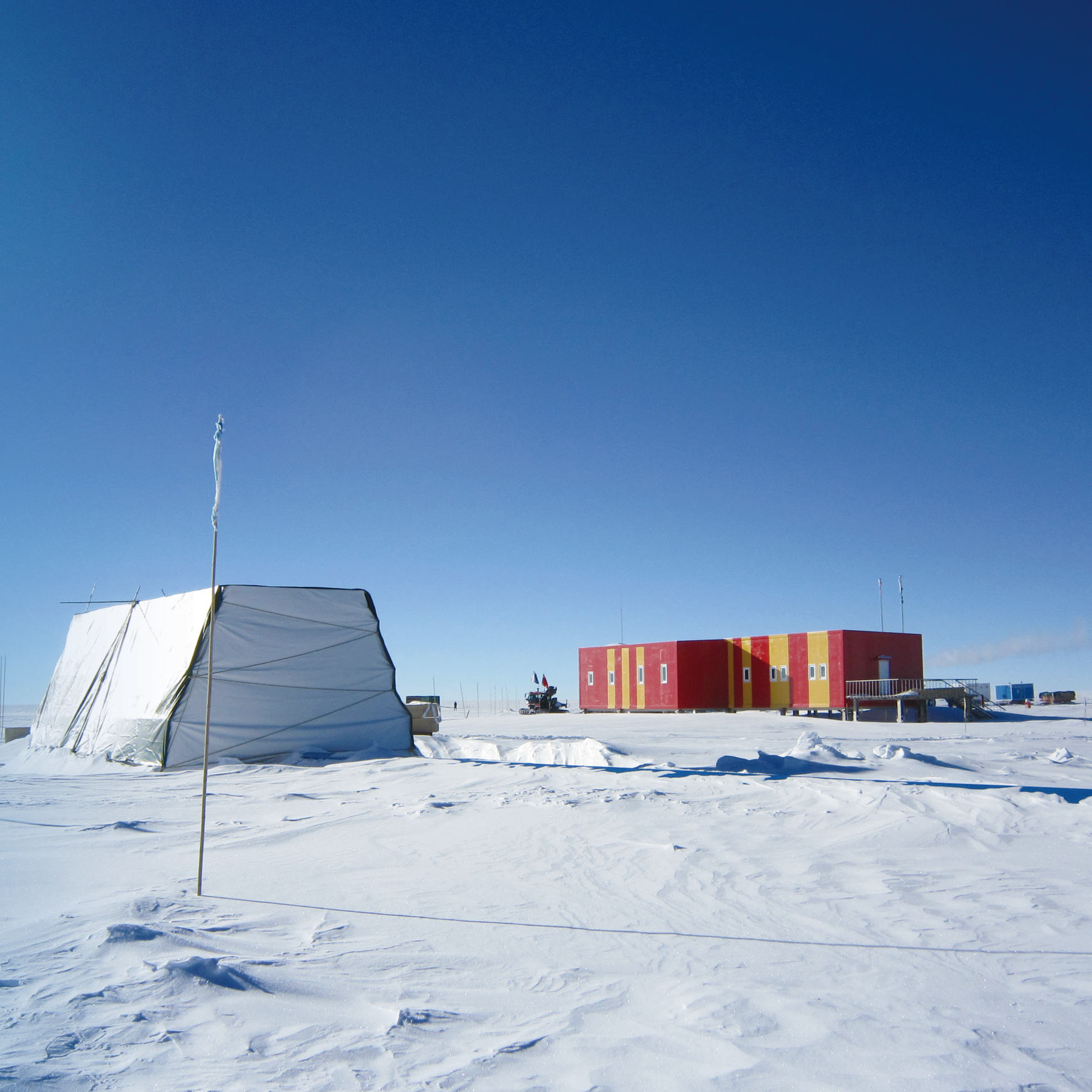

Advances in Polar Science is an international, peer-reviewed, open-access journal dedicated to multidisciplinary Arctic and Antarctic research. Since October 2025, APS has also been officially endorsed by the Asian Forum for Polar Sciences (AFoPS). Supported by the Polar Research Institute of China, all articles are published free of charge, with particular emphasis on supporting early-career researchers.
APS is currently inviting submissions for upcoming special issues scheduled for publication during 2026 and 2027.
1. Changes of the Arctic Climate System and Its Global Connections
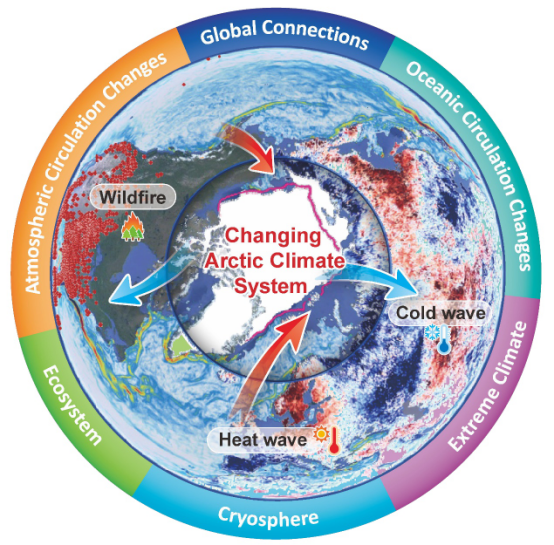 Main topic: The Arctic plays a pivotal role in the Earth’s climate system, with its rapid transformation exerting profound impacts on global climate dynamics, ecosystems, and human societies. In recent decades, Arctic warming has significantly outpaced the global mean temperature increase, driving enhanced sea ice decline, accelerated mass loss of the Greenland Ice Sheet, permafrost degradation, and glacier retreat. These changes modulate atmospheric and oceanic circulation patterns, establishing teleconnections with mid- and low-latitude climate systems. Investigating the historical evolution, current state, and projected future trends of the Arctic climate system, as well as its global impacts, is crucial for elucidating the mechanisms underlying Arctic amplification, refining climate change projections, attributing extreme weather and climate events, and informing sustainable development strategies. Recent advances in high-resolution climate modeling, satellite remote sensing, paleoclimate reconstructions from ice cores and sediments, and other observational techniques have significantly improved our understanding of the multi-sphere interactions within the Arctic climate system and their global linkages. Submit your paper!
Vol. 37, No. 2 — Publication: June 2026
2. Changes in Polar Ice Sheets and Global Sea Level
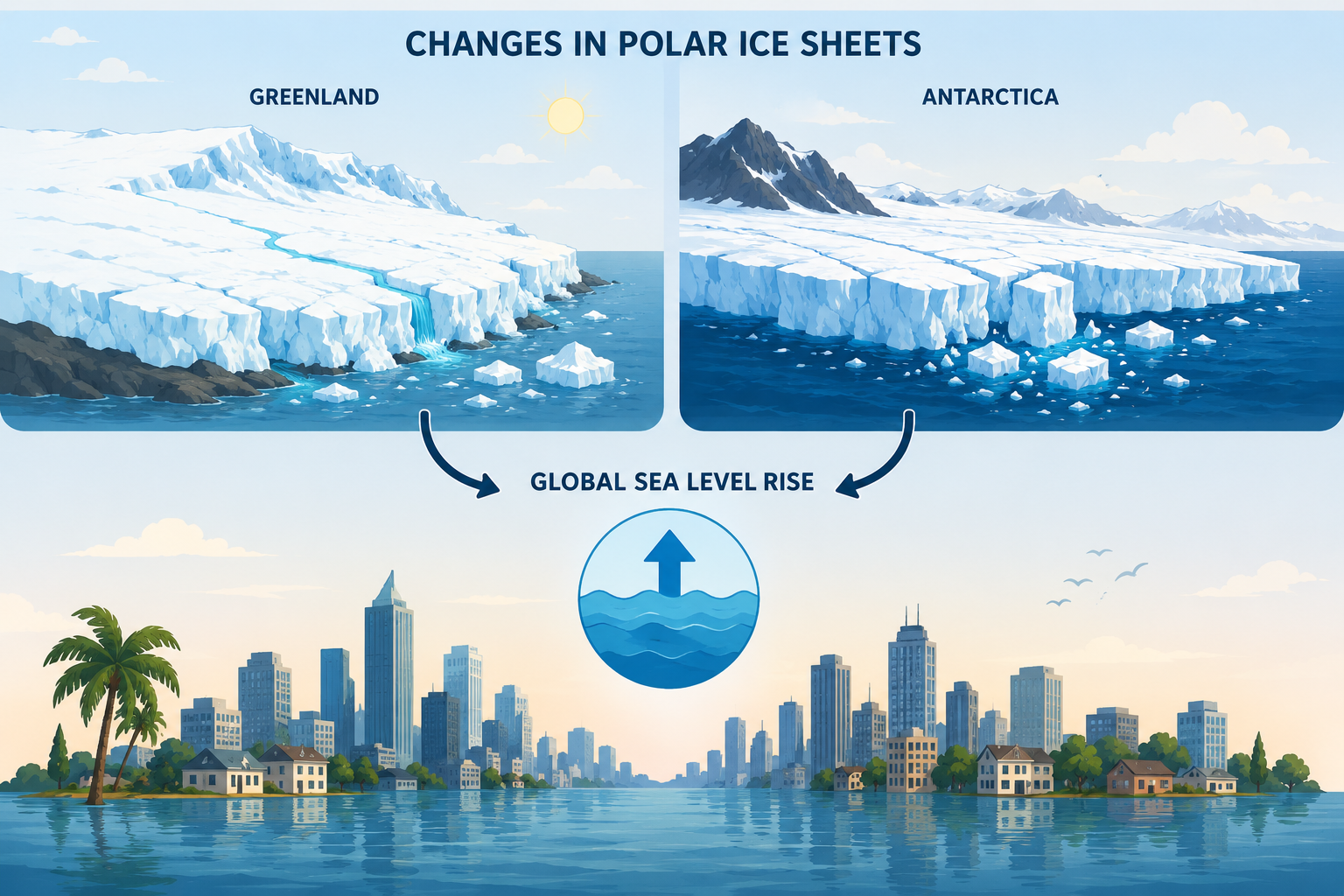
Main topic: The Antarctic and Greenland ice sheets are core components of the cryosphere, storing more than two-thirds of the Earth's freshwater in solid form. Changes in polar ice sheets have significant impacts on global sea levels, water cycles, and atmospheric and oceanic circulation. Driven by climate warming, the Antarctic and Greenland ice sheets are undergoing continuous mass loss and have become one of the main contributors to the current global sea level rise. It is expected that this process will accelerate in the 21st century, posing a substantial challenge to the sustainable development of the world's coastal areas. Therefore, understanding the past, present, and future mass balance of polar ice sheets remains a key focus for the global scientific community. However, there is still considerable uncertainty in estimating the contributions of polar ice sheet changes to global sea level rise. This uncertainty is regarded as the greatest obstacle to accurate projections of future sea level change. The key factors and dynamic mechanisms affecting variations in ice sheet mass balance are not fully understood. To address this, global scientists worldwide have made tremendous efforts, including establishing in-situ observation networks, integrating multi-source remote sensing data, developing three-dimensional ice sheet dynamic models, improving schemes for subglacial processes, and optimizing regional climate models for polar regions. These efforts have led to major advances in understanding polar ice sheet mass balance and its role in global sea level change. Add your research to this volume!
Vol. 37, No. 4— Publication: December 2026
3. Response of Polar Ecosystems to Climate System Changes
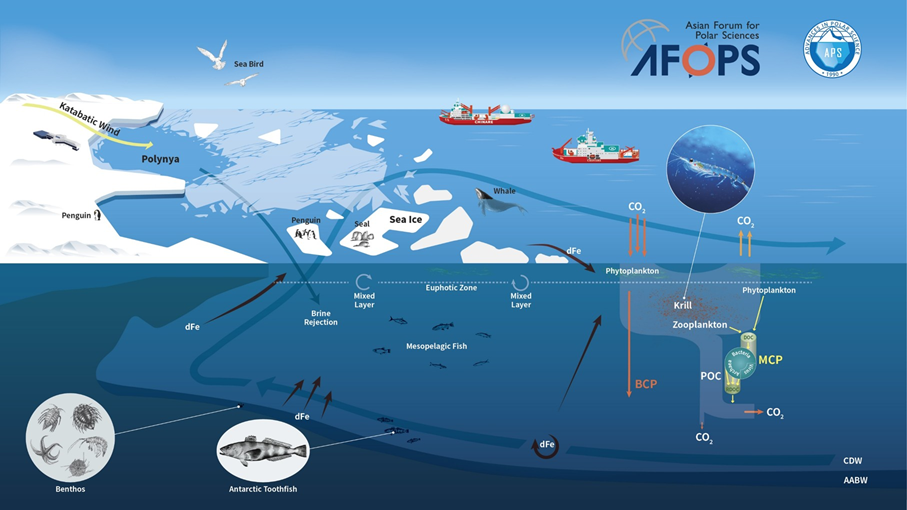
Main topic: The polar regions, as critical areas in the Earth's climate system with high sensitivity and amplification effects, are undergoing the most significant environmental changes worldwide. Data from a bulletin released by the World Meteorological Organization (WMO) in 2025 shows that the warming rate in the Arctic has risen to four times the global average. Additionally, a report in Nature in July 2025 highlighted a sharp decline in Antarctic sea ice extent since 2014, with 2023 setting a record low — the sea ice coverage in July of that year was more than 7 standard deviations below the average from 1981-2010 average, and the magnitude of this change far exceeds the range of natural fluctuations over the past 300 years.
These dramatic environmental changes are profoundly reshaping the structure and function of polar ecosystems. Taking the Antarctic ecosystem as an example, over the past 26 years, the productivity of diatoms in the Southern Ocean has significantly decreased by 18%. Meanwhile, the abundance of phytoplankton groups under less grazing pressure has increased by 6% - 10%. This shift in the community structure of phytoplankton across the Southern Ocean has triggered cascading impacts on the survival and development of krill populations. Meanwhile, the retreat of sea ice and changes in bottom water temperature are significantly affecting the habitat of macrobenthos, whose diversity and community structure changes are increasingly becoming important indicators for assessing the health of polar ecosystems. Send your contribution!
Vol. 38, No. 1 —Publication: March 2027
4. Meridian Project Probes the Polar Region: Multi-Layer Coupling and Response of Space Environment
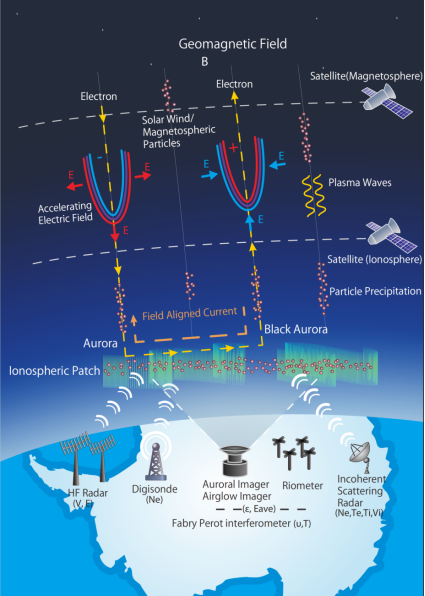
Main topic: Earth’s polar regions serve as convergence zones for space weather energy input and represent the most direct and intense windows of response within the solar-terrestrial energy coupling chain. As China’s national ground-based monitoring array for space environment, the Meridian Project has established long-term, coordinated polar observation capabilities at key locations, including Arctic field stations, Zhongshan Station, and Great Wall Station. This network enables multi-parameter synchronous measurements ranging from auroral particle precipitation and ionospheric drift to thermospheric wind fields. This unique configuration provides irreplaceable data support for systematically revealing the complete processes of energy injection, transport, and dissipation during extreme space weather events in polar regions. This special issue focuses on “Polar Space Environment Response” and aims to leverage radar, optical, and geomagnetic data accumulated by the Meridian Project to investigate frontier topics, including polar ionosphere-thermosphere coupling mechanisms during magnetic storms, multi-scale atmospheric wave propagation characteristics, and conjugate effects. Join this volume with your paper!
Vol. 38, No. 2 — Publication: June 2027
These four thematic issues aim to foster international discussion and collaboration across the broad spectrum of polar sciences, including climate dynamics, cryosphere research, marine and terrestrial ecosystems, geology, paleontology, and space environment studies.
APS also welcomes proposals for future Special Issues or Thematic Columns focused on polar themes that foster strong international collaborative links. Researchers interested in developing new thematic initiatives are encouraged to contact the editorial office or visit APS.



Please sign in or register for FREE
If you are a registered user on Research Communities by Springer Nature, please sign in