Lynch on Research about Sport, Leisure and physical development... optimising 0-8 years.
Published in Social Sciences and Education

Explore the Research
 Springer Nature Switzerland
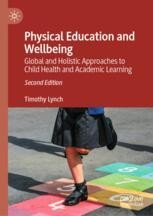
Physical Education and Wellbeing
This book explores how physical education (PE) can be best enacted in schools in order to optimize children’s well-being.
Consistently around the world, across various educational curricula, sport sits within Physical Education (PE). This is accentuated in the National Curriculum of England. However, educationalists are cautioned of the misconception that PE is only sport. This misconception becomes confusing for educators in the early years when children’s motor control is not developmentally ready to combine a number of motor skills with game rules and strategies.
For this reason, in Australia for example, sport has been described as a logical extension of a school’s physical education (PE) programme. Furthermore, research suggests that the optimum time for children to learn and refine their motor skills and to be introduced to positive PE/ Health & PE experiences is during preschool and early primary school years. It is therefore argued that to build an ideal ‘Sport and Leisure’ system within society, we need to concentrate on a holistic approach.
A shift towards a socio-cultural approach in education has experienced a Health, Wellbeing and Physical Education (H, W & PE) revolution – described as a growing global curriculum reform, one that is in the best interest of the whole child. However, research evidences that in many nations H, W & PE often only exists as policy and fails to reach children in schools; on sporting fields or in gym halls.
Hence, an ideal Sport and Leisure system requires an inclusive, developmentally appropriate and progressive infrastructure beginning within early years of primary schools. Such an infrastructure will engage and challenge all children, subsequently enhancing individual and team success, provide diverse movement opportunities and ultimately optimise health and wellbeing. This concept was supported by the inaugural ICHPER-SD world congress 1958 theme; ‘Child Health and the School’. However, while this shift has been around for some time, it has been slow.
A growing number of nations have made the shift to a holistic HPE curriculum and these numbers are rising. Nations embracing H, W & PE include: Australia, United States, United Kingdom (Wales & Scotland), New Zealand, Singapore, Canada, China, Malaysia, Brunei Darussalam, Philippines, Japan, Nepal, Thailand, Cambodia, Indonesia, India, Sri Lanka, Finland, Ireland, Northern Ireland, Netherlands, Switzerland, Sweden, Cameroon, Nigeria, Uganda, Sudan, Malawi, Namibia, Tanzania, Afghanistan, United Arab Emirates, Cook Islands and Somoa.
Quality PE (QPE) is recommended by global policy as the ideal pedagogical way to implement PE for enhancing all dimensions of health. Thinking through the mind’s eye of a child, it is intrinsically natural for all children to enjoy movement for the purpose of play, games, exploring, learning, developing Fundamental Movement Skills (FMS) and Dominant Movement Patterns (DMP). So the question raised is why do some children lose the enjoyment to move? What negative experience has occurred?
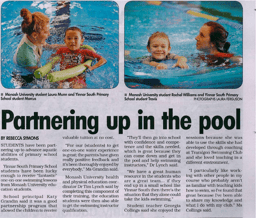
Children want to be included; to truly belong; to be acknowledged; and to discover exciting ways to feel good about themselves and their movement. Inclusive education requires access to QPE, to equipment and to opportunities to develop skills correctly. It involves developmentally appropriate content and experiences, a knowledgeable teacher who cares about each child’s progress, who is interested in each child’s movement and enjoys working with children generally. Such attributes are embedded within UNESCO global policy and literature. Furthermore, partnerships are investigated within communities and across communities. According to the United Nations, ‘partnerships’ are essential for optimising children’s QPE experiences and continued efforts towards equality in health and wellbeing.
Timothy Lynch is the Western Co-Head of ECE and Primary at Yew Chung International School of Chongqing (China) and Adjunct Professor at Yew Chung College of Early Childhood Education (YCCECE), Hong Kong (China). Timothy has taught and researched in the Middle East, Europe, Asia and Oceania. He is the current Vice-President for the International Council for Health, Physical Education, Recreation, Sport and Dance (ICHPER-SD). ICHPER was founded as a Non-Government Organisation (NGO) in 1958 and is officially recognised by UNESCO and the International Olympic Committee (IOC).
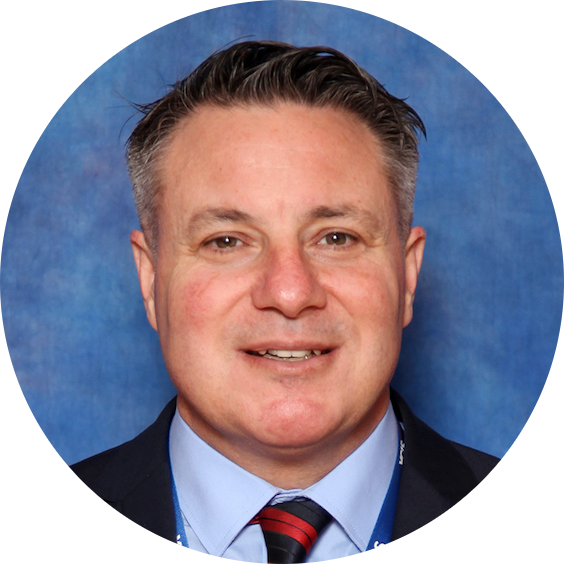
Dr. Timothy Lynch, the most cited school practitioner on Google Scholar, is the Western Co-Head of ECE and Primary at Yew Chung International School of Chongqing (China) and Adjunct Professor at Yew Chung College of Early Childhood Education (YCCECE), Hong Kong (China). Timothy is acknowledged by UNESCO as an Inclusive Policy Lab (IPL) expert for education and wellbeing, by the International Alliance for Health, Physical Education, Dance and Sport (IAHPEDS) as Secretary General (Elect) and accredited as a Senior Fellow of the Higher Education Academy (UK Professional Standards Framework). An active teacher, school leader and researcher, he has published widely in the field of education, having taught and researched across the Middle East, Africa, Asia, Europe and Australia. Timothy has 24 years' teaching and school leadership experience and eight years' working full time as a teacher/researcher in higher education.
Previous experiences include:
- Deputy Principal at The Joseph Varga School
- Deputy Head of Junior School at the British International School of Cairo
- Assistant Headteacher/ Deputy Headteacher at Hornbill School, Brunei - Ofsted outstanding (Ministry of Defence, UK)
- Adjunct Professor at the Universiti of Brunei Darussalam (UBD) in the Sultan Hassanal Bolkiah Institute of Education (SHBIE)
- Plymouth University - Subject Lead in the Institute of Education - Ofsted outstanding (UK) 2015-2017
- Senior Lecturer in the Faculty of Education at Monash University - no. 1 in world QS rankings (Australia) (2011-2015).
- Assistant Professor at University of Canberra
Research interests include; Wellbeing, Special Education, Health and Physical Education, pedagogy and quality teaching practices, Early Childhood Education, curriculum reform, and enhancing learning through the physical. An active teacher, school leader and researcher, he has published widely in the field of education for Yew Chung College of Early Childhood Education (Hong Kong), Swinburne University of Technology (Melbourne, Aus), Universiti of Brunei Darussalam (Brunei), University of Plymouth (Devon, UK), Monash University (Melbourne, Aus) University of Canberra (Aus), Federation University (Aus) and Australian Catholic University (Aus).
Follow the Topic
-
Palgrave Macmillan
Palgrave Macmillan is a world-class publisher of books and journals with more than 175 years’ experience in the Humanities and Social Sciences.

Introducing: Social Science Matters
Social Science Matters is a campaign from the team at Palgrave Macmillan that aims to increase the visibility and impact of the social sciences
Continue reading announcement