A Gift for All Children During Times of Conflict and Need: Planting Seeds for Future Peace
Published in Social Sciences, Sustainability, and Behavioural Sciences & Psychology
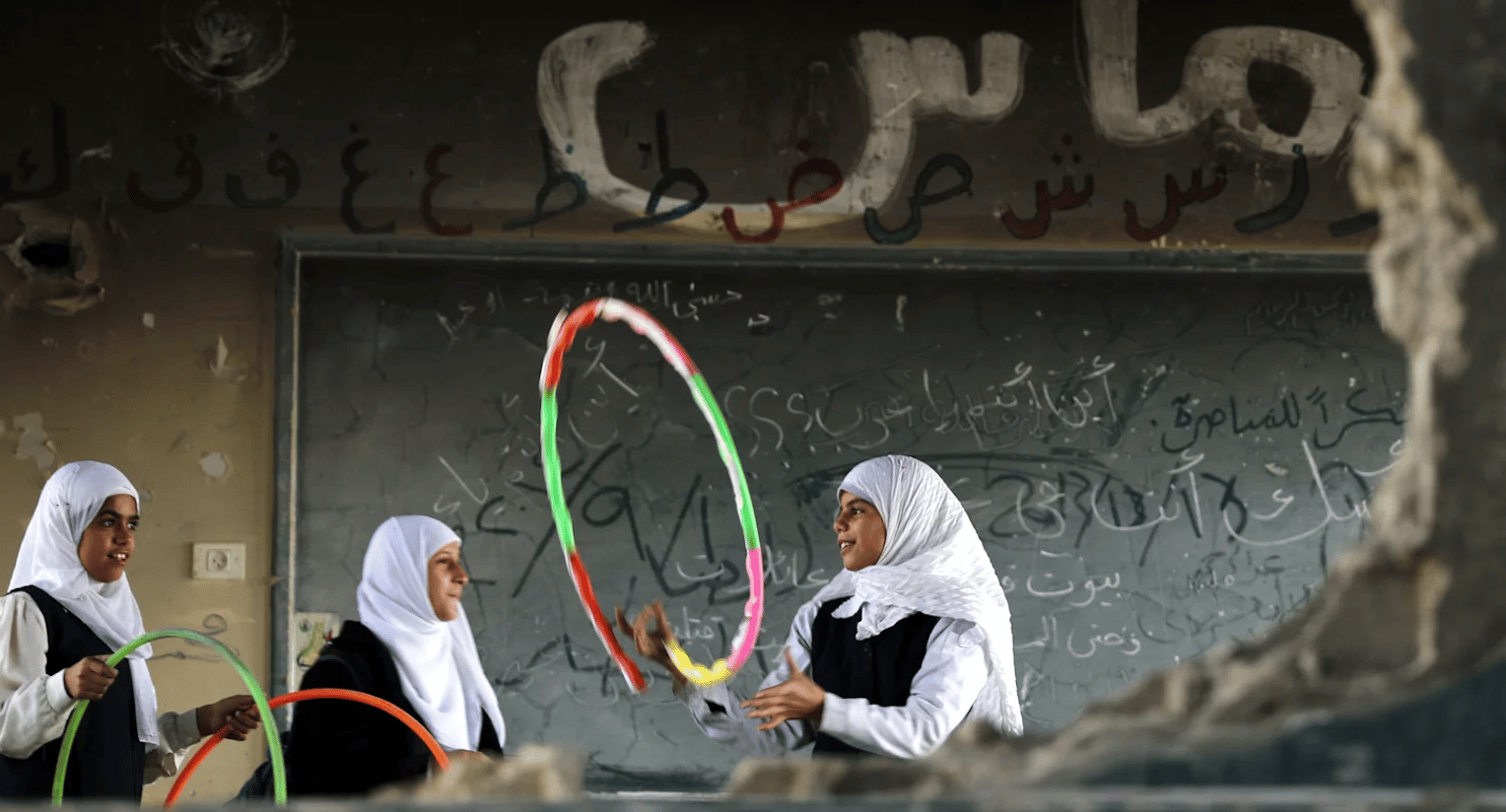

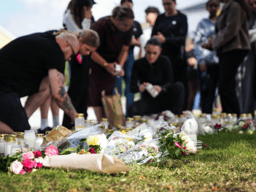
In a world increasingly fractured by conflict, displacement, and inequality, the question resonates with urgent clarity: How can sport, physical education and wellbeing help bring peace? The answer lies not in grand political gestures but in the daily, transformative work happening in schools and communities worldwide - work that nurtures children’s bodies, minds, and spirits through evidence -based approaches that foster respect, empathy, and collaboration. We are planting the seeds for future peace, one child, one school, one community at a time.
The United Nations Secretary-General’s recent call for inputs on sport for development and peace [1] underscores a critical reality: sport and physical education are not luxuries - they are essential tools for building peaceful, resilient societies. This is particularly true in times of crisis, when children bear the heaviest burden of conflict, trauma, and instability.
The Transformative Power of Values-Based Education
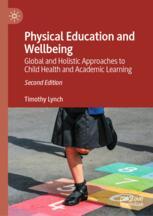
Timothy Lynch’s research book Physical Education and Wellbeing [2] provides a roadmap for how schools can become sanctuaries of peace and development, directly contributing to the United Nations Sustainable Development Goals - particularly SDG 3 (Good Health and Wellbeing), SDG 4 (Quality Education), and SDG 17 (Partnerships for the Goals). Chapter 10, “Wellbeing Enactment in Schools: Implementing Learning Values”, offers profound insights into how deeply integrating universal values transforms educational environments and, by extension, entire communities.
The chapter identifies nine universal competencies essential for wellbeing and peace-building: Reflection, Collaboration and Cooperation, Learning to Learn, Respect, Responsibility, Empathy, Self-regulation, Persistence, and Trust [2]. These are not abstract ideals but practical, teachable skills that research consistently shows improve both academic outcomes and overall wellbeing. When children learn empathy, they reduce antisocial behaviors and increase prosocial actions. When they develop self-regulation, they manage anxiety and achieve their goals. When they practice collaboration, they build agency and motivation that extends far beyond the classroom. Each competency is a seed planted in fertile ground, growing into the peaceful societies we desperately need.
Lauve Wellbeing: A Gift to the World
Lauve Wellbeing (Learning Approach Using Values Education) is an evidence-based educational framework that embodies these principles [3]. Endorsed by the International Alliance for Health, Physical Education, Dance and Sport (IAHPEDS) and approved by UNESCO, Lauve Wellbeing is not a rigid program but a contextual approach to curriculum reform designed to foster lifelong learning through holistic, movement-based, and inclusive methods.
What makes Lauve Wellbeing truly revolutionary is its accessibility. In recognition that every child -regardless of geography, socioeconomic status, or circumstance - deserves the tools for wellbeing and peace, the framework offers free online resources for educators, parents, teachers, and carers worldwide.
Physical Dimension A and B: Free Resources for All
Two particularly valuable resources are now available:
Physical Dimension A (https://www.lauvewellbeing.com/physical) provides comprehensive guidance on fundamental movement skills, play-based learning, and physical literacy - the building blocks of physical confidence and social connection [3].
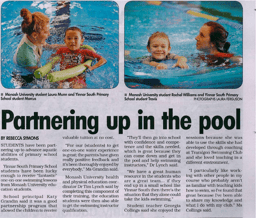
Physical Dimension B (https://www.lauvewellbeing.com/physicalb) extends these foundations with specialized content including dance, water safety, and advanced motor skill development [3].
These resources are designed for immediate implementation in schools, sporting clubs, refugee camps, community centers - anywhere children gather and adults care about their futures. They require no expensive equipment, no specialized facilities - only commitment to children’s holistic development.
Planting Seeds: From Classrooms to Communities
The research is clear: when schools adopt a whole-school approach to values implementation -embedding them across formal and informal learning, in curriculum, culture, and community partnerships - the impact extends far beyond individual students [2]. Staff relationships improve. Behavior challenges decrease. Teaching quality rises. Most importantly, children develop self-regulation, resilience, and the social-emotional skills that enable them to navigate adversity and contribute positively to their communities.
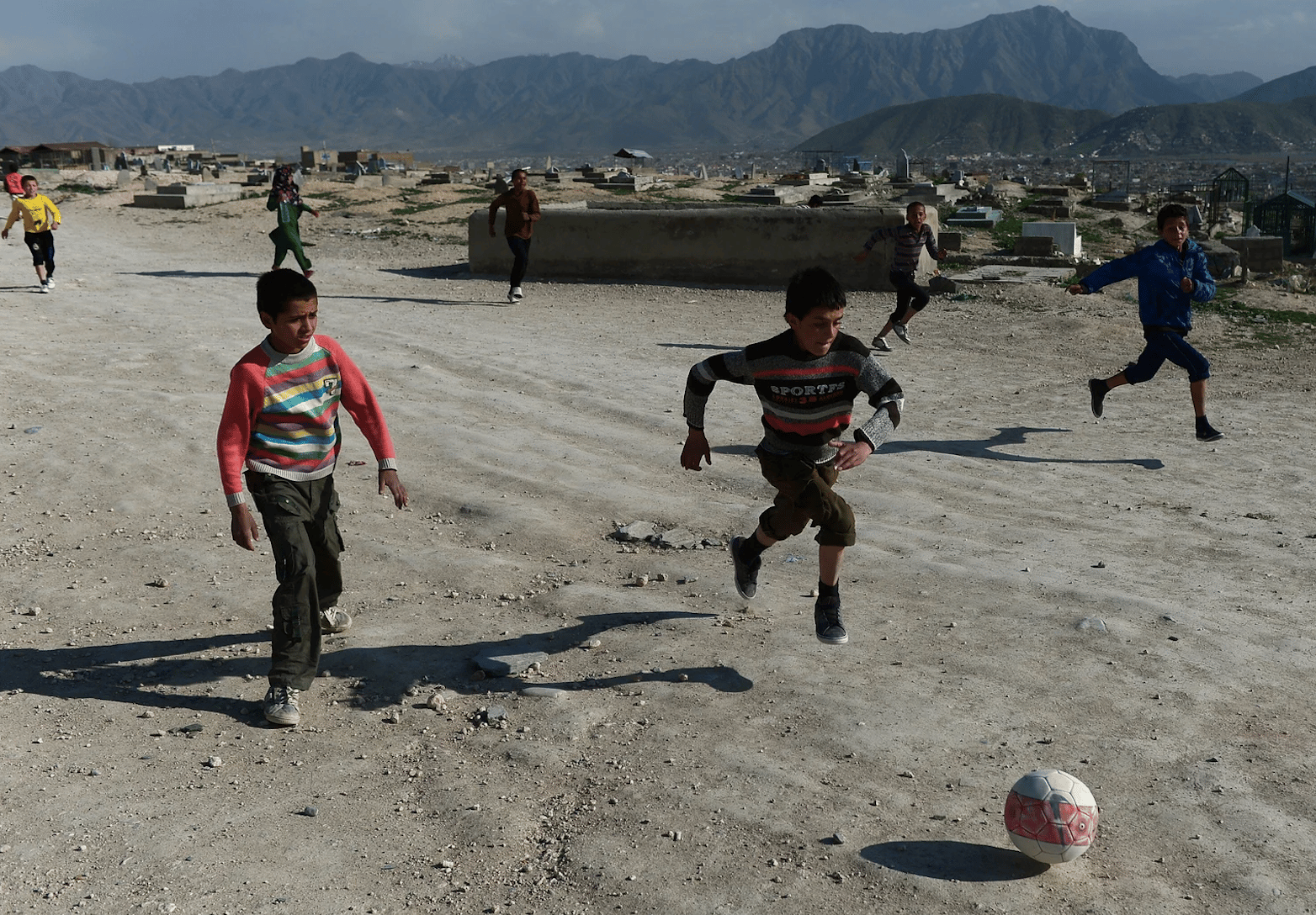
Children who learn conflict resolution through cooperative games, who practice empathy through inclusive physical activities, who build trust through team sports, are developing the very competencies that break cycles of violence and build foundations for peace. We are planting seeds today that will bloom into peaceful tomorrows - seeds of understanding in places torn by misunderstanding, seeds of cooperation where competition has bred conflict, seeds of hope where despair has taken root.
A Call to Action: Become a Gardener of Peace
The beauty of Lauve Wellbeing is its democratic accessibility. You don’t need to wait for policy changes or funding allocations. Teachers can begin tomorrow. Parents can engage today. Community leaders can mobilize this week.
Visit www.lauvewellbeing.com and explore Physical Dimension A and Physical Dimension B. Share these resources with every educator, coach, parent, and carer in your network. Translate them. Adapt them to your context. Use them in schools, camps, community centers, and homes.
Every school that implements values-based physical education is creating a space where children learn not just to move, but to move together - with respect, responsibility, and trust.
This is a gift, it costs nothing but commitment. It requires nothing but care. And it has the power to change everything.
Peace begins with children. Wellbeing makes peace possible. We are planting the seeds for future peace. The tools are free. The time is now.
References
[1] Sport and Development. (2026). Call for inputs: United Nations Secretary-General’s report on sport for development and peace. Retrieved from https://www.sportanddev.org/latest/news/call-inputs-united-nations-secretary-generals-report-sport-development-and-peace
[2] Lynch, T. (2024). Physical Education and Wellbeing. Springer Nature. Chapter 10: Wellbeing Enactment in Schools: Implementing Learning Values. https://doi.org/10.1007/978-3-031-72874-7_10
[3] Lauve Wellbeing. (2026). Learning Approach Using Values Education. Retrieved from https://www.lauvewellbeing.com
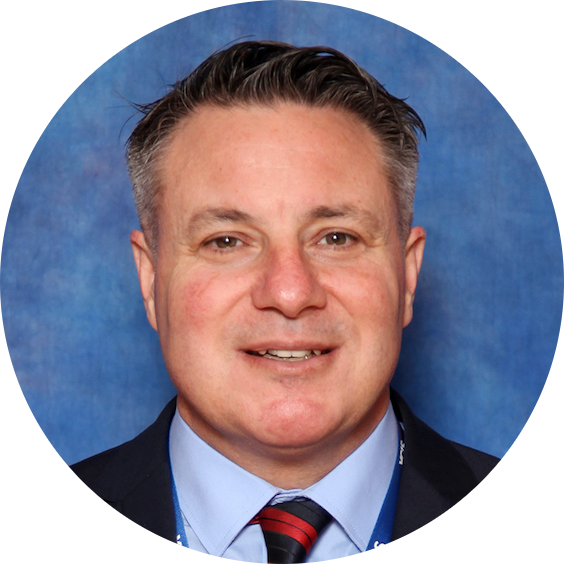
Dr. Timothy Lynch, the most cited school practitioner on Google Scholar, is the Western Co-Head of ECE and Primary at Yew Chung International School of Chongqing (China) and Adjunct Professor at Yew Chung College of Early Childhood Education (YCCECE), Hong Kong (China). Timothy is acknowledged by UNESCO as an Inclusive Policy Lab (IPL) expert for education and wellbeing, by the International Alliance for Health, Physical Education, Dance and Sport (IAHPEDS) as Secretary General (Elect) and accredited as a Senior Fellow of the Higher Education Academy (UK Professional Standards Framework). An active teacher, school leader and researcher, he has published widely in the field of education, having taught and researched across the Middle East, Africa, Asia, Europe and Australia. Timothy has 24 years' teaching and school leadership experience and eight years' working full time as a teacher/researcher in higher education.
Previous experiences include:
- Deputy Principal at The Joseph Varga School
- Deputy Head of Junior School at the British International School of Cairo
- Assistant Headteacher/ Deputy Headteacher at Hornbill School, Brunei - Ofsted outstanding (Ministry of Defence, UK)
- Adjunct Professor at the Universiti of Brunei Darussalam (UBD) in the Sultan Hassanal Bolkiah Institute of Education (SHBIE)
- Plymouth University - Subject Lead in the Institute of Education - Ofsted outstanding (UK) 2015-2017
- Senior Lecturer in the Faculty of Education at Monash University - no. 1 in world QS rankings (Australia) (2011-2015).
- Assistant Professor at University of Canberra
Research interests include; Wellbeing, Special Education, Health and Physical Education, pedagogy and quality teaching practices, Early Childhood Education, curriculum reform, and enhancing learning through the physical. An active teacher, school leader and researcher, he has published widely in the field of education for Yew Chung College of Early Childhood Education (Hong Kong), Swinburne University of Technology (Melbourne, Aus), Universiti of Brunei Darussalam (Brunei), University of Plymouth (Devon, UK), Monash University (Melbourne, Aus) University of Canberra (Aus), Federation University (Aus) and Australian Catholic University (Aus).
Follow the Topic
What are SDG Topics?
An introduction to Sustainable Development Goals (SDGs) Topics and their role in highlighting sustainable development research.
Continue reading announcement