Mitochondrial Potassium Channels – Small Gates With Big Impact
Published in Cell & Molecular Biology
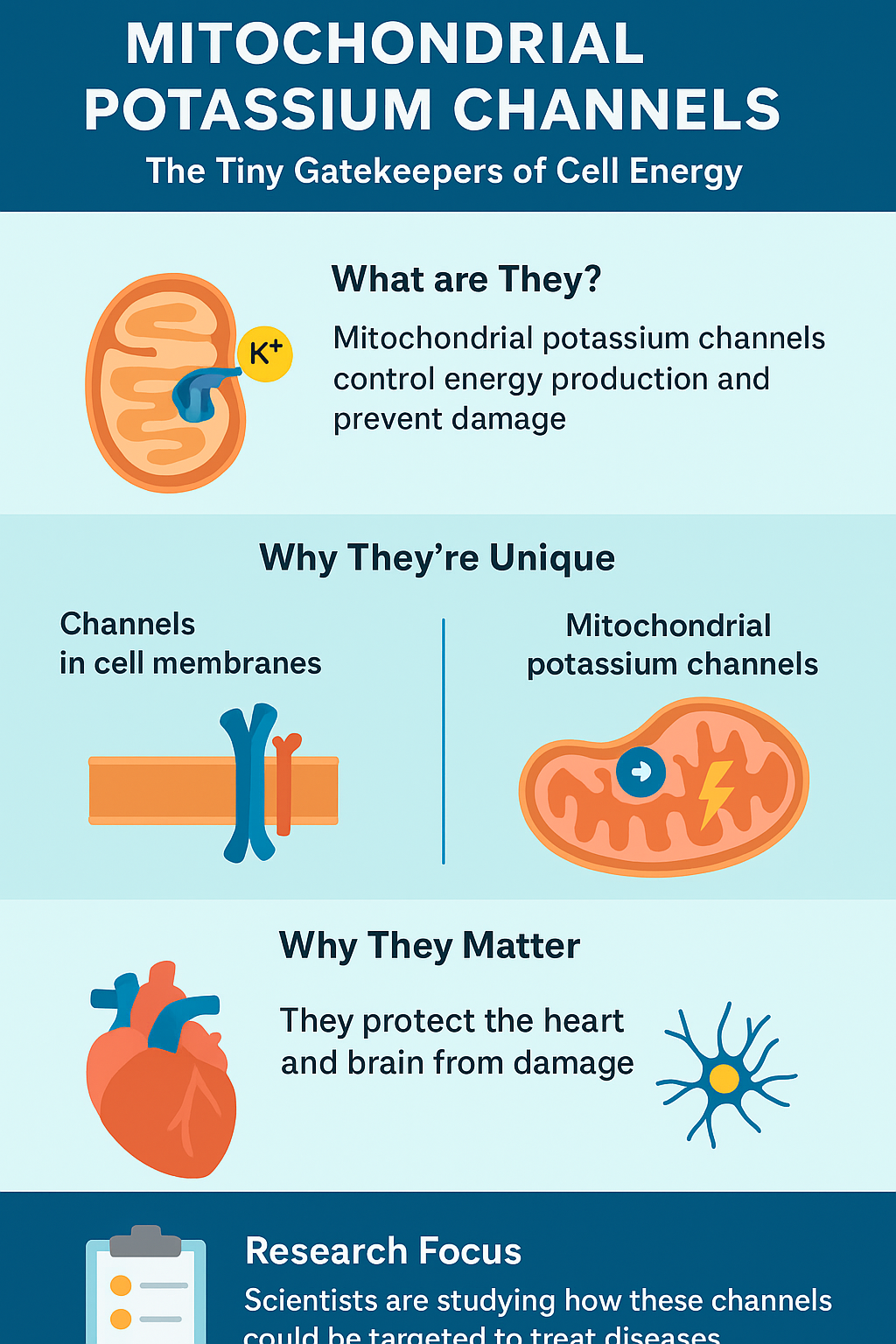
These channels act like microscopic gates that allow potassium ions (K⁺) to flow in and out of mitochondria. This movement of potassium helps the cell control how much energy it produces, how it responds to stress, and whether it survives difficult conditions such as a lack of oxygen.
Why are they special?
Potassium channels are well known in the outer cell membrane, where they help nerves send signals and the heart maintain its rhythm. But in mitochondria, they work in a completely different environment — one filled with high voltage, reactive oxygen species (ROS), and unique lipids such as cardiolipin. Because of this, mitochondrial potassium channels are regulated by many signals, including calcium, ATP levels, and even metabolic molecules like heme.
Why do they matter?
These channels protect cells in the heart and brain from damage. For example, opening potassium channels in mitochondria can help the heart survive a heart attack by reducing harmful stress. In the brain, they help neurons resist overload and oxidative damage.
What are scientists looking for?
Researchers are now trying to understand exactly how these channels are built and how they interact with other mitochondrial proteins. This knowledge could help develop new therapies for heart disease, neurodegenerative disorders, and cancer.