Multi-Decadal shoreline dynamics of Ras El-Bar, Nile Delta: Unraveling human interventions and coastal resilience
Published in Earth & Environment and Sustainability
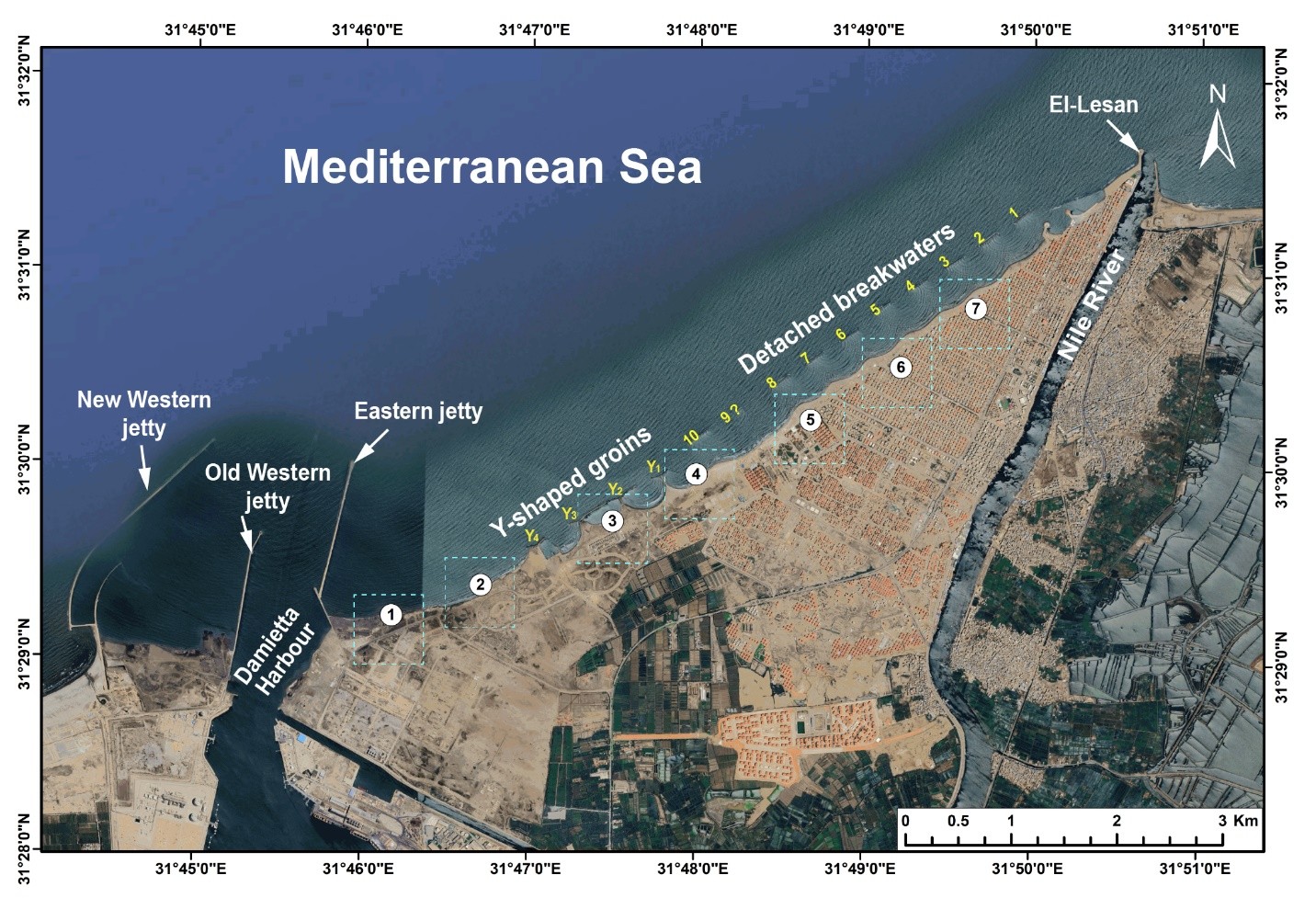
The results suggest good consistency, with high confidence, between the two methods, with an average r value of 0.86, R2 value of 0.92, and RMSE value of 23.11 m. The findings highlight the impact of Damietta Harbour (DH) on coastal morphodynamics, with continuous erosion observed over the Eastern Jetty (EJ) of the DH (sectors 1 to 4) from 1984 to 2020. From 2020 to 2024, the extension of DH’s jetties created a shadow zone with appreciable accretion east of EJ at sector 1. Moreover, the construction of the Aswan High Dam (AHD) induced sediment entrapment that nourished the coast. Several protection structures have been implemented to mitigate inundation and damage to infrastructure and to secure coastal stability along the Ras El-Bar resort. These structures include three groins, a revetment, eight detached breakwaters (DBWs), and four Y-shaped groins. Among these, the detached breakwaters have proven to be the most effective structures for ensuring coastal stability and maintaining a beach suitable for resort activities. These findings inform adaptive coastal management strategies to optimize tourism, protect critical infrastructure, and sustain natural coastal processes, providing policymakers with actionable insights to enhance the resilience of Ras El-Bar against erosion, sea-level rise, and climate change, while supporting sustainable development in this socioeconomically vital region.

An accomplished Quaternary Geologist and coastal Geo-Environmental Manager, possessing over 40 years of expertise in addressing coastal geological challenges and emphasising human interaction with coastlines within the context of Integrated Coastal Zone Management (ICZM), sustainability, and resilience to climate and sea level fluctuations. Supervising and carrying out tens of research projects and scientific publications related to the profession.
Follow the Topic
What are SDG Topics?
An introduction to Sustainable Development Goals (SDGs) Topics and their role in highlighting sustainable development research.
Continue reading announcement


Please sign in or register for FREE
If you are a registered user on Research Communities by Springer Nature, please sign in