Northward Gulf Stream migration 300 years ago
Published in Earth & Environment
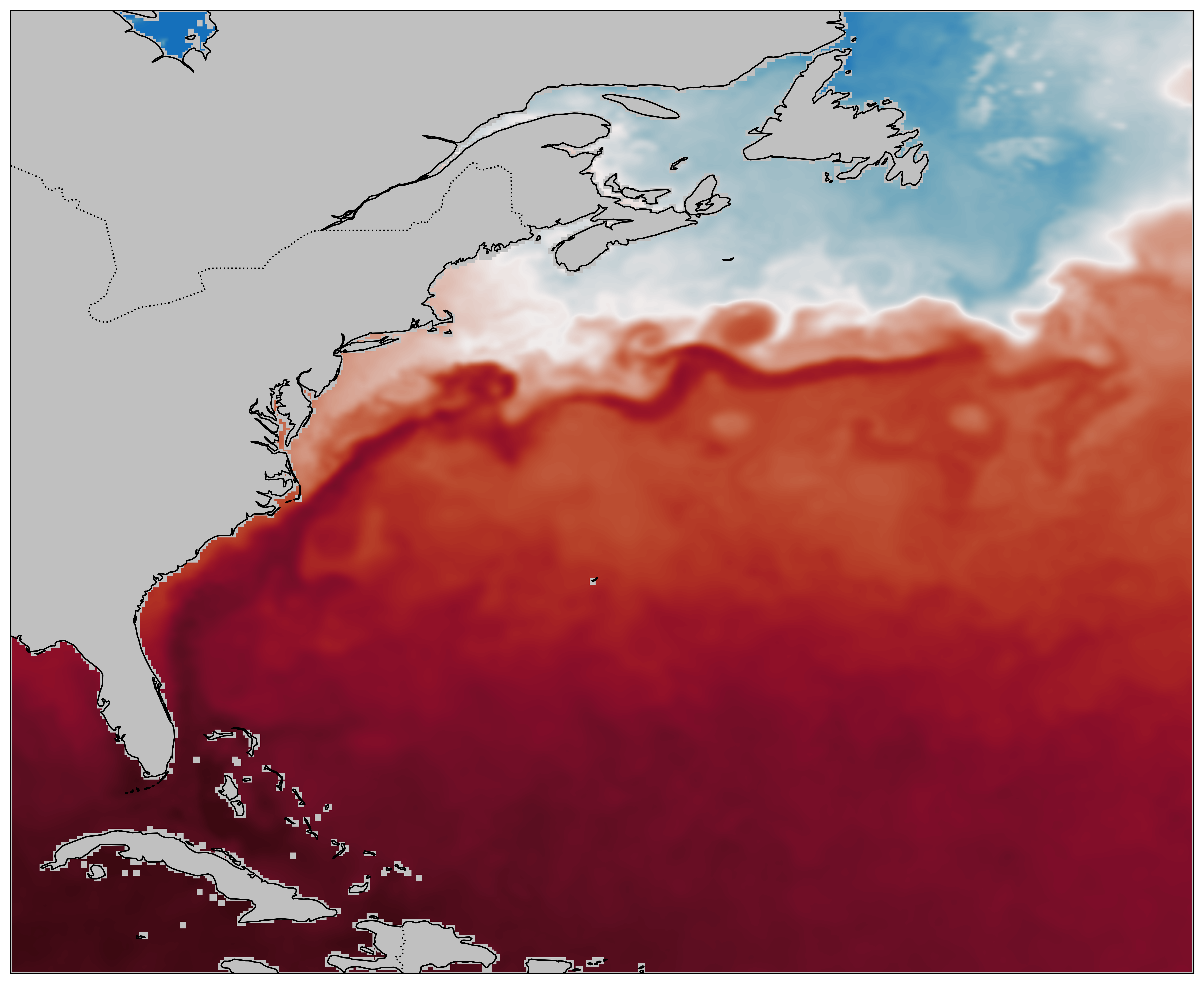



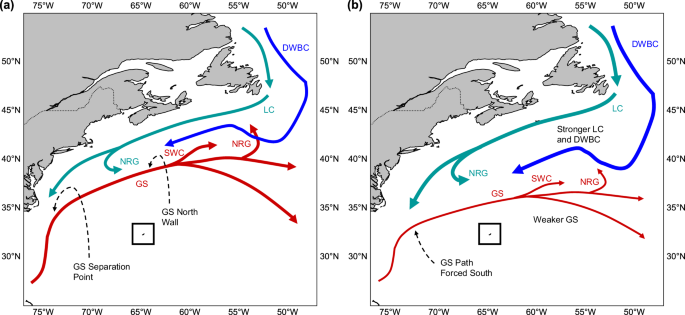

The Gulf Stream is a major ocean current transporting warm water from the Gulf of Mexico east towards Western Europe, influencing regional climates. It forms part of the Atlantic Meridional Overturning Circulation (AMOC), a system of ocean currents responsible for redistributing heat northward. Studies show that Gulf Stream path is intrinsically linked to AMOC strength and that it is currently moving northward with modern day AMOC weakening. There is increasing concern about the forecasted AMOC response to rising global temperatures, with some warning of a tipping point being crossed within the next few decades. If there is a substantial AMOC slowdown there would likely be regional cooling of up to 15°C in the North Atlantic, shifts in precipitation patterns, more frequent and intense storms, and additional sea level rise. However, because instrumental records of AMOC strength are short, there is debate as to when the AMOC started weakening and by how much. Palaeoclimate proxy data can help us better understand the system and its sensitivity by uncovering its past changes.
Our new study (see Forman et al. 2025 - https://doi.org/10.1038/s43247-025-02446-3) reconstructs over five centuries (1449-2013 CE) of monthly sea surface temperatures (SSTs) in the Common Era using a stalagmite from Leamington Cave, Bermuda. We show that the stalagmite magnesium (Mg) concentrations are capturing SST variability via a connection to seaspray. When SSTs are colder, surface wind speeds tend to be higher leading to more seaspray, which then contributes to the dripwater feeding the stalagmite. Because rainfall has a low and sea water a very high Mg concentration, Mg and SST are inversely linked. Our new reconstruction shows a clear signal after ~1850 CE, coinciding with the rise in atmospheric greenhouse gas concentrations. However, it also shows sustained high SSTs interval before ~1720 CE followed by cooling up to the 1850 CE minimum.
Pre-1850 the Northern Hemisphere experienced a prolonged cold interval called the Little Ice Age (LIA). So, if the Northern Hemisphere was colder than today, why were Bermudan SSTs so high pre-1720?

We show that the Bermudan temperature trends exist alongside opposite trends in more northern records. This thermal seesawing across latitudes hints at a wide scale physical shifting. Previous studies have shown that the northern cold currents (including the Labrador and Deep Western Boundary Currents) were stronger during this interval and the Gulf Stream was weaker. We suggest that as a result the Gulf Stream was forced south during the LIA, lowering SSTs on the northeast coast of North America and raising Bermudan SSTs. Then, as the LIA abated, the Gulf Stream migrated northward, leading to cooling in Bermuda and warming to the north. Northward movement of the Gulf Stream during the LIA could strengthen the case for an early onset of AMOC weakening and provide not only an insight into past Gulf Stream path dynamics but also AMOC strength.

Follow the Topic
-
Communications Earth & Environment
An open access journal from Nature Portfolio that publishes high-quality research, reviews and commentary in the Earth, environmental and planetary sciences.

Related Collections
With Collections, you can get published faster and increase your visibility.
Ecological resistance and resilience under global change
Publishing Model: Open Access
Deadline: Apr 07, 2027
Hazards in Mountain Regions
Publishing Model: Open Access
Deadline: Nov 02, 2026