NPB Editor's Choice

Share article titled "Nidulin stimulates glucose uptake in myotubes through the IRS-AKT pathway and alters redox balance and intracellular calcium"
Like

Share this post

Choose a social network to share with, or copy the URL to share elsewhere

This is a representation of how your post may appear on social media. The actual post will vary between social networks

Explore the Research

SpringerLink
SpringerLink SpringerLink

Nidulin stimulates glucose uptake in myotubes through the IRS-AKT pathway and alters redox balance and intracellular calcium - Natural Products and Bioprospecting

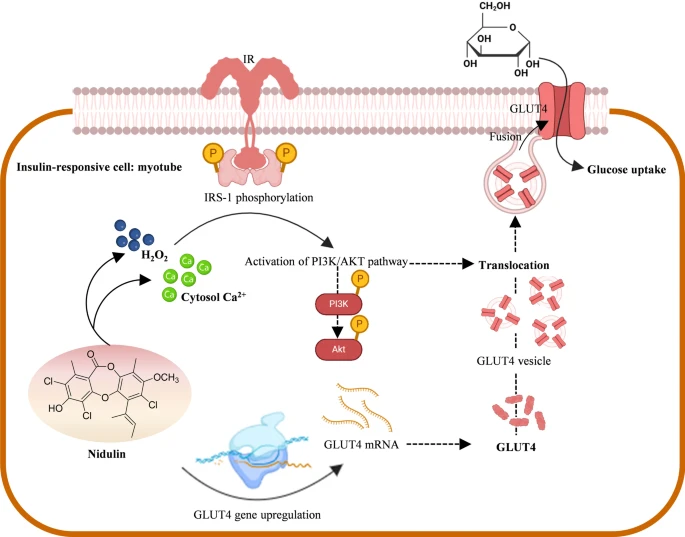
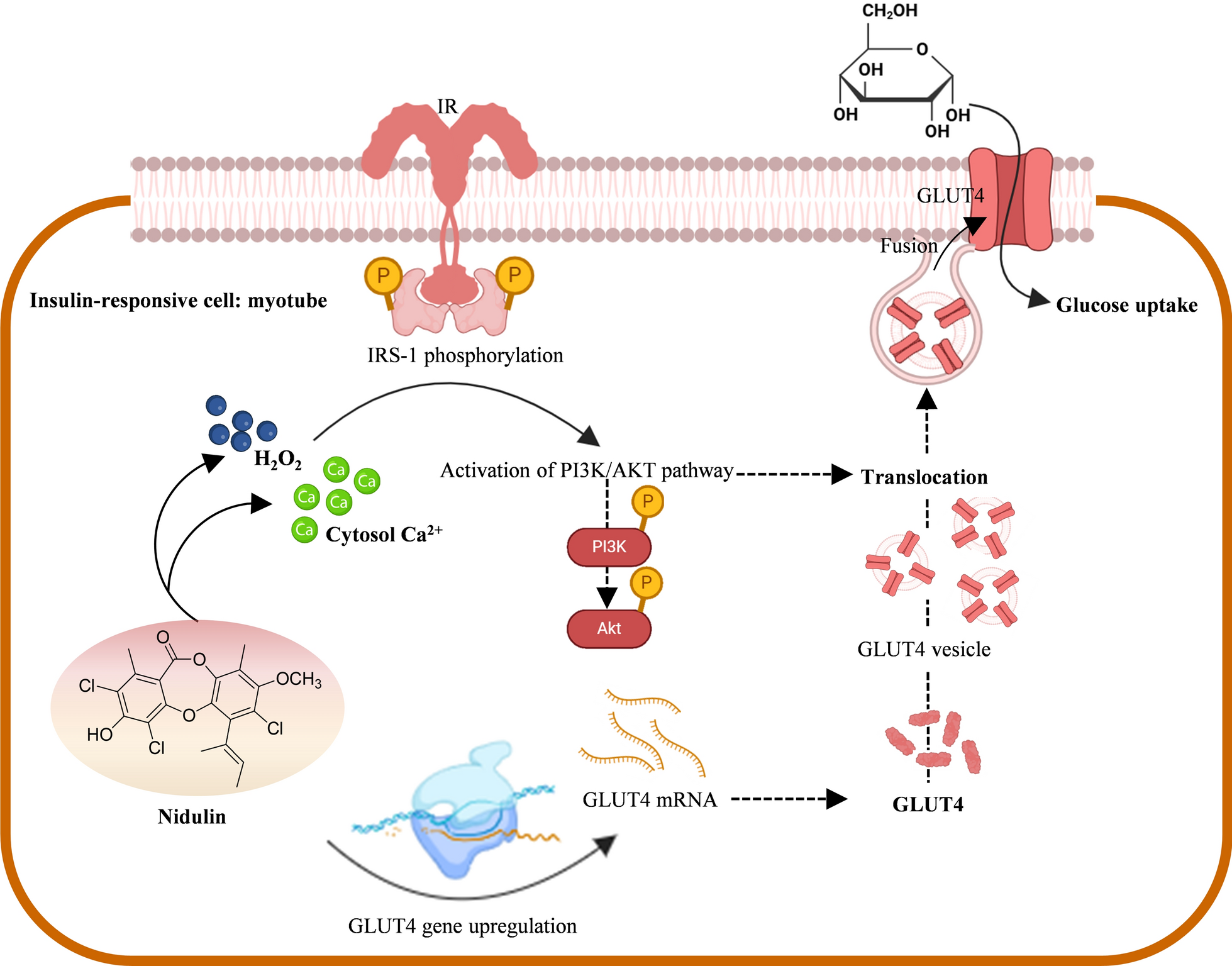
Nidulin is a secondary metabolite of the depsidone family produced by Aspergillus spp., and has shown promises in pharmacological applications. This study aimed to investigate the effect of nidulin on glucose metabolism in skeletal muscle, the primary site of physiological glucose disposal, and its underlying mechanisms. Using a 2-[3H]-deoxy-glucose (2-DG) uptake assay, nidulin stimulated 2-DG in L6 myotubes in a dose- and time-dependent manner. This effect of nidulin was additive to insulin and metformin, and remained effective under palmitic acid-induced insulin resistance. At the molecular level, nidulin upregulated the mRNA expression and promoted membrane translocation of glucose transporters, GLUT4 and GLUT1. Although nidulin activated AMPK and p38 signaling, pharmacological inhibition of this pathway had minimal effect on nidulin-enhanced 2-DG uptake activity. Notably, nidulin activated key insulin signaling proteins, including IRS1, AKT, and p44/42, and its effect was attenuated by an AKT inhibitor. This study further compared the upstream mechanism of nidulin with that of insulin. While nidulin did not directly activate the insulin receptor β-subunit, it modulated redox homeostasis and intracellular calcium, evidenced by increased cytosolic H₂O₂ and Ca2⁺ levels. The 2-DG uptake-enhancing effect of nidulin and its activation of AKT were suppressed by either an antioxidant or calcium chelator treatment. These findings position nidulin as a promising insulin-sensitizing agent, offering mechanistic insights and therapeutic potential for improving glucose homeostasis in type 2 diabetes. Graphical Abstract

Nidulin—a fungal depsidone capable of substantially activating the PI3K/AKT signaling pathway independent of the insulin receptor—effectively transforms L6 myotubes into highly efficient glucose-clearing systems, even under conditions of palmitate-induced insulin resistance. By integrating redox and Ca²⁺ signaling to promote both GLUT4 translocation and transcriptional upregulation of GLUT1 and GLUT4, nidulin exhibits robust insulin-mimetic activity without requiring a functional insulin receptor. In vivo studies have already indicated initial tolerability, positioning it as a strong candidate for advancement into animal models of type 2 diabetes. Given its distinct mechanism of action, nidulin represents a promising first-in-class small-molecule insulin sensitizer with potential for monotherapy or combination regimens. For researchers seeking novel therapeutic candidates, nidulin warrants immediate consideration for inclusion in preclinical development pipelines.

Please sign in or register for FREE

If you are a registered user on Research Communities by Springer Nature, please sign in

Go to the profile of Ling Zhang
about 1 hour ago

For researchers seeking novel therapeutic candidates, nidulin warrants immediate consideration for inclusion in preclinical development pipelines.