Origin matters: Where does the biodiversity impact of your lunch actually come from?
Published in Earth & Environment, Sustainability, and Agricultural & Food Science
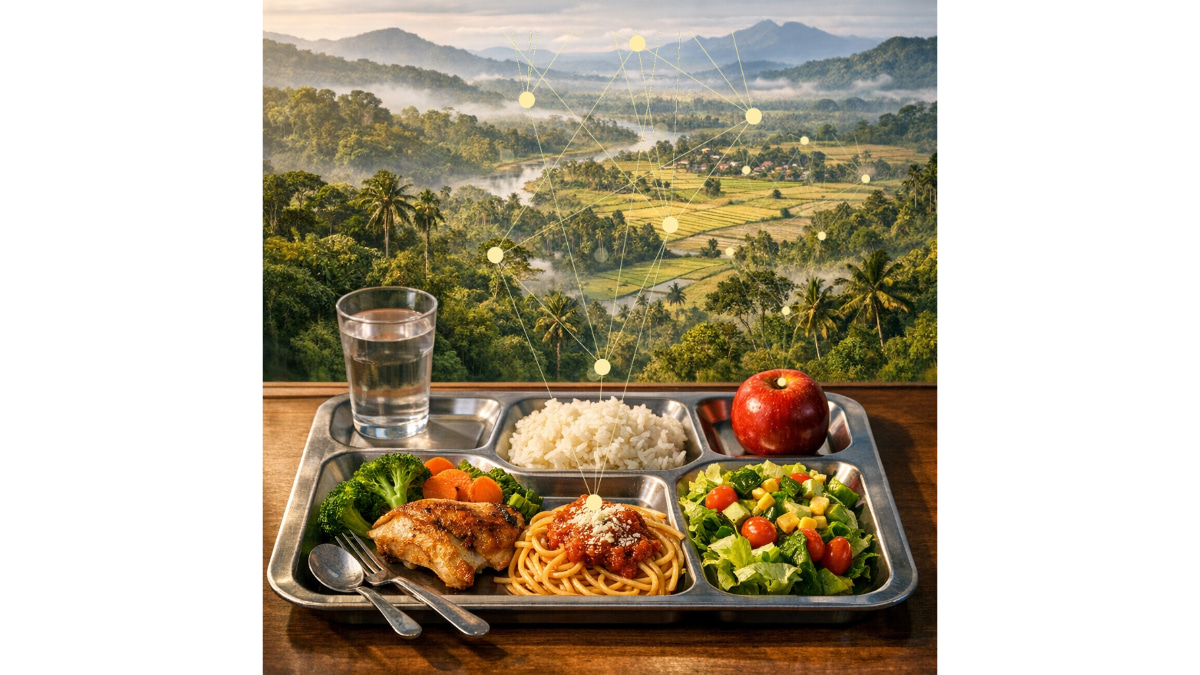

We often talk about the environmental footprint of food as if it were one number. But biodiversity does not work like carbon. Where food is produced matters enormously, and tracing those origins can completely change which products and places appear most harmful.
Most institutions start their sustainability journey with carbon. I did too. One of my first major projects at the University of Hohenheim was helping build the university’s first greenhouse gas inventory. It felt like an important milestone, but once the numbers were on the table, I started noticing what was missing. Food - consumed by thousands of students and staff every day. We later added it through a consumption-based carbon footprint. That gave us a credible first estimate and a bigger question: if carbon is only one part of the story, what are we missing about biodiversity?
Beyond carbon
The problem is that biodiversity is much harder to measure than carbon.
With carbon, averaging is often acceptable: a tonne of CO₂ has the same warming effect wherever it is emitted. Biodiversity is different. The same agricultural activity can have very different effects depending on where it happens. The ecological consequences, e.g. of converting land or nutrient leaching into water bodies, can differ by orders of magnitude depending on where it lands and may threaten species-rich and fragile ecosystems.
Why origins matters
My first biodiversity assessments followed the same path many organisations take: start with what is available. We used existing tools and databases to estimate the biodiversity footprint of university procurement, and the results were genuinely helpful as a first overview. The more I worked with them, the more the gaps became apparent.
That feeling sharpened through conversations with colleagues from ecology, agronomy, modelling, and conservation. What struck me most was how differently they thought about place. For people working directly with biodiversity in the field, location is never a detail. A pressure is not just “land use” in the abstract, it is land use somewhere, affecting particular species and ecosystems. Again and again, one concern came up: if biodiversity assessments are supposed to support action, they need to reflect where impacts actually occur.
That became the starting point for this work.
What we did
We analysed one full year of food procurement data from a German institutional canteen, covering about 200 tonnes of food and around 211,000 meals. Instead of assigning each food item a single global-average biodiversity footprint, we traced ingredients back to the countries where they were likely produced, then combined those origin data with location-specific impact factors. This allowed us to estimate impacts from land use, irrigation water use, freshwater eutrophication, and climate change. In short, we moved from "how harmful is this product on average?" closer to "where was it produced, what pressures occurred there, and how ecologically sensitive is that place?" That shift changed the picture considerably.
Once we moved away from global averages, different products and sourcing regions emerged as the main hotspots. Method and data choices, in other words, do not just affect technical details, they can change what an organisation sees as a priority.
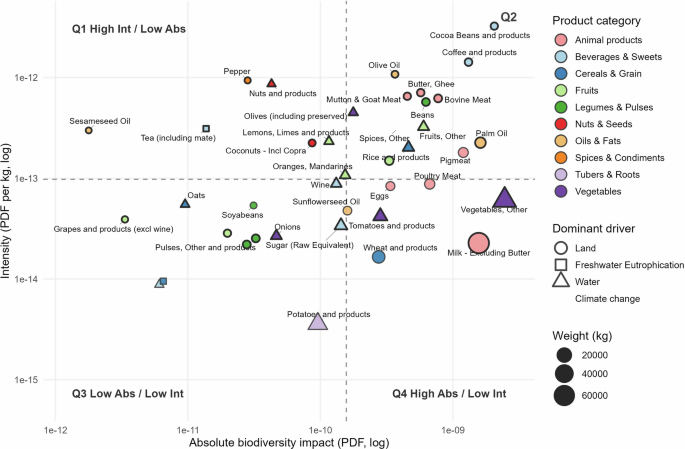
A small number of commodity–region–driver combinations accounted for a disproportionate share of total impact. The canteen's biodiversity footprint was not spread evenly across everything it bought. Including multiple drivers also mattered: land-use impacts were concentrated in tropical sourcing regions, while water-use impacts shifted attention toward water-stressed areas.
Some findings were expected. Animal products remained major contributors overall. But tropical commodities such as cocoa, coffee, and palm oil rose sharply once origin and ecological sensitivity were included. These products may not dominate by weight, but they carry high biodiversity impacts per kilogram when sourced from sensitive regions. Vegetables also became more important once water stress was factored in, not because they are worse than animal products, but because biodiversity impacts are more complex than a simple good-food/bad-food divide.
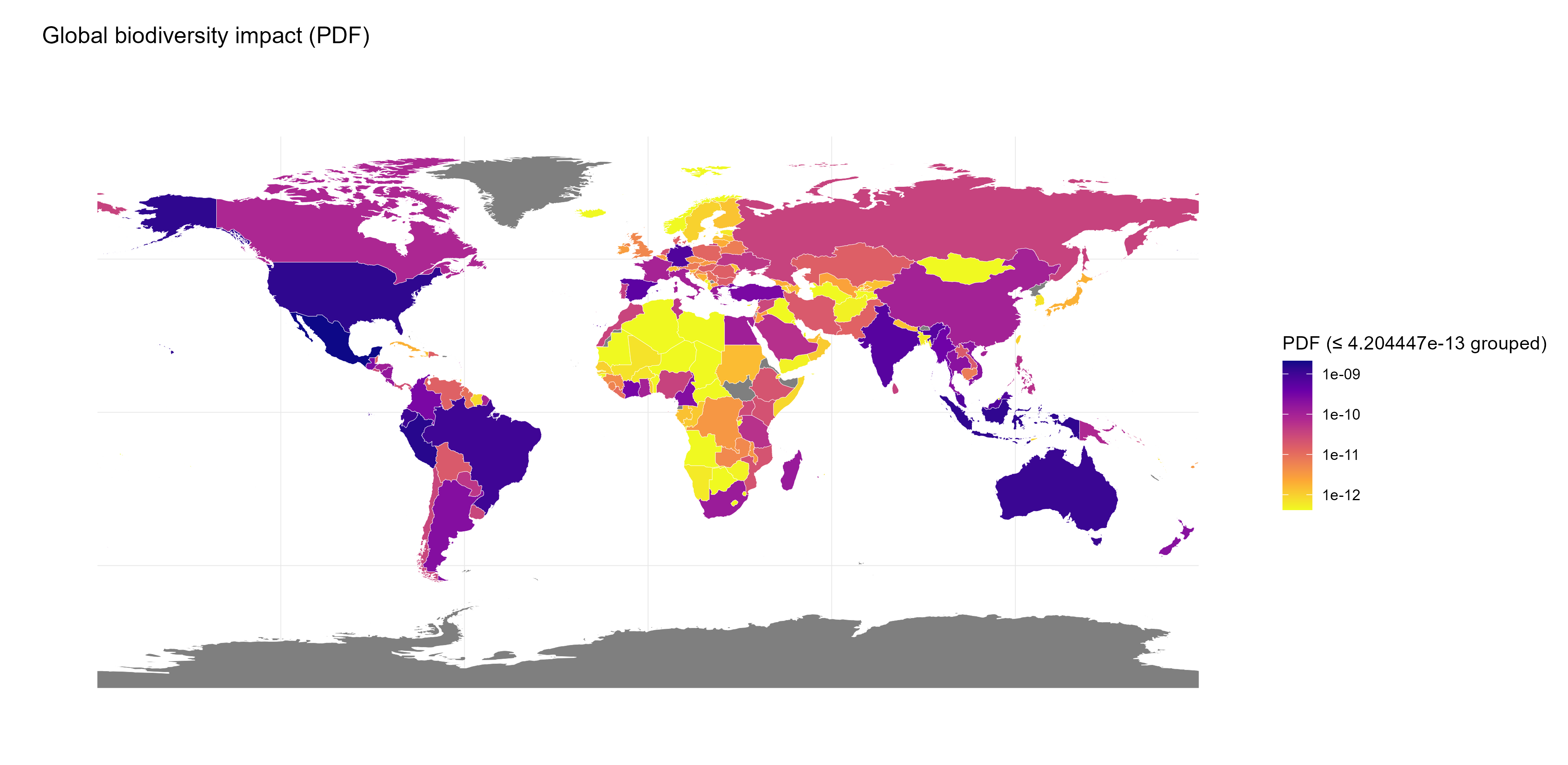
The geography was also revealing. Although the food was consumed in one canteen in Germany, the pressures were distributed globally, concentrated particularly in Middle and South America and the Asia-Pacific region.
Why it matters
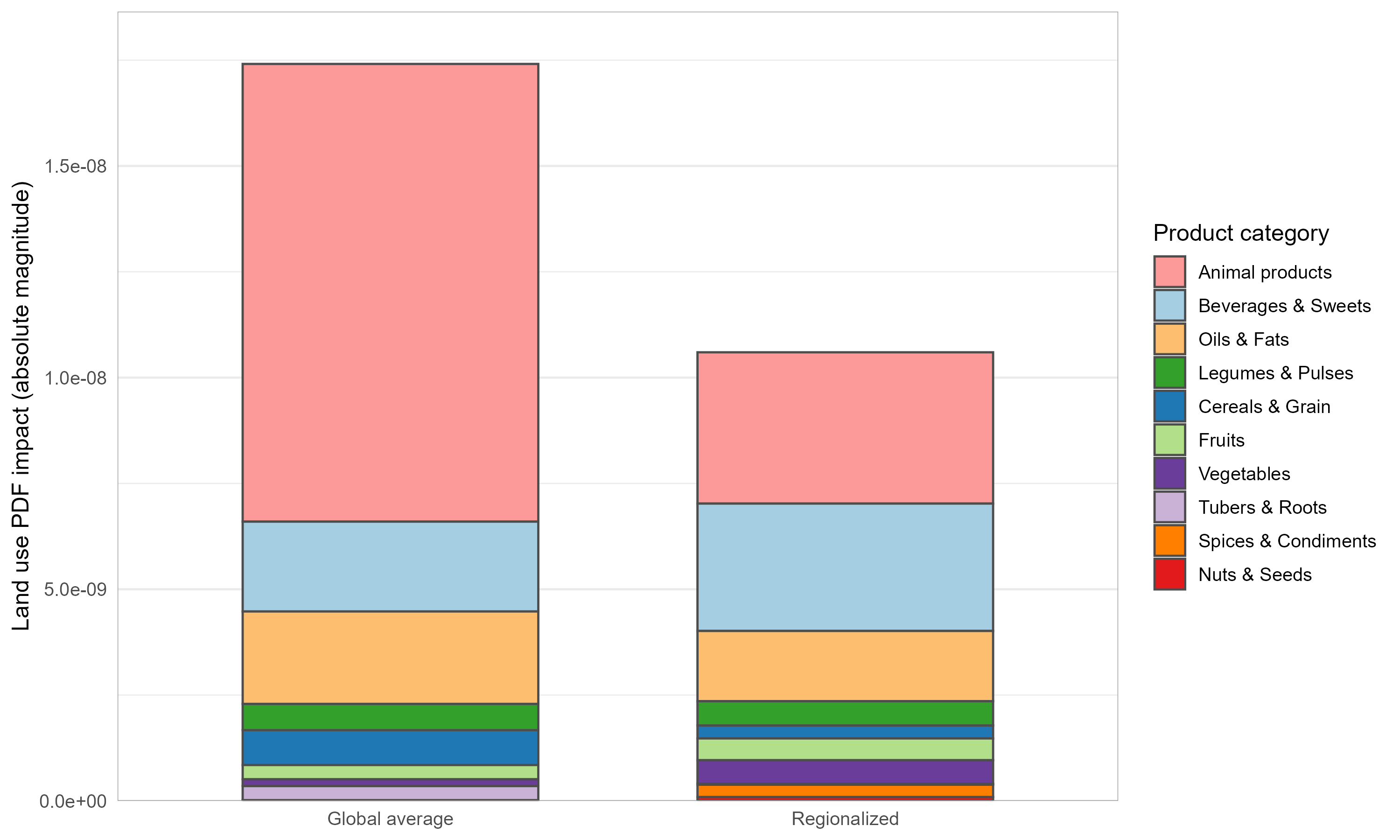
If organisations want biodiversity assessments that are useful for action, average footprints are not enough. Averages are a good starting point. But if the goal is to decide where to intervene, which products to reduce, which suppliers to focus and collaborate with, which regions deserve attention, then origin matters (see Figure for comparison of land use impacts in a global average vs regionalized approach).
This is especially relevant for institutions like universities, schools, hospitals, and public canteens. They make recurring food purchasing decisions at a scale that is large enough to matter, but still concrete enough to change.
Our results suggest two broad strategies: focusing on high-volume staples, where total impact is driven by quantity; and focusing on strategic hotspots, where both total and per-unit impacts are high and procurement choices matter more directly.
A canteen is not just a place where people eat lunch. It is one of the most direct levers an institution has to align sustainability commitments with everyday practice. If there is one lesson I take from this work, it is that the biodiversity cost of a meal is not a single number. It is a map, and the more carefully we draw it, the better equipped we are to change what ends up on the plate.
What comes next
This paper answered one question, but it opened several more. How stable are these hotspots across different biodiversity models? What happens when procurement teams and caterers are actually given this kind of information? Which forms of evidence help them act, and which are too abstract to be useful?
There is also a more ambitious horizon. If the goal is not just to assess impact but to inform decisions, we need to move closer to management options. That requires more granular spatial data on actual suppliers. Local-level suggestions depend on local-level knowledge: which suppliers operate in which landscapes, what practices they use, and how those practices interact with the biodiversity of specific places. At the same time, this finer resolution would allow us to capture something the current approach cannot: the potential benefits. Procurement that actively supports well-managed, species-rich farmland, or that redirects demand toward lower-pressure landscapes, may generate measurable biodiversity gains, gains that remain invisible when the analysis stops at impact reduction.
And there is a broader challenge still: How do we design food systems that are lower-impact, nutritionally adequate, affordable, and acceptable to the people eating in them every day? That is not just a biodiversity question. It sits at the intersection of ecology, nutrition, behaviour, and governance.

Follow the Topic
-
Communications Sustainability
An open-access journal publishing high-quality, editorially selected and peer-reviewed advances in all sustainability-related areas of science, including the natural and social sciences as well as engineering.

What are SDG Topics?
An introduction to Sustainable Development Goals (SDGs) Topics and their role in highlighting sustainable development research.
Continue reading announcementRelated Collections
With Collections, you can get published faster and increase your visibility.
Carbon Dioxide Removal
Publishing Model: Hybrid
Deadline: Jan 16, 2027
Ecological resistance and resilience under global change
Publishing Model: Open Access
Deadline: Apr 07, 2027