Performance of a hybrid reactor system for the biological treatment of dye rich wastewater using textile effluent adapted microbial community
Published in Bioengineering & Biotechnology and Earth & Environment
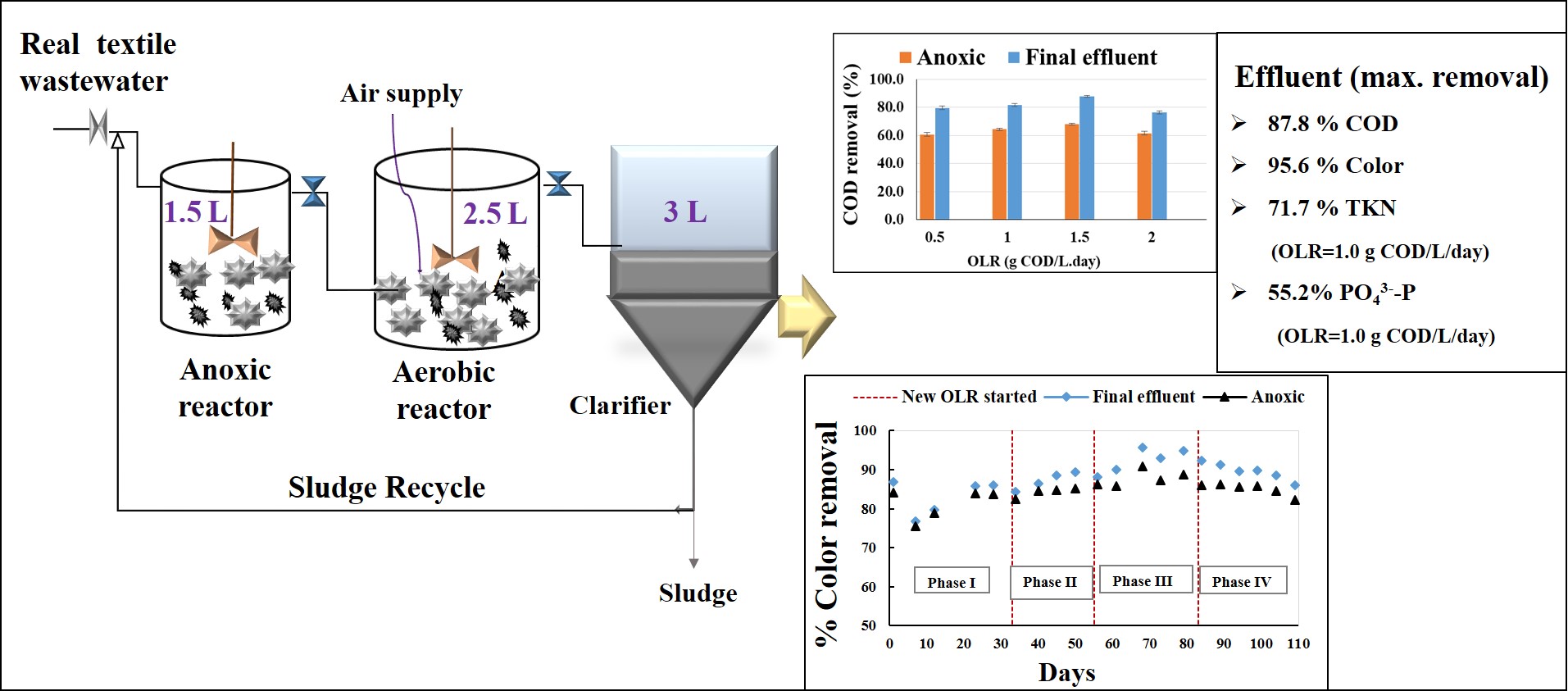



Behind the research published in Discover Environment (2026) lies a story of shifting scientific focus—from searching for external "super-bugs" to realizing that the best solution was already living within the waste itself. My team and I set out to tackle one of the textile industry’s most persistent environmental threats: dye-rich wastewater. While many researchers, including our own past work, looked to extreme environments like alkaline soda lakes for powerful microbes, this study proved that indigenous communities directly adapted to the textile effluent are often the most resilient and efficient degraders.
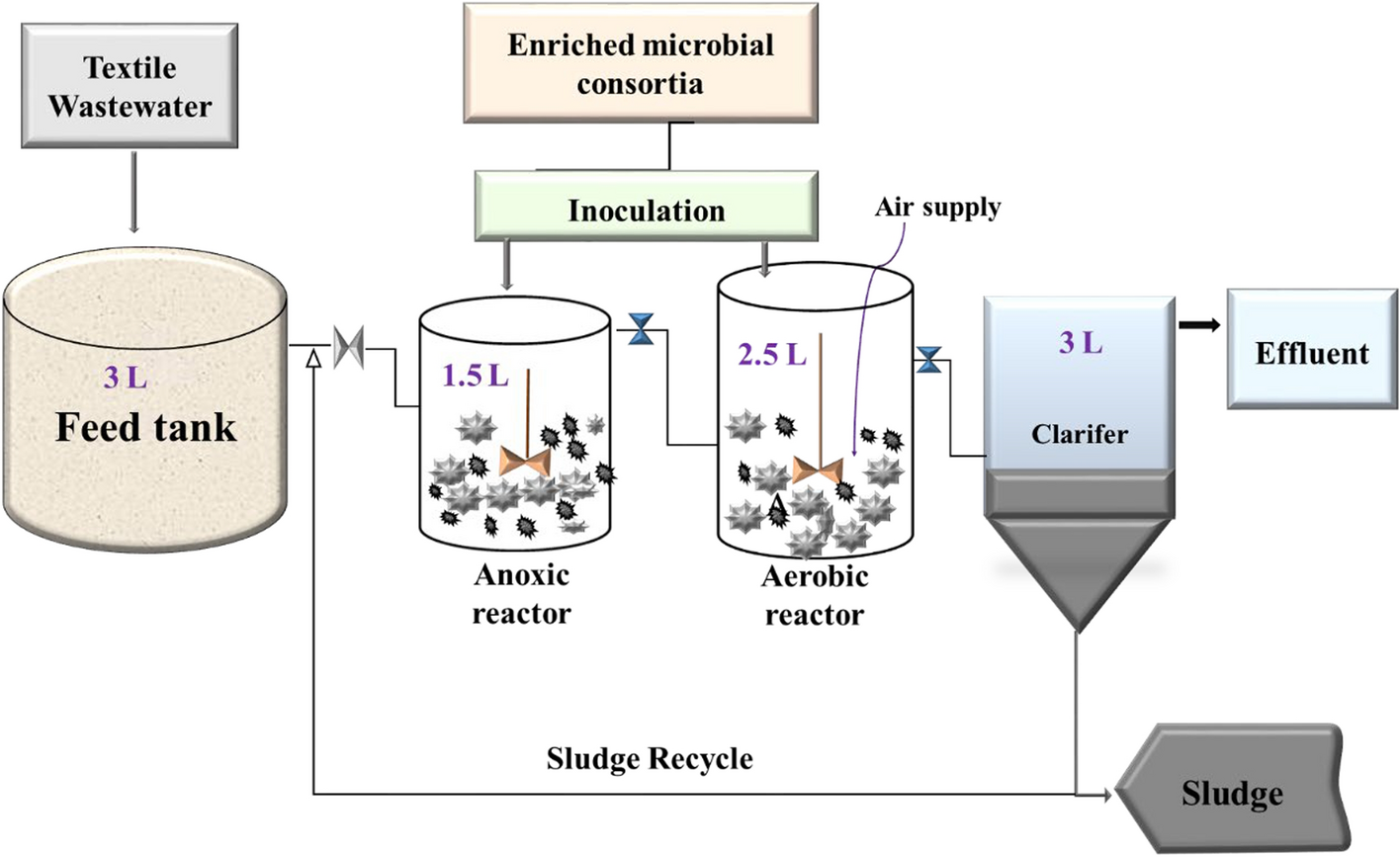
The "untold story" of this work is the meticulous balance required to treat parameters that are rarely addressed collectively in existing literature, such as the simultaneous removal of wastewater test parameters. We designed a unique sequential anoxic/aerobic (SAn/A) hybrid reactor system—a setup often simplified in other studies but here tested with real-world, high-strength wastewater under varying organic loading rates (OLRs).
Key highlights and challenges from our journey include:
- The Power of Adaptation: We spent four and a half days purely on microbial acclimatization, watching for the moment the deep dye color would finally vanish, signaling that our effluent-adapted community was ready.
- The Anoxic/Aerobic Synergy: We discovered a clear division of labor: the anoxic stage was the powerhouse for color removal (reaching up to 90.9% on its own), while the aerobic stage was essential for polishing COD and managing nutrients.
- A "Realistic" Success: By avoiding external nutrient supplements or pH adjustments, we achieved a maximum color removal of 95.6% and COD removal of 87.6%. This makes our findings directly applicable to textile industries striving for environmental compliance.
- The Ongoing Nutrient Puzzle: One of our most honest findings was that while we excelled at decolorization, the aerobic stage actually increased nitrate concentrations. This highlights a critical need for the research community to develop better post-treatment nutrient management strategies.
This work serves as a reminder that sustainable engineering often means listening to the environment we are trying to fix—and that the most effective microbial allies might be the ones already surviving in the harshest industrial conditions.

Follow the Topic
-
Discover Environment
This is a transdisciplinary, open-access journal that provides a leading platform for the rapid dissemination of knowledge and advances covering the research and innovation that is taking place across the environmental sector.

Related Collections
With Collections, you can get published faster and increase your visibility.
Mapping Sustainability: Geospatial Tools for Environmental Challenges
The escalating complexity of global ecological challenges demands innovative approaches to understanding, monitoring, and managing the environment. Geospatial technologies, including Geographic Information Systems (GIS), remote sensing, and spatial analytics, have become indispensable tools in addressing these issues. These technologies have demonstrated remarkable impact across various domains. For instance, in disaster management, the NASA-Disaster Response Coordination System utilizes satellite imagery and GIS analytics to assess damages from natural calamities, while the Copernicus Emergency Management Service (EMS) provides real-time mapping and early warning systems. In biodiversity conservation, initiatives like Global Forest Watch (GFW) and the Integrated Biodiversity Assessment Tool (IBAT) employ satellite data and spatial datasets to monitor deforestation and support conservation planning. Additionally, in urban sustainability, projects such as the Landsat Urban Heat Mapping Initiative help urban planners mitigate rising temperatures through targeted green infrastructure solutions.
This collection, "Mapping Sustainability: Geospatial Tools for Environmental Challenges," addresses critical gaps in the current literature by showcasing pioneering research that leverages geospatial technologies to confront urgent environmental issues. While existing research extensively explores geospatial methods, there is a significant need for more integrated, interdisciplinary approaches that translate data-driven insights into actionable solutions for sustainability. This collection advances the field by bridging science and policy, enhancing urban sustainability, advancing climate resilience, promoting data-driven conservation, and innovating spatial decision support systems (SDSS). Contributions that emphasize interdisciplinary research, innovative case studies, global perspectives, and policy insights are highly encouraged.
Keywords:Geospatial Technologies; Environmental Sustainability; Climate Change Analysis; Biodiversity Conservation; Pollution Monitoring; Water Resource Management; Spatial Data Analytics; Sustainable Development; Ecological Resilience; Geospatial Modeling; Spatial Decision Support Systems (SDSS); Remote Sensing Applications; Sustainable Urban Planning; Land Use and Land Cover Change (LULC); Disaster Risk Reduction (DRR); Ecosystem Monitoring; GIS-based Policy Analysis; Smart Cities and Resilient Infrastructure
Publishing Model: Open Access
Deadline: Jan 31, 2027
Monitoring environmental pollution and impact on health
The intensification of human activities and the expansion and densification of urban areas cause various damages to the environment, necessitating continuous monitoring to assess the impact and extent of potential risks to both the environment and human health, in order to ensure urban sustainability.
This collection, “Monitoring Environmental Pollution and Impact on Health,” invites contributions that utilize tools related to health impact assessment, human health risk, ecological risk, data modeling, geospatial data, and Geographic Information Systems (GIS) to analyze impacts within urban environments. We also encourage the publication of research on the dynamics of pollution and health in rural and peri-urban areas, interdisciplinary studies between environmental sciences and public health, epidemiology, and urban planning for a holistic assessment of the multifaceted impacts of pollution on human well-being. In addition, studies that contribute actionable policy recommendations for local governments, environmental agencies, or public health institutions dealing with urban pollution are welcome. Research (time series or longitudinal studies) that demonstrate public health trends related to chronic exposure to pollutants, aiming for a better understanding of long-term urban sustainability issues, are also encouraged. Studies addressing health risks for vulnerable populations (such as children, the elderly, or low-income communities) exposed to environmental pollution in densely populated areas are of particular interest. We welcome studies on participatory monitoring and the development of citizen science, empowering communities to act in collaboration with local environmental health surveillance managers. Research involving satellite pollution monitoring and remote sensing is also encouraged. Comparative studies on pollution and health across different regions, identifying critical hotspots and globally replicable mitigation strategies, are of interest. We also welcome research that investigates environmental justice and urban socio-demographic inequalities/disparities in health due to environmental pollution. Review studies and meta-analyses exploring trends, methodologies, and gaps in urban environmental health research are also welcome.
Keywords: Health impact assessment, Environmental quality monitoring (air, water, and soil), Pollution sources and emissions, Spatial analysis, Geospatial technology, Climate change, Urban sustainability, Machine learning, Ecological risk assessment, Human health risk assessment
This Collection supports and amplifies research aligned with the following Sustainable Development Goals (SDGs): SDG 11.
Publishing Model: Open Access
Deadline: Feb 28, 2027





Please sign in or register for FREE
If you are a registered user on Research Communities by Springer Nature, please sign in