Phytoremediation of Heavy Metals in Soil and Water: Converting Ornamental Plants and Green Landscapes into Nature-Based Clean-Up Solutions
Published in Earth & Environment, Electrical & Electronic Engineering, and Agricultural & Food Science
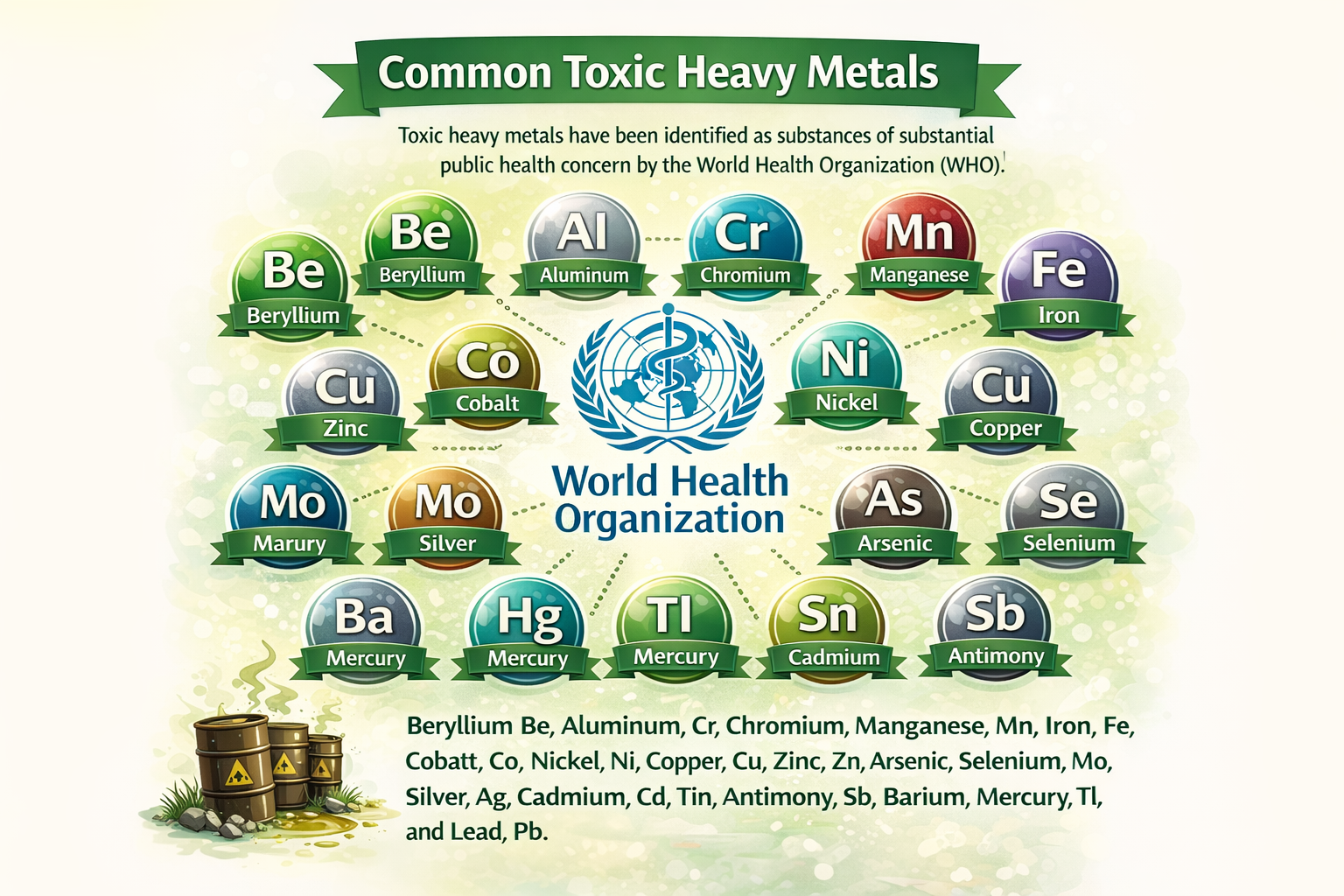
Rapid industrialization, expanding urbanization, excessive application of chemical fertilizers, sewage irrigation, mining activities, and indiscriminate waste disposal have led to alarming levels of heavy metal contamination in soil and water resources worldwide. Toxic metals such as cadmium (Cd), lead (Pb), chromium (Cr), arsenic (As), mercury (Hg), copper (Cu), and zinc (Zn) are persistent, non-biodegradable, and hazardous even at trace concentrations. A major global assessment published in Science reported that approximately 14–17% of the world’s cropland—equivalent to nearly 242 million hectares—is contaminated with at least one heavy metal exceeding established safety thresholds. Consequently, an estimated 900 million to 1.4 billion people reside in high-risk polluted regions, highlighting the grave extent to which these contaminants infiltrate soils, food chains, and water systems, thereby threatening environmental sustainability and human health (American Association for the Advancement of Science, AAAS).
In India, heavy metal contamination has emerged as a widespread and critical environmental issue. A government assessment revealed that 81 rivers and their tributaries contain dangerously elevated concentrations of toxic metals (Central Water Commission). Nationwide monitoring conducted across 328 stations during January–December 2022, 2023, and 2024 (Table 1) showed that approximately 43% of the monitored sites exhibited alarming levels of one or more toxic heavy metals, placing a substantial portion of the population at risk from soil and waterborne metal exposure.
Within floriculture, nursery production, landscaping, and peri-urban horticulture systems, heavy metal contamination not only suppresses plant growth and compromises flower quality but also poses serious ecological and public health concerns. Conventional remediation approaches, such as soil excavation, chemical leaching, or vitrification, are often cost-intensive, environmentally disruptive, and impractical for large-scale or low-input green spaces.
In this context, phytoremediation has gained attention as a sustainable and eco-friendly alternative. This approach exploits the natural capacity of plants to absorb, immobilize, or transform heavy metals, thereby reducing contaminant bioavailability and restoring degraded sites with minimal energy input and chemical intervention (Bhat et al., 2022).
Why Do Heavy Metals Matter to Soil, Water, and Plants?
Heavy metals are persistent, non-degradable, and often bio-accumulative pollutants. Unlike organic contaminants, they do not break down over time and can remain in soil and water for decades. Once introduced into the environment, heavy metals can penetrate plant root systems, accumulate in plant tissues, and leach into groundwater. Their presence in agro-ecosystems and green landscapes leads to several adverse effects, including:
-
Reduction in soil fertility and crop productivity
-
Impairment of plant growth, physiological functions, and flower quality
-
Increased risk to animal and human health through contaminated food and water chains
What Is Phytoremediation?
Phytoremediation is an eco-friendly, plant-based remediation technology that exploits the natural capacity of plants to absorb, accumulate, stabilize, or transform heavy metals present in contaminated soils and water bodies. Through these biological processes, plants help reduce metal toxicity, mobility, and bioavailability, thereby contributing to the restoration of polluted environments.
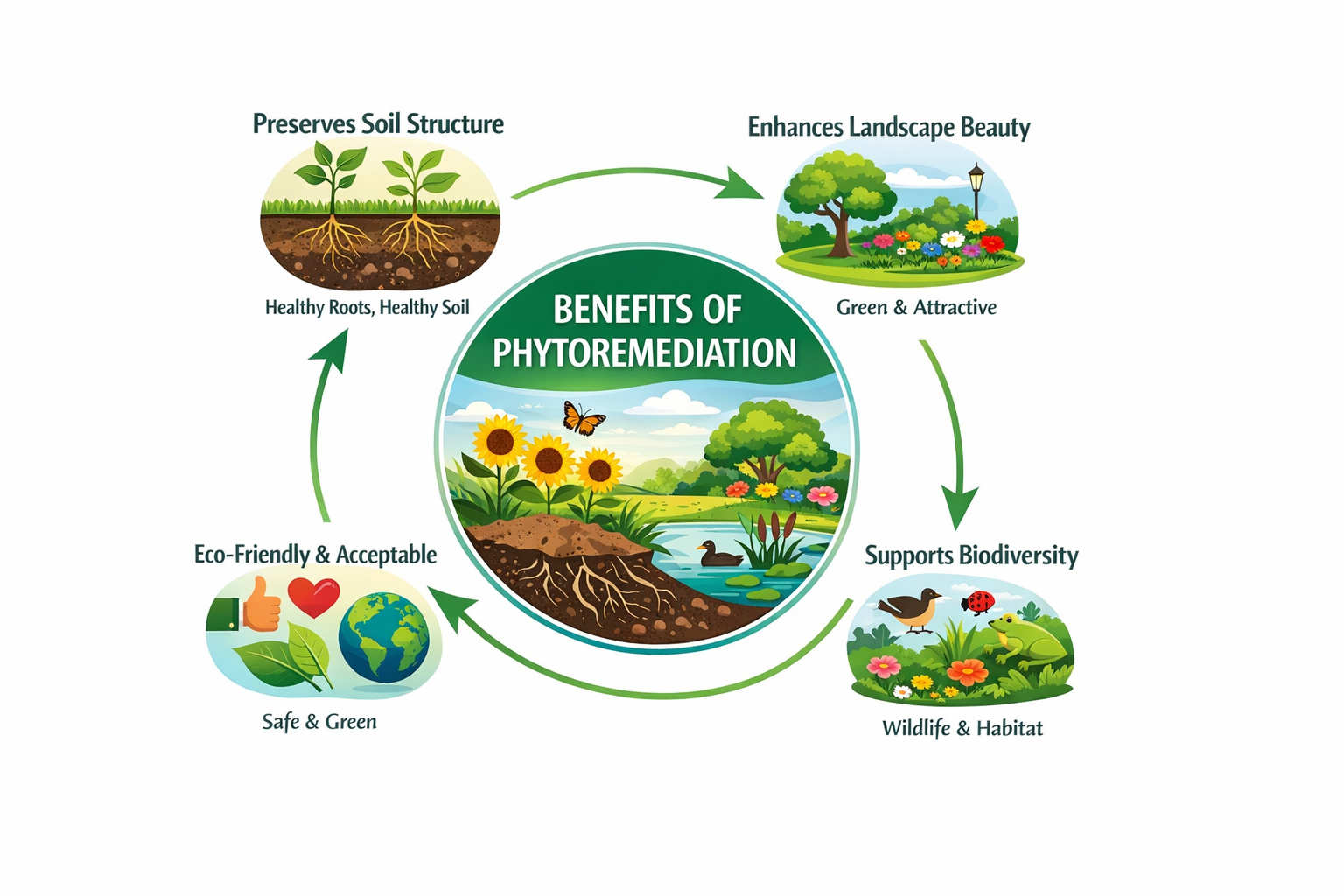
Figure 1: Benefits of phytoremediation
Table 1: Permissible limits and maximum concentrations of selected heavy metals recorded in the water quality of major Indian rivers (2022–2024) are given below-
| Contaminant | Acceptable limit (µg L⁻¹) | Maximum concentration recorded (January–December 2022) | Maximum concentration recorded (January–December 2023) | Maximum concentration recorded (January–December 2024) |
|---|---|---|---|---|
| Arsenic (As) | 10 | 19.47 µg L⁻¹ at River Rind, Kora WQMS | 17.59 µg L⁻¹ at Sengar River (tributary of Yamuna) | 26.63 µg L⁻¹ at Palla WQMS, Yamuna River |
| Cadmium (Cd) | 3 | 5.54 µg L⁻¹ at Gomti River, Lucknow WQMS | 10.59 µg L⁻¹ at Sarabenga River, Thevur WQMS | 6.54 µg L⁻¹ at Ponnaiyar River, Singasadanapalli WQMS |
| Chromium (Cr) | 50 | 87.58 µg L⁻¹ at Brahmaputra River, Udaipur WQMS | 84.61 µg L⁻¹ at Cauvery River, Biligindulu WQMS | 248.90 µg L⁻¹ at Chinnar River, Hogenakkal WQMS |
| Copper (Cu) | 50 | 98.10 µg L⁻¹ at Palar River, Avarankuppam WQMS | 107.01 µg L⁻¹ at Nellithurai WQMS | 160.41 µg L⁻¹ at Ponnaiyar River, Singasadanapalli WQMS |
| Iron (Fe) | 1,000 | 11.39 mg L⁻¹ at Alakananda River, Kirtinagar D/S WQMS | 5.99 mg L⁻¹ at Tambraparani River, Murappanadu WQMS | 21.21 µg L⁻¹ at Cauvery River, Kudlur WQMS |
| Lead (Pb) | 10 | 63.48 µg L⁻¹ at Seetha River, Avershe WQMS | 75.51 µg L⁻¹ at Cauvery River, Kudige WQMS | 117.90 µg L⁻¹ at Chinnar River, Hogenakkal WQMS |
| Mercury (Hg) | 1 | 8.90 µg L⁻¹ at Yamuna River, Palla U/S Delhi WQMS | 4.79 µg L⁻¹ at Godavari River, Rajahmundry WQMS | 3.83 µg L⁻¹ at Arkavathi River, Koggedoddi WQMS |
| Nickel (Ni) |
20 |
69.01 µg L⁻¹ at Pamba River, Madamon WQMS | 66.64 µg L⁻¹ at Cauvery River, Musiri WQMS | 72.11 µg L⁻¹ at Cauvery River, Kudlur WQMS |
*Source of table: Report on Status of Trace and Toxic Metals in Rivers of India, 2022, 2023, and 2024, CWC, Department of Water Resources, River Development and Ganga Rejuvenation, Ministry of Jal Shakti, Govt. of India.
Phytoremediation Mechanisms
Phytoremediation operates through several well-defined biological mechanisms by which plants mitigate heavy metal contamination in soil and water:
1. Phytoextraction (Phytoaccumulation)
Plants absorb heavy metals through their root systems and translocate them to above-ground tissues such as stems, leaves, and flowers. These harvestable plant parts are then removed and safely disposed of, enabling gradual metal removal from contaminated sites. This mechanism is particularly effective when hyperaccumulator or high-biomass plants are used. Species such as sunflower, Indian mustard, marigold, and chrysanthemum are well-suited for phytoextraction.
2. Phytostabilization
In phytostabilization, plants immobilize heavy metals within the root zone or surrounding soil, reducing metal mobility, leaching, and erosion. While this approach does not remove metals from the site, it significantly lowers their environmental and ecological risk. Ornamental grasses, shrubs, and trees are commonly used for this purpose.
3. Rhizofiltration
Rhizofiltration involves the adsorption or absorption of heavy metals by plant roots directly from contaminated water bodies. This technique is especially effective for treating surface water, wastewater, and industrial effluents. Aquatic plants such as water hyacinth, Typha, and duckweed are particularly efficient rhizofiltrators.
4. Phytovolatilization
Certain plant species can transform specific metals into volatile, less toxic forms that are released into the atmosphere. Although relatively rare and metal-specific, this mechanism helps reduce metal concentrations in soil or water.
5. Phytodegradation
In phytodegradation, plant root exudates and associated microbial communities facilitate the breakdown or transformation of metal organic complexes in contaminated soils, thereby reducing toxicity and improving soil health.
Role of Flowers and Ornamental Plants in Phytoremediation: Beauty with a Purpose
Ornamental plants offer a unique advantage in phytoremediation by combining environmental cleanup with aesthetic and ecological value.
Gladiolus and Chrysanthemum
Controlled studies evaluating copper (Cu) and arsenic (As) uptake revealed that Gladiolus grandiflorus and chrysanthemum accumulate significant concentrations of these metals in roots, stems, leaves, and flowers under contaminated conditions. Chrysanthemum, in particular, exhibited superior translocation of metals to aerial parts, highlighting its potential as a phytoextractor in ornamental landscapes (Haseeb et al., 2024). In decorative beds near industrial areas or polluted parks, flowering ornamentals can simultaneously enhance visual appeal and reduce metal contamination (Swetha et al., 2023).
African Marigold (Tagetes erecta) and Bio-assisted Phytoremediation
Studies have demonstrated that combining marigolds with beneficial soil microorganisms enhances plant biomass, chlorophyll content, and heavy metal uptake. This bio-assisted approach improves stress tolerance and remediation efficiency, presenting a promising strategy for restoring contaminated urban green spaces while maintaining ecological and aesthetic functions (Khilji et al., 2024).
Ornamental Amaranthus tricolor
Amaranthus tricolor, an ornamental leafy plant, showed enhanced lead (Pb) and zinc (Zn) uptake when grown in soils amended with organic materials such as sugarcane vinasse. These amendments improved soil remediation factors, suggesting that integrating ornamental plants with organic soil conditioners can significantly boost phytoextraction efficiency (Awad et al., 2021).
Sunflower (Helianthus annuus)
Sunflowers are among the most extensively studied phytoremediation species due to their high biomass production and efficient root systems. They effectively absorb Pb, Cd, and other heavy metals from contaminated soils and wastewater. Sunflowers have been successfully used in agricultural lands near industrial zones to reduce soil metal concentrations prior to food crop cultivation (Pillai and Ayyanar, 2025).
Brassica Species (Mustards and Canola)
Members of the Brassica genus, particularly Indian mustard (Brassica juncea), possess strong root systems and high metal uptake capacity, especially for Cd and Pb. These plants accumulate metals primarily in their shoots, making them effective phytoextractors. However, because many brassicas are edible, strict biomass management is required to prevent entry of contaminants into the food chain (Aoun et al., 2008).
Ferns and Hyperaccumulators
Ferns such as Pteris vittata and Athyrium yokoscense thrive in metal-rich soils and can accumulate arsenic, zinc, lead, and copper in their fronds without exhibiting toxicity symptoms. These species are particularly suited for phytoremediation in industrial, mining, and degraded landscapes.
Aquatic Plants: Water Hyacinth and Typha
Water hyacinth (Pontederia crassipes) efficiently absorbs cadmium, chromium, cobalt, nickel, lead, and mercury from polluted water. Its dense root system supports high metal uptake, making it effective for improving water quality in contaminated ponds, canals, and wetlands. Similarly, Typha latifolia and Eichhornia crassipes exhibit high bioconcentration factors and are widely used in constructed wetlands and wastewater treatment systems (Zhang et al., 2018).
Practical Considerations in Phytoremediation
Biomass Management
Plants that accumulate heavy metals must be harvested and disposed of safely to prevent recontamination. Recommended disposal methods include controlled incineration with metal recovery, secure landfill burial, or extraction of metals from plant biomass.
Soil Conditions and Amendments
Soil pH, organic matter content, and microbial activity strongly influence metal bioavailability. Organic amendments such as compost, mulch, or biochar can enhance root development and metal mobilization, thereby improving phytoremediation efficiency (Awad et al., 2021).
Ecological Integration
Successful integration of phytoremediation into landscaping and agricultural systems requires careful planning. Edible crops should only be introduced once metal concentrations fall below safe limits, and ornamental phytoremediators must be managed to minimize human and animal exposure to contaminated plant tissues.
Conclusion
Phytoremediation represents a sustainable, cost-effective, and scalable alternative to conventional remediation techniques for heavy metal–contaminated soil and water. With appropriate plant selection from ornamental marigolds and gladiolus to sunflowers and aquatic species such as water hyacinth, contaminated landscapes and water bodies can be detoxified while simultaneously enhancing aesthetics and biodiversity. Continued advances in microbial-assisted remediation and biotechnological interventions are expected to further improve phytoremediation efficiency and expand its application across urban, agricultural, and industrial environments.
References
Aoun, M., Cabon, J. Y., & Hourmant, A. (2008). Potential Phytoextraction with in-vitro regenerated plantlets of Brassica juncea (L.) Czern. In presence of CdCl2: Cadmium accumulation and physiological parameter measurement. https://doi.org/10.48550/arXiv.0807.1059.
Awad, M., El-Desoky, M. A., Ghallab, A., Kubes, J., Abdel-Mawly, S. E., Danish, S., & El Sabagh, A. (2021). Ornamental plant efficiency for heavy metals phytoextraction from contaminated soils amended with organic materials. Molecules, 26(11), 3360.
Bhat, S. A., Bashir, O., Haq, S. A. U., Amin, T., Rafiq, A., Ali, M., and Sher, F. (2022). Phytoremediation of heavy metals in soil and water: An eco-friendly, sustainable and multidisciplinary approach. Chemosphere, 303, 134788.
Haseeb, M.A., Akhtar, I., Javed, A., Fatima, T., Ullah, I., & Sanaullah, S. (2024). Phytorehzial Technique for Phytoremediation of Heavy Metals Using Ornamentals Plants. Asian Journal of Research in Crop Science, 9(1), 96–102.
https://cwc.gov.in/en/publications
https://cwc.gov.in/sites/default/files/statustracetoxicmaterialsindianrivers.pdf
https://cwc.gov.in/sites/default/files/approved-annual-report-cwc-2023-24.pdf
https://cwc.gov.in/sites/default/files/tt-metals-report-2022to-upload.pdf
https://cwc.gov.in/sites/default/files/status-trace-and-toxic-metals-rivers-india-7th-edition.pdf
Khilji, S. A., Waseem, M., Tariq, S., Jabeen, S., Jamal, A., Alomrani, S. O., & Riaz, A. (2024). Microbe-assisted phytoremediation of heavy metal contaminated soil by using African marigold (Tagetes erecta L.). Plant Stress, 11, 100369.
Phytoremediation of heavy metals contaminated soil using Amaranthus spinosus. Scientific African, 17, e01278.
Phytoremediation of heavy metals in soil and water: An eco-friendly, sustainable and multidisciplinary approach. PubMed.
Pillai, P., & Ayyanar, C. B. (2025). Heavy Metal Removal Using. Handbook of Sustainable Industrial Wastewater Treatment, 112.
Swetha, T.N., Rajasekar, B., Hudge, B.V., Mishra, P., & Harshitha, D.N. (2023). Phytoremediation of Heavy Metal Contaminated Soils Using Various Flower and Ornamentals. International Journal of Plant & Soil Science, 35(18), 747–752.
Zhang, M., Wang, J., Bai, S. H., Teng, Y., & Xu, Z. (2018). Evaluating the effects of phytoremediation with biochar additions on soil nitrogen mineralization enzymes and fungi. Environmental Science and Pollution Research, 25(23), 23106-23116.

I am currently serving as an Assistant Professor at the Meerut Institute of Technology, Meerut. I have also served as a peer reviewer for reputable scientific journals, reviewing three manuscripts in agriculture and plant sciences. I hold a Ph.D. in Horticulture with a specialization in Floriculture and Landscaping Architecture, reflecting a strong academic foundation and a commitment to advancing agricultural sciences.
With a distinguished academic and research profile, I have received three prestigious international awards recognizing my scientific contributions, and I hold three patents that demonstrate my innovative approach and dedication to developing practical horticultural solutions. My scholarly output includes 24 research and review papers published in reputed national and international journals, 27 popular science articles, 11 book chapters, and authorship of 8 books—collectively showcasing my expertise and passion for knowledge dissemination.
Beyond publications, I have actively participated in 15 national and international conferences, where I presented my research, shared insights, and collaborated with experts from across the world. My commitments also extend beyond academics, as reflected in my Course on Computer Concepts (CCC) certification, 6 Month DLC (diploma in Landscaping in CAD), and National Service Scheme (NSS) participation, highlighting both my technical proficiency and dedication to community service.


