Prevalence and correlates of food insecurity among Bangladeshi university students: associations with psychological distress and academic performance—a cross-sectional study
Published in Agricultural & Food Science and Behavioural Sciences & Psychology
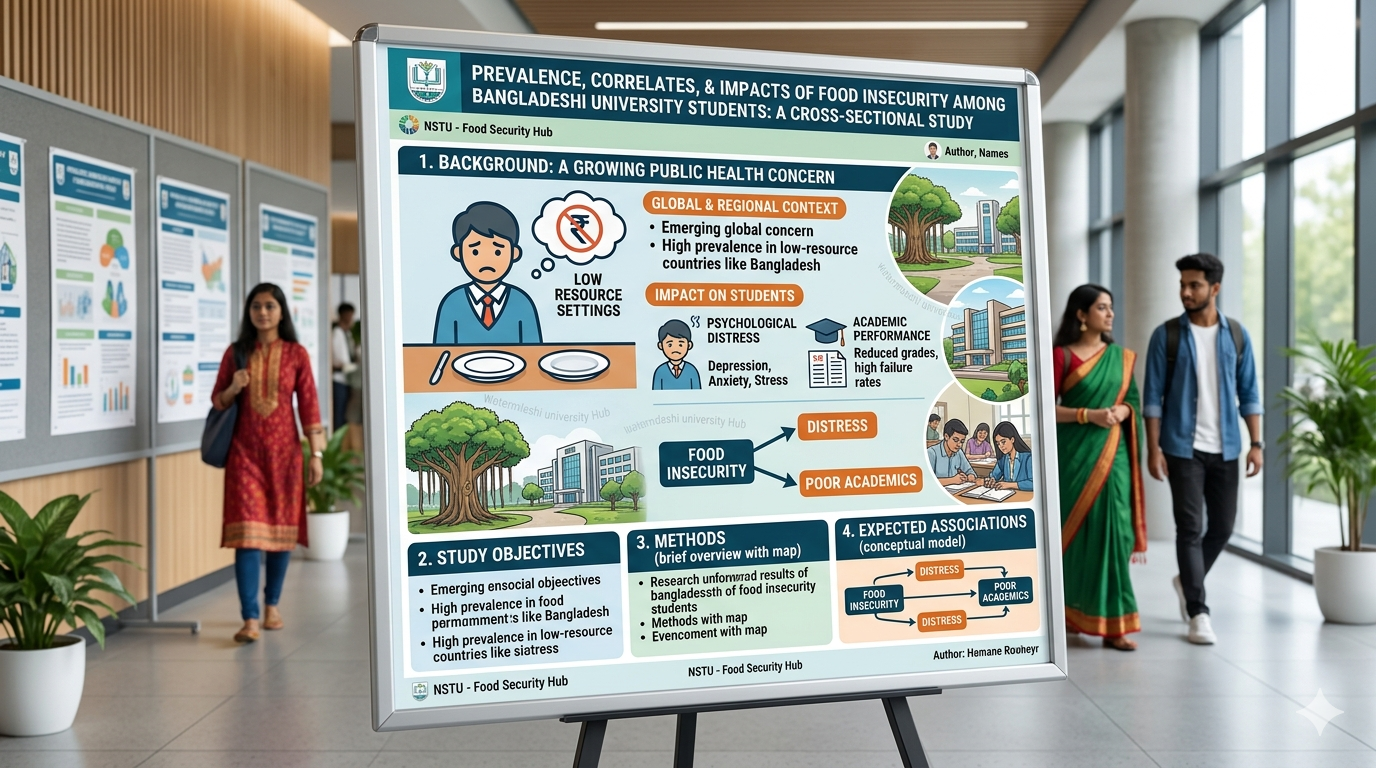
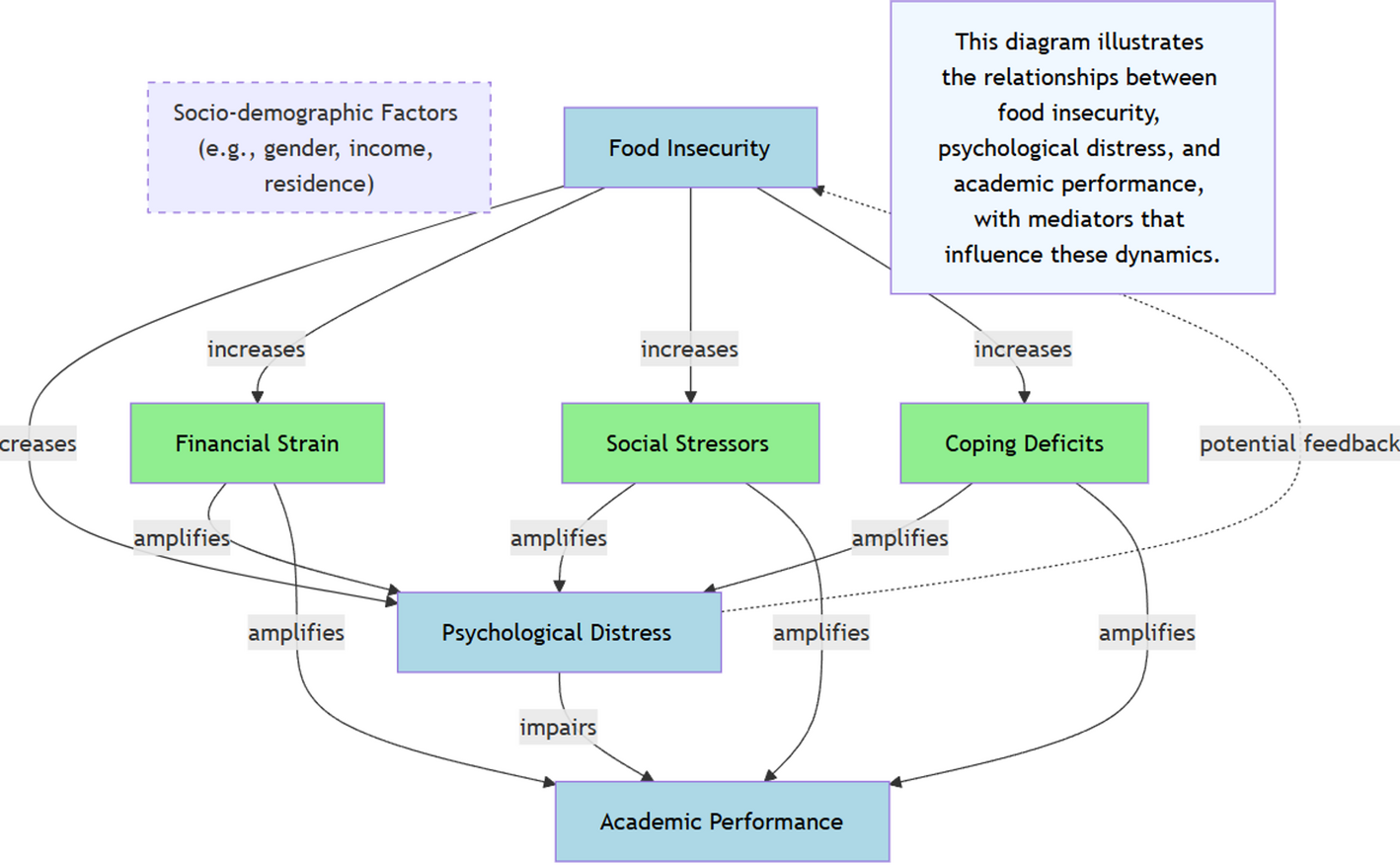

Our paper investigates the critical issue of food insecurity among university students in Bangladesh, focusing on its impact on psychological distress and academic performance. Conducted at Noakhali Science and Technology University, the study involved 397 students and utilized the Food Insecurity Experience Scale (FIES) and the Depression, Anxiety, and Stress Scale-21 (DASS-21). Findings revealed that 65.5% of students experienced food insecurity, which was significantly linked to anxiety, stress, and academic challenges. These results underscore the urgent need for interventions like food assistance programs and mental health services to support student well-being. Read the full paper here.

Follow the Topic
-
Discover Social Science and Health
Discover Social Science and Health is an open access journal publishing research across the full range of disciplines at the intersection of health, social and biomedical sciences.

📢 Introducing: # Mental Health
Mental Health is a Topic created to increase visibility and impact of research in this area and facilitate exchange amongst researchers.
Continue reading announcementRelated Collections
With Collections, you can get published faster and increase your visibility.
Health, Well-being, and the SDGs in an Era of Global Uncertainty: Interdisciplinary and International Perspectives
The 2030 Agenda for Sustainable Development, ratified by all United Nations member states in 2015, emphasises the need to ensure healthy lives and promote well-being for people of all ages (SDG 3). Health and well-being are not stand-alone goals; they are closely linked to other Sustainable Development Goals (SDGs), such as poverty eradication (SDG 1), gender equality (SDG 5), access to safe water and sanitation (SDG 6), quality education (SDG 4) and reducing inequalities (SDG 10). Achieving universal health and well-being requires a comprehensive, interdisciplinary strategy that addresses both structural determinants and growing global problems.
In light of recent global economic uncertainties and cuts in international development funding, particularly from traditional donor countries such as the United States and the United Kingdom, exploring creative, sustainable and locally-led models for promoting health and well-being has become even more important. Reflecting on the implications of such funding changes for global health goals, SDG-related programme implementation, and international collaboration in health and social policy is another aim of this collection.
This collection invites original research articles, case studies, policy reviews, and theoretical contributions on the complex relationships between health, well-being, and the Sustainable Development Goals (SDGs) framework. We invite interdisciplinary perspectives from public health, social work, sociology, policy studies, economics, gender studies, and development studies that address health equity, mental health, social determinants of health, and community-based interventions. Submissions from diverse geographical and cultural contexts are strongly encouraged. We also welcome collaborative contributions from authors across disciplines and regions, particularly those with insights into evolving global health financing mechanisms and their implications for achieving the SDGs in low-resource settings.
Keywords: Sustainable Development Goals (SDGs); Global Health and Wellbeing; Social Determinants of Health; Health Systems; Public Health Policy; Innovation in Healthcare; International Development; Health Financing.
Publishing Model: Open Access
Deadline: Nov 30, 2026
Health as a Multidimensional Social Phenomenon: Evidence-Based Theoretical Perspectives
Health has traditionally been approached from biomedical and individualistic perspectives. However, the processes that shape health and illness go beyond the individual and are embedded in social, cultural, political, and economic contexts. Durkheim, Marx, and Weber, for example, provided the theoretical foundations for understanding health as a social and structural phenomenon. Parsons introduced the concept of the “sick role,” defining the normative expectations of illness in modern societies. Later scholars such as Foucault and Illich expanded this view by examining power, professional authority, and the social construction of medical knowledge. Luhmann and Beck explored the sociology of risk, which is closely related to the social dimensions of health. These perspectives show that health is a historically and socially constructed and configured reality. This Collection aims to gather research that analyzes health as a multidimensional social phenomenon, understood as the result of complex interactions between social structures, institutional practices, power relations, community dynamics, cultural imaginaries, and subjective experiences.
Objectives:
• Explore health through multidimensional approaches that integrate social, cultural, economic, political, and environmental variables.
• Foster a plural dialogue among different theoretical approaches (sociology of health, critical social theory, public health, medical anthropology, cultural studies, etc.).
• Bring together theoretical research and rigorous case studies that provide evidence and help to understand health as a collective and interdependent phenomenon.
• Promote interpretations of health that move away from biomedical reductionism, while remaining open to dialogue with that perspective.
Scope and types of contributions:
Original manuscripts that meet the following criteria will be considered:
1. A focus on the social and multidimensional interpretation of health.
2. Acceptance of different theoretical perspectives (critical, interpretative, systemic, phenomenological, etc.).
3. Manuscripts must be theoretical or theoretical–empirical, but always supported by evidence, whether qualitative, quantitative, comparative, or from systematic reviews.
4. Case studies with strong theoretical articulation will also be considered.
5. Special attention will be given to contributions that analyze health as a collective, structural, or institutional phenomenon, avoiding its reduction to individual-level variables.
6. Manuscripts that explore the multidimensionality of the factors associated with health (social determinants, inequalities, policies, subjectivities, territory, etc.) will be valued.
7. Articles related to social health or the health of the social system, in the broadest sense (institutional well-being, social cohesion, sustainability of care systems, etc.), will also be accepted.
Keywords: Social health, Multidimensionality of health, Social theory, Interpretive studies, Sociohermeneutics and sociosemiotics, Politics, Culture, Social values, Sociohistory, Collective health.
This Collection supports and amplifies research related to SDG 3, SDG 10, and SDG 16.
Publishing Model: Open Access
Deadline: Dec 31, 2026