Radon signals in soil gas associated with earthquake occurrence in Greece: review and perspective.
Published in Earth & Environment, Research Data, and Sustainability

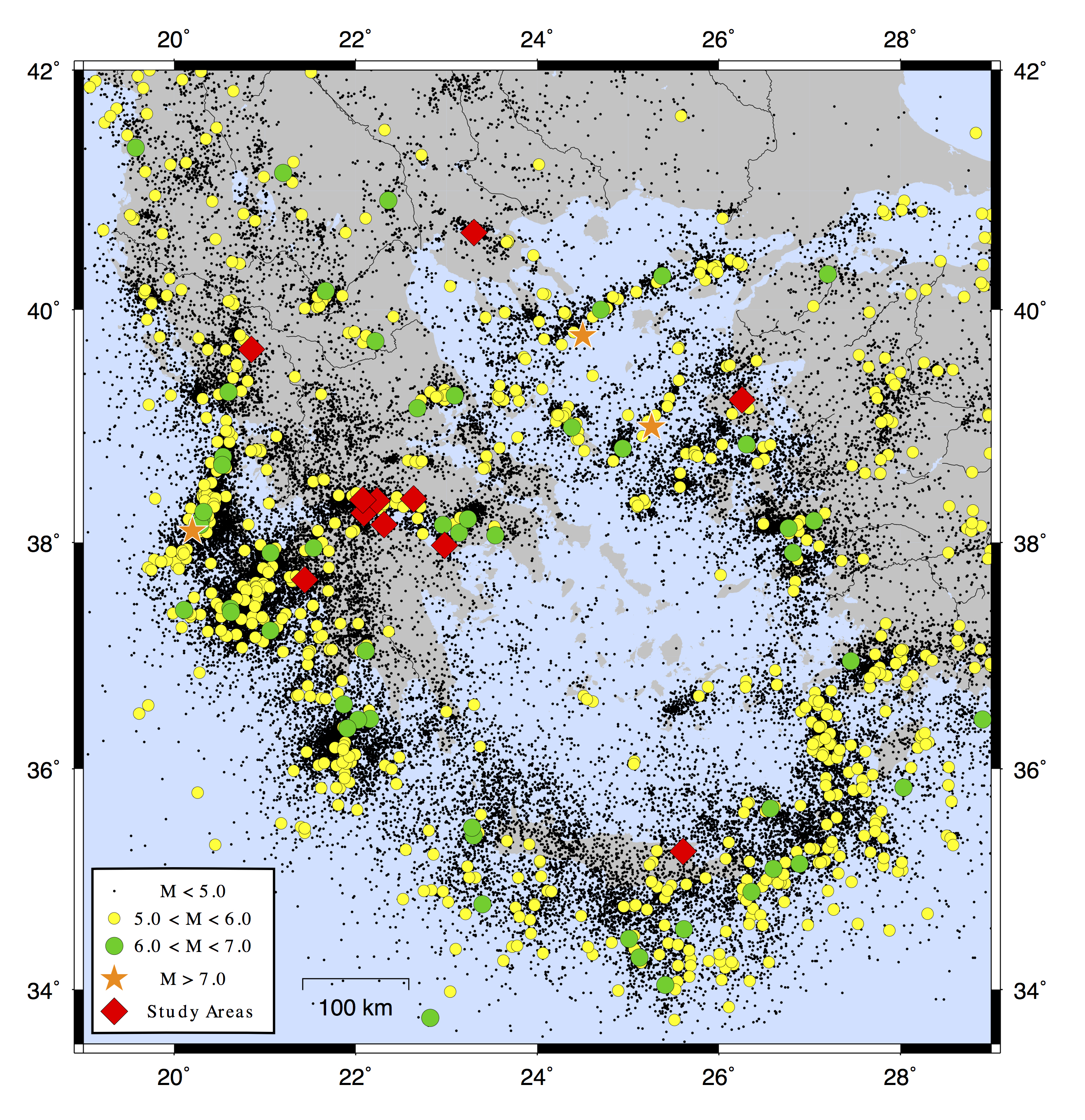
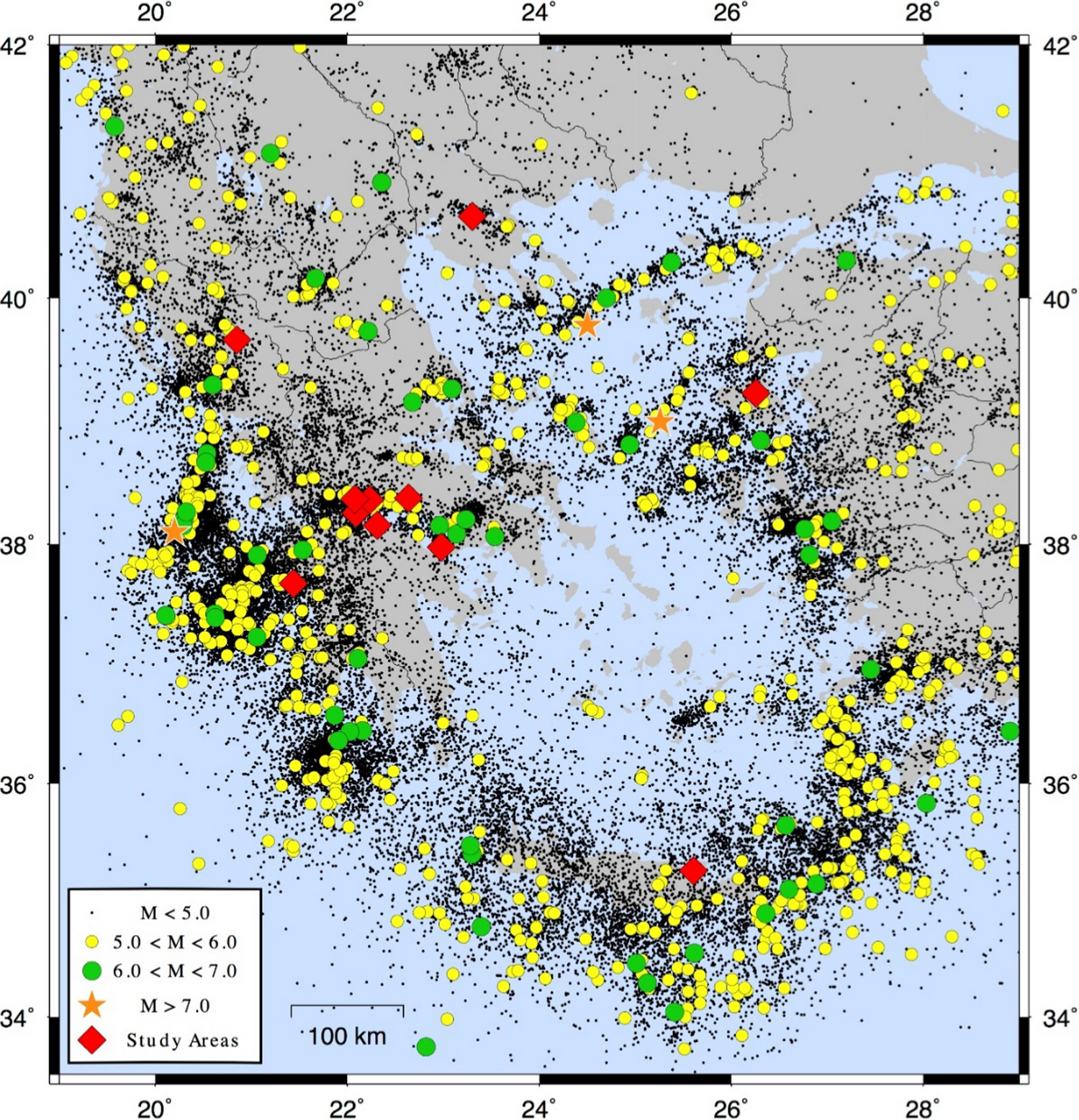

The experience gained after seven decades of research shows that large–scale sampling points in each area of interest and over an extended time are required to collect a statistically more robust data sample, meaning that numerous sensor networks for radon are required to give a new level of statistical significance of the measurements. The advanced machine learning algorithms for time series combined with computational power will enable a deeper analysis of the parameters affecting radon and other observations. The prospect is to learn which radon anomalies can be associated with earthquakes. Technically, there should be no obstacle to building extensive radon networks along seismic fault zones supporting increased public awareness.
Inspired by such suggestions, the Artemis project has been developed to advance large–scale monitoring of radon and other observables in groundwater in the Abruzzi region, Italy, the Ionian Islands, Greece, and selected sites in Switzerland. The project intends to produce a sensor network of about 100 units – the detection based on gamma-ray measurements in groundwater using a novel sensor of CsI developed in SGI, Germany and calibrated in JURO, Czech Republic. The radon concentration, temperature, barometric–hydraulic pressure, conductivity, and pH will be measured with a vision of prolonged monitoring duration. The data time series will be analysed using A.I. to obtain correlation results between the radon signal, the earthquake's precursor time and magnitude, and the building of an early public warning system.
More details are available in the publication in the Journal of Radioanalytical and Nuclear Chemistry:
https://doi.org/10.1007/s10967-024-09710-4
Follow the Topic
-
Journal of Radioanalytical and Nuclear Chemistry
This is an international journal covering a wide range of topics in the field of nuclear chemistry.

What are SDG Topics?
An introduction to Sustainable Development Goals (SDGs) Topics and their role in highlighting sustainable development research.
Continue reading announcementRelated Collections
With Collections, you can get published faster and increase your visibility.
Selected papers presented at 7th International Conference on Nuclear Analytical Techniques (NAT 2026)
Selected papers presented at 7th International Conference on Nuclear Analytical Techniques (NAT 2026), September 6-10, 2026, Seoul, Republic of Korea
Topics include:
- Actinide Analytical Chemistry
- Collaborative Material Exercise
- Radioecology and Environmental Radioactivity
- Nuclear Forensics
- Advances in Radiochemistry Supporting the Nuclear Fuel Cycle
- Radioanalytical Methods of Long-lived Radionuclides
- Mass Spectrometry
- Nuclear Instrumentation and Methodology
- Nuclear Methods in Material Structure Studies (Moessbauer Effect, Positron Annihilation, MuSr, etc.)
- Neutron Activation Analysis
- Prompt Gamma Activation Analysis
- Neutron Depth Profiling
- Accelerator based Analytical Methods (PIXE, PIGE, NRA, RBS, AMS etc.)
- Radiolabeled Compounds and Radiopharmaceuticals
- Production of Radionuclides
- Radionuclide Separation
- Metrology, Reference Materials, Reference Methods
- Method
- Education in Radiochemistry and Activation Analysis
Publishing Model: Hybrid
Deadline: Oct 31, 2026