Reflections on Building a More Equitable Scientific Community in Brazil
Published in Earth & Environment, Ecology & Evolution, and Sustainability
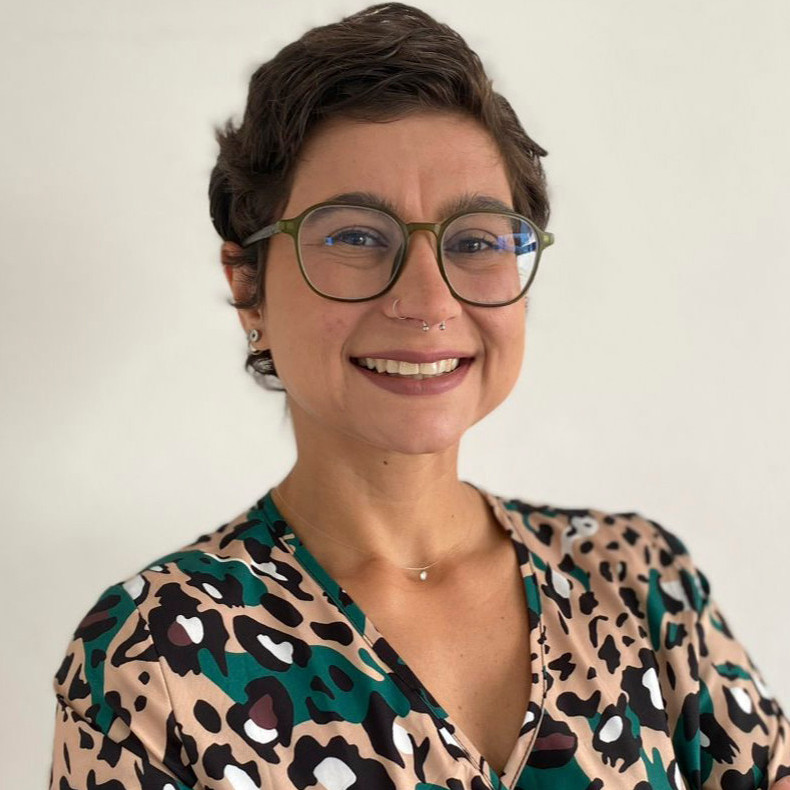
Earlier this year, I had the opportunity to participate as a panelist in the event "Equity in Brazilian Science: Gender, Race and representativeness in scientific research", promoted by Springer Nature. This experience gave me the opportunity to reflect on how we can build a research ecosystem where structural barriers do not limit talent.
The conversation brought together researchers and leaders to discuss how gender, race, and other dimensions of identity shape scientific careers in Brazil. One of the most important reflections from the discussion was that advancing gender equity requires an intersectional perspective. Women do not experience science in the same way, and factors such as race, socioeconomic background, geographic location, and gender identity can create different barriers to entering, remaining in, and progressing through scientific careers.
As a scientist from Brazil working internationally, my own trajectory has been shaped by both the transformative power of scientific communities and the challenges created by unequal structures. I have experienced how supportive environments can help develop innovative approaches and strengthen career paths. At the same time, traditional academic systems can limit opportunities for researchers from underrepresented groups to reach leadership positions. These experiences motivated me to establish the Kunhã Asé Network of Women in Science and the Laboratory of (Bio)Diversity in the Anthropocene (BioDivA), while also engaging in international scientific organizations such as the Global Young Academy. With that, I have come to see that lasting change depends on transforming the institutions themselves, while networks represent powerful spaces for developing such transformative action.
During the discussion, we also reflected on the role of bias in shaping scientific careers. Unconscious and systemic biases can influence recruitment, funding, publication, recognition, and leadership opportunities, often in ways that are difficult to identify but deeply embedded in academic culture (Diele-Viegas et al., 2021, 2022). Addressing these challenges requires concrete actions, including more transparent evaluation processes, diverse decision-making bodies, responsible research assessment, and institutional accountability rather than relying solely on individual goodwill (Diele-Viegas et al., 2021).
Equity and scientific excellence are deeply connected, which means that a diverse scientific community can expand the perspectives, questions, and approaches that shape research (Deanna et al., 2022; Diele-Viegas, 2024). This is particularly important when addressing complex challenges such as climate change, biodiversity loss, and social inequalities, which require knowledge produced through collaboration across disciplines, experiences, and communities (Diele-Viegas, 2025). As a conservation scientist, I have learned that addressing challenges such as biodiversity loss and climate change requires integrating different knowledge systems and perspectives. Scientific excellence is strengthened when research reflects the diversity of the societies it aims to serve.
The discussions reinforced my belief that lasting change requires collective action. Researchers can foster more inclusive collaborations and challenge biased practices. Institutions can create structures that support diversity and belonging. Scientific organizations and publishers can contribute by promoting responsible approaches to evaluation and recognition. Equity in science is a continuous process, built through everyday decisions, institutional commitments, and communities that support one another. The conversations we started in this event are an important step toward a Brazilian scientific ecosystem where more people can contribute, lead, and shape the future of research.
References
Deanna, R., Merkle, B. G., Chun, K. P., Navarro-Rosenblatt, D., Baxter, I., Oleas, N., Bortolus, A., Geesink, P., Diele-Viegas, L., Aschero, V., de Leone, M. J., Oliferuk, S., Zuo, R., Cosacov, A., Grossi, M., Knapp, S., Lopez-Mendez, A., Welchen, E., Ribone, P., & Auge, G. (2022). Community voices: The importance of diverse networks in academic mentoring. Nature Communications, 13(1), 1681. https://doi.org/10.1038/s41467-022-28667-0
Diele-Viegas, L. M. (2024). How I run a virtual lab group that’s collaborative, inclusive and productive. Nature, d41586-024-01620–01625. https://doi.org/10.1038/d41586-024-01620-5
Diele-Viegas, L. M. (2025). Inter- and Transdisciplinarity approaches to solving socio-environmental issues: Bridging science, policy, and local knowledge. (13), 9–11.
Diele-Viegas, L. M., Cordeiro, T. E. F., Emmerich, T., Hipólito, J., Queiroz-Souza, C., Sousa, E., Vançan, A. C., & Leite, L. (2021). Potential solutions for discrimination in STEM. Nature Human Behaviour. https://doi.org/10.1038/s41562-021-01104-w
Diele-Viegas, L. M., Sales, L. P., Slobodian, V., Virginio, F., de Araújo Sousa, S., Pareja-Mejía, D., Bacon, C. D., Mugarte, A. S. X., Amati-Martins, I., Dias-Silva, F., Araújo, O. G. S., Nassif, J., Carvalho, M., Luz, C., Soares, B. E., Pêgas, R. V., & Souza, L. G. (2022). Productivity in academia: When the rules determine the losers. Frontiers in Ecology and Evolution, 10, 1021812. https://doi.org/10.3389/fevo.2022.1021812
Follow the Topic
What are SDG Topics?
An introduction to Sustainable Development Goals (SDGs) Topics and their role in highlighting sustainable development research.
Continue reading announcement