Regime shift in Arctic Ocean N biogeochemistry
Published in Earth & Environment

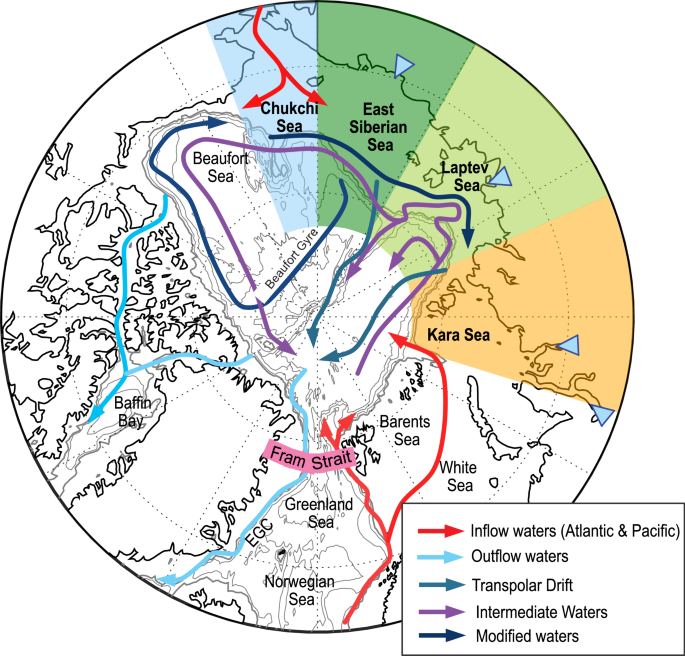

The Arctic Ocean is changing fast. It is warming more than twice as quickly as the global average, and its sea ice cover is shrinking dramatically. At first glance, that might seem like good news for marine life: less ice means more sunlight reaching the ocean surface, and more light should support more photosynthesis by phytoplankton, the microscopic organisms that form the base of the Arctic food web.
And in some parts of the Arctic, that is exactly what has happened.
However, the story is not so simple.
In the years following the major sea-ice losses of 2007, especially around the Pacific gateway to the Arctic, primary production increased as expected. Yet after 2009, productivity increases on the interior shelves and central basin slowed down, despite the continued retreat of sea ice. That raised a fundamental question: Why? And if light is no longer the main constraint, what is?
That question led us to think about nutrients, and especially nitrate- the main form of nitrogen used by phytoplankton for growth.
The Arctic Ocean is unusual because more than half of its surface area lies over shallow continental shelves. These shelves are hotspots for benthic denitrification, a microbial process in sediments that removes nitrate and coverts it to gaseous N forms which escapes from the ocean. In other words, the Arctic shelves act as a sink for one of the key nutrients needed to sustain marine productivity.
This matters because denitrification is fuelled by the breakdown of organic matter. As sea-ice loss allowed more phytoplankton growth on the Pacific inflow shelves, more organic matter sank to the seafloor. That should stimulate sedimentary oxygen demand and create conditions that favour nitrogen loss through benthic denitrification. In effect, the same sea-ice decline that initially promotes productivity could also intensify the loss of the nitrate that is needed to sustain phytoplankton downstream of these benthic denitrification hotspots.
To test this idea, we turned to one of the Arctic’s most telling exit routes: Fram Strait. Waters flowing southward through Fram Strait carry an integrated signal of upstream changes across the Arctic Ocean, from the productive inflow shelves to the central basins, transported along the Transpolar Drift. This kind of insight is only possible thanks to sustained, collaborative sampling efforts over decades. Much of the dataset comes from repeated cruises led by the Norwegian Polar Institute as part of the Fram Strait Arctic Outflow Observatory Program. By bringing together two decades of nutrient observations (1998–2023), we could ask whether the Arctic was leaving a fingerprint of the N loss in waters exported out of it.
That fingerprint was striking.
Around 2009, nitrate concentrations in the Arctic outflow dropped abruptly. At the same time, nitrate-to-phosphate ratios declined, while silicate-to-nitrate ratios increased. Together, these shifts point to a major change in Arctic nutrient regime. We interpret this as evidence for a transition in the controls on Arctic primary production: from a system that was predominantly light-limited to one that is increasingly nitrate-limited.
Using ocean circulation modelling together with estimates of benthic denitrification, we traced this nitrate decline back to enhanced nitrogen loss over the Chukchi and East Siberian shelves just downstream of the Bering Strait- the shallow opening that connects the Arctic Ocean to the Pacific Ocean. In other words, these hotspots located at the Pacific gateway can act as a nutrient filter depriving nitrate to the interior areas (see schematic below). The implication is that very low nitrate levels have become the new norm in Arctic halocline waters. These low-nutrient waters are now expanding into the Arctic, helping to explain why productivity in parts of the interior Arctic is declining even as sea ice continues to retreat.
This shift could have consequences far beyond nutrient budgets.
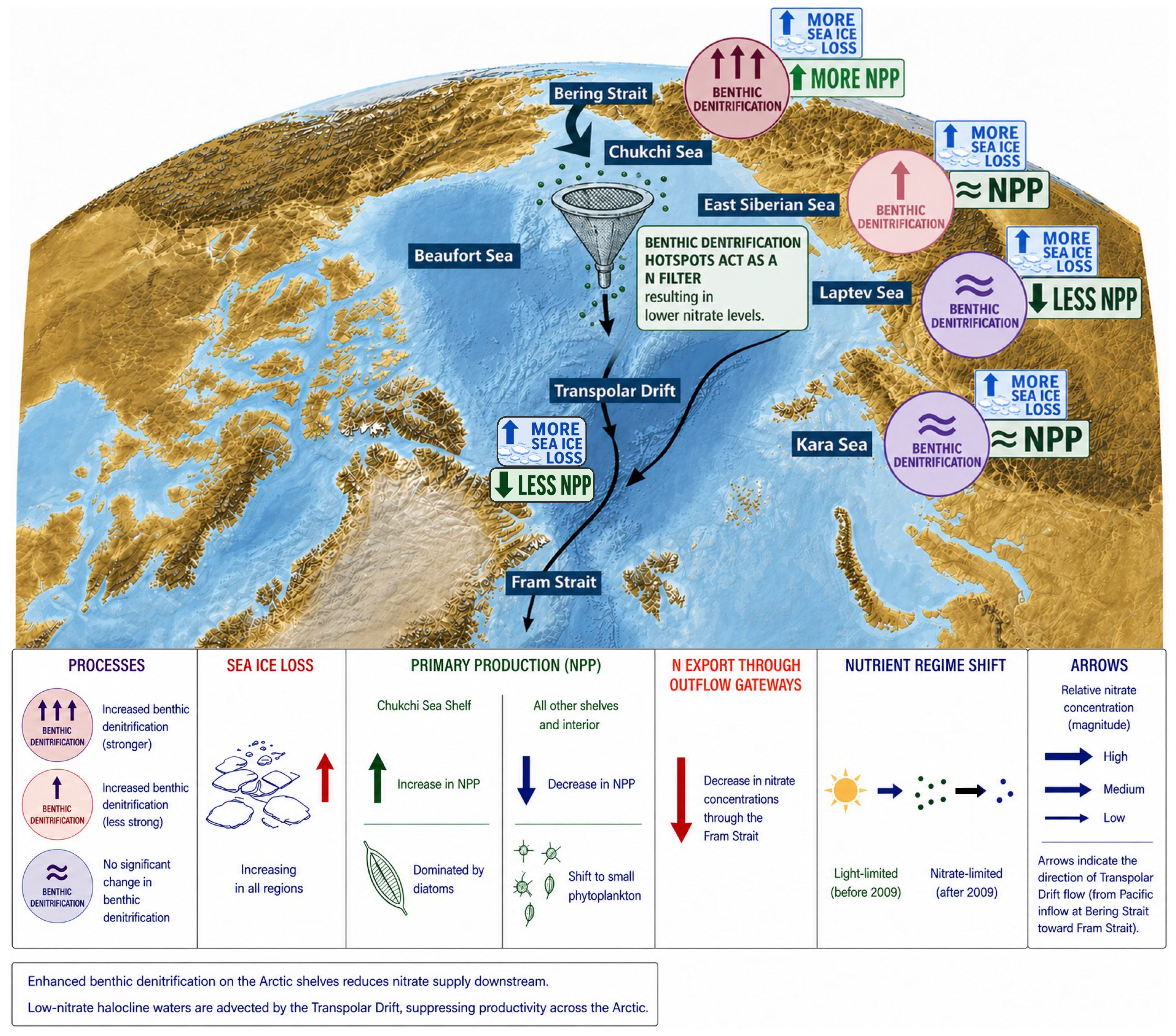
Schematic of drivers and consequences of the 2009 regime shift in Arctic Ocean nitrogen biogeochemistry. Benthic denitrification hotspots on Arctic shelves, particularly the Chukchi Sea, act like a “nitrogen filter,” removing bioavailable nitrogen from inflowing Pacific waters. This process lowers nitrate concentrations in waters transported downstream via the Transpolar Drift and exported through Fram Strait, contributing to reduced NPP and a shift toward nitrate-limited conditions across the Arctic basin. Source: Marta Santos-García.
If nitrate becomes increasingly scarce, more light alone will not be enough to sustain increased productivity. Low nitrate conditions favour smaller phytoplankton communities which are better adapted to nutrient-poor conditions, rather than the larger diatoms that efficiently transfer carbon and energy through the marine food web. This could reduce carbon sinking to the deep ocean and weaken the Arctic Ocean’s future capacity to absorb and store carbon dioxide. In addition, in regions including the Chukchi Sea and Fram Strait phytoplankton communities are shifting toward pico- and nanoplankton and species such as Phaeocystis pouchetii are becoming more common. The resulting change in food web structure can also reduce the overall fish population and commercial fish species. The loss of nitrate within the Arctic may also impact the nutrient levels in waters exported southward into the North Atlantic, with possible downstream consequences for productivity and carbon cycling there.
Sea-ice loss is often framed as a driver of increasing Arctic productivity because it lets in more light through surface waters and aids phytoplankton growth. Our study shows that this is only part of the story. As the Arctic changes, the nutrient system is changing with it. What begins as a boost in productivity may ultimately reinforce nitrate removal on the shelves, leaving the wider Arctic Ocean increasingly nitrate-limited, setting in motion changes whose full consequences are only just beginning to emerge.
Publication: https://www.nature.com/articles/s43247-026-03569-x
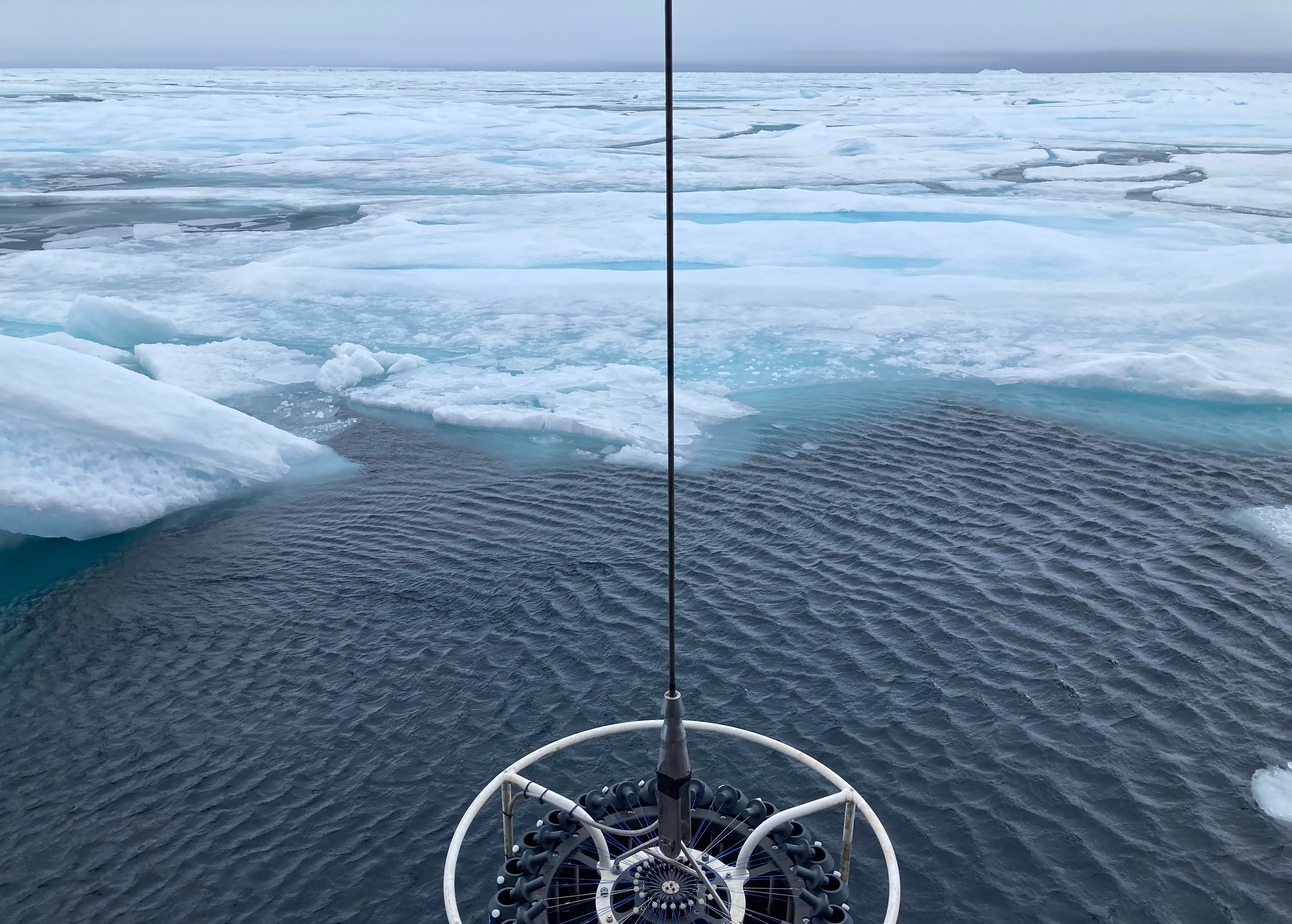
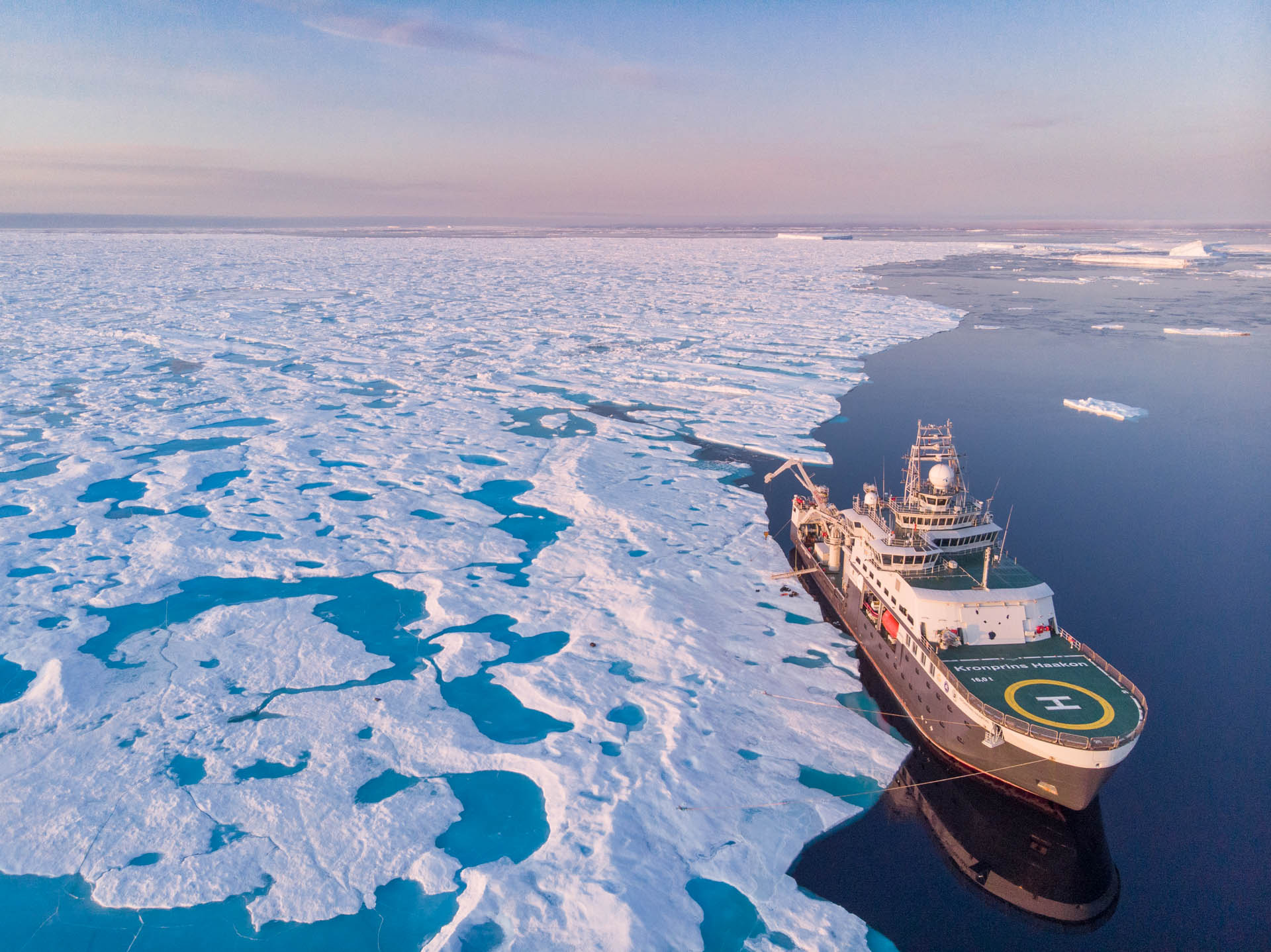
CTD deployment during the FS2023 Fram Strait cruise, collecting water samples for nutrient analysis among sea ice. Photo: Marta Santos-García

Follow the Topic
-
Communications Earth & Environment
An open access journal from Nature Portfolio that publishes high-quality research, reviews and commentary in the Earth, environmental and planetary sciences.

Related Collections
With Collections, you can get published faster and increase your visibility.
Ecological resistance and resilience under global change
Publishing Model: Open Access
Deadline: Apr 07, 2027
Hazards in Mountain Regions
Publishing Model: Open Access
Deadline: Nov 02, 2026