Remember Privacy?
Published in Social Sciences, Electrical & Electronic Engineering, and Computational Sciences
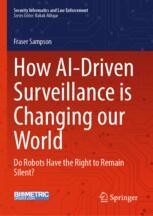

The use of AI-driven surveillance – in particular biometrics like facial recognition – is one of the most contentious technology challenges across the world. While some argue that, if you have nothing to hide, you’ve nothing to fear, others point to irreversible erosions of privacy and a dystopian Orwellian future. Whether you are a policymaker or engineer, influencer or academic, or simply one of a growing number of concerned citizens, the technology is already being used extensively, sometimes in ways that may have escaped your attention. AI-enabled surveillance has already changed the relationship between the citizen and the state and with it the traditional predictions of what the future will look like.
As former UK Biometrics and Surveillance Camera Commissioner, I have pulled together some of the questions that people have asked me about technology and surveillance. The answers are not always what you’d expect. It’s easy to laugh off warnings about state-sponsored hacking of our appliances, for example, but the real risk from China hacking your fridge is not really about surveillance; it comes less from what can be seen and more from what can be sown. Similarly, in the world of ID fraud, the saying “if it looks like a duck, walks like a duck and quacks, it’s probably a duck”, is not a harmless, ‘common sense’ motto; identity fraudsters and scammers use human intuition to evade even the most sophisticated security measures.
Using examples from first-hand experience in policing, law and regulation of technology, I’ve also raised a few questions that we should probably be asking. Instead of asking whether the police should be allowed to use facial recognition, we should think about what’s been stopping them until now.
Having taken part in online discussions, radio and TV phone-ins and international conferences, I’ve also included some ‘explainers’. Here are a few examples:
We love lists and rankings – you’ll see plenty claiming to identify “the world’s most surveilled places” but these are nonsensical when seen in light of how AI-enabled visibility really works. At the same time, CCTV has no future and, because all the research into the impact of public space surveillance on crime took place before the camera knew it was looking for people, even its past is in doubt.
People (mainly lawyers, journalists and politicians) talk of privacy but how many have stopped to consider what that concept now means? Is it a right or a freedom? Defining privacy is difficult, policing it almost impossible and regulating the technological, legal and societal aspects is going to be challenging. And, should you find yourself thinking “if you’ve done nothing wrong you’ve nothing to worry about”, you’ve missed the point (several in fact). If you don’t know why, skip to chapter 12.
In a collection of what I hope are readable and relatable essays I set out to accompany the reader through everyday examples of the growing use of AI-driven surveillance, in ways we may not have even noticed, challenging wisdom and pointing out challenges for governments, police and the citizen along the way. The use of Deepfakes in the criminal justice system, for instance, has received very little attention from researchers but the potential impact of the technology is considerable. We used to say that the camera never lies. Well, it does now and very convincingly. Will it be allowed to do so in court proceedings? It probably already is. In most countries, the justice systems are nowhere near ready for the digital integration that will be needed to stop it. Moving further into the realities of justice and AI, the title chapter – “Do robots have the right to remain silent?” - considers the proliferation of smart devices that contain information about us. evidence or intelligence. You can now confess to an AI-Jesus, or offload to Alexa, but is any of it protected if the police think it is evidence of something? Until now, if the state has needed access to data – even if confidentially held – it’s been able to get it. The robots question looks at some of the wider legal and constitutional issues about how AI will fit into our criminal justice world – and vice versa.
One of our great fears about surveillance is what an American lawyer once called omniveillance - the state’s ability to watch all of us, all of the time. The idea that some day we’ll be covered by a surveillance system observing our every action, empowering the state to step in and enforce the law if we cross any lines that it has drawn. As the technological reality of omniveillance has grown, the setting in which it is most likely to happen is not a criminological one. The word pandemic (from pan demos) means ‘across all people’ and perfectly describes both the state’s ability to watch everyone and the circumstances where governments will have a compelling case to do so. The next global health emergency will show how the ubiquity of technology in our lives means we’re already in a surveillance pandemic.
AI-enabled technology has shrunk our worlds. The growth in ‘measurables’ such as voice, gait, the use of actuarial policing to predict criminality has replaced biometrics with a new concept: ‘zoemetrics’. As police leaders increasingly talk about ‘leaving nowhere for suspects to hide’, the final chapter closes with a question: the state now has the capability to shrink the world of a suspect in order to catch them; how far should they be allowed to shrink all our worlds in order to do it?
In writing this book I’ve set each chapter as a standalone discussion, in a non-technical, conversational but focused way. At its heart, I suppose this is a guidebook charting the technological, legal and societal implications of previously unimagined surveillance technology, not only in the hands of state agencies, but increasingly in our own.
This is a keenly followed subject and I’m already gathering the material for the follow-up. If you can think of other surveillance and privacy related conundrums, please reach out!