Rethinking ER+ Breast Cancer Brain Metastasis: From Clinical Observation to Biological Insight
Published in Cancer

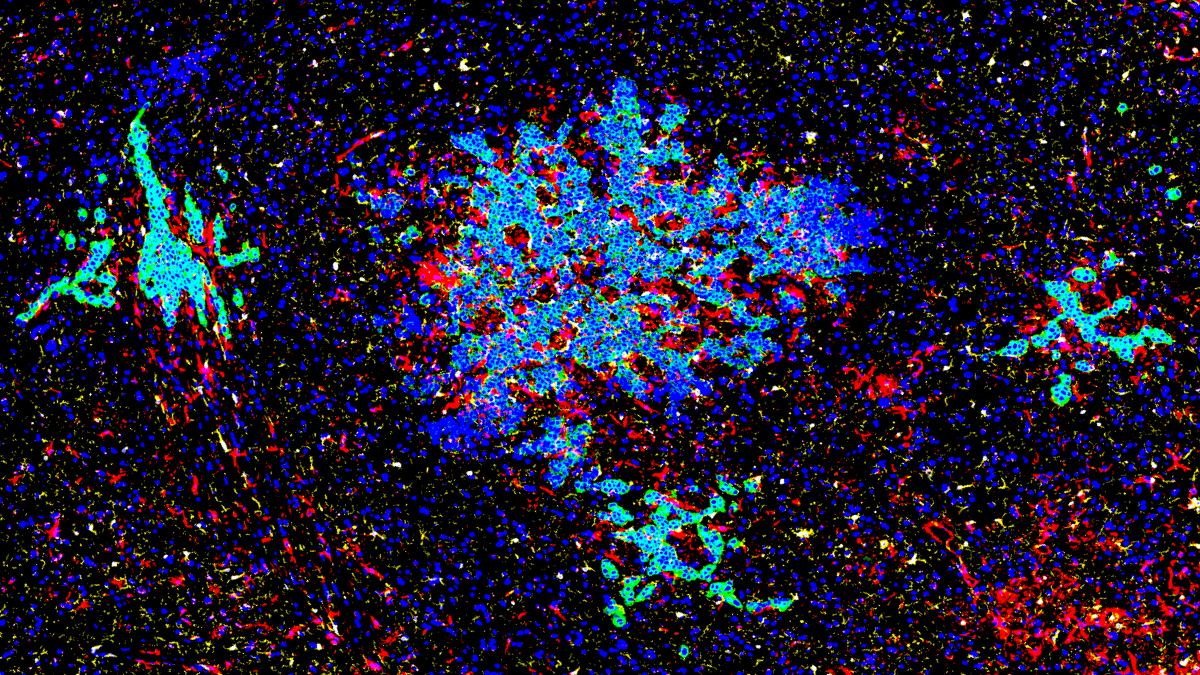


Our work on estrogen receptor-positive (ER+) breast cancer brain metastasis (BCBM) started with a simple observation: despite limited research attention, ER+ disease accounts for about 40–50% of all BCBM cases. We first saw this in a University of Colorado dataset and confirmed it across published studies. Although ER+ tumors have a lower relative risk of spreading to the brain compared with more aggressive subtypes, they make up 70 - 80% of primary breast cancers, so in absolute numbers, they represent a large share of patients living with BCBM. This gap between research focus and patient burden motivated us to explore ER+ BCBM more closely.
We connected with patient advocates Christine Hodgdon and Julia Maues (GRASP), who introduced us to Lianne Kraemer, a patient living with ER+ BCBM. Lianne shared that she initially thought her diagnosis was extraordinarily rare, but through advocacy work, she kept meeting others like her, revealing that ER+ BCBM is more common than widely recognized. Her perspective made it clear that these statistics represent a real and underappreciated patient population, and that understanding the biology of these tumors is urgently needed.
Launching this work was challenging due to the lack of established ER+ BCBM models. We partnered with Carol Sartorius and Peter Kabos, who had developed ER+ patient-derived xenografts and cell lines, to identify models with brain metastatic potential. We found that two models with FGFR1 amplification showed enhanced brain colonization and growth, which led us to investigate FGFR1 as a potential driver of ER+ BCBM.
We also aimed to model ER+ BCBM as it occurs clinically. Unlike other subtypes, ER+ brain metastases are most often diagnosed in older, postmenopausal patients, something that is difficult to replicate in typical mouse models, which rely on high estrogen levels to support tumor growth. As expected, our models only grew in young mice when supplemented with estrogen. However, when we tested them in mice aged over one year, we found that these ER+ cells could grow without added estrogen, effectively modeling the postmenopausal setting. This gave us two complementary systems: one reflecting premenopausal disease and one reflecting postmenopausal disease.
Over the next four years, we used these models to demonstrate that in both younger/premenopausal and older/postmenopausal settings, FGFR1 is a driver of ER+ BCBM through differential ligand-dependent activation in the brain. While aging mice for over a year and performing tumor studies that spanned 4 months on average was not easy, the results highlight the importance of considering interactions with the host in metastatic progression. The continued support, enthusiasm, and input from Lianne has kept us motivated. She reminds us of something that is often missed by cancer researchers: everything that we do ties back to real people. We hope that this work can pave the way for additional research on ER+ BCBM so patients like Lianne no longer feel overlooked.
Follow the Topic
-
Nature Communications
An open access, multidisciplinary journal dedicated to publishing high-quality research in all areas of the biological, health, physical, chemical and Earth sciences.

Related Collections
With Collections, you can get published faster and increase your visibility.
Women's Health
Publishing Model: Hybrid
Deadline: Ongoing
Biosensing
Publishing Model: Hybrid
Deadline: Jun 30, 2026


Please sign in or register for FREE
If you are a registered user on Research Communities by Springer Nature, please sign in