Reversible bilateral sensorineural hearing loss associated with atorvastatin: a case report

Behind the Paper: When a Common When a Common Cholesterol Medication Led to Reversible Hearing Loss
Most clinicians prescribe statins every day. They are among the most widely used medications worldwide and have an excellent safety profile. While muscle symptoms and liver enzyme abnormalities are well recognized, hearing loss is not generally considered a potential adverse effect. That is what made this case so memorable.
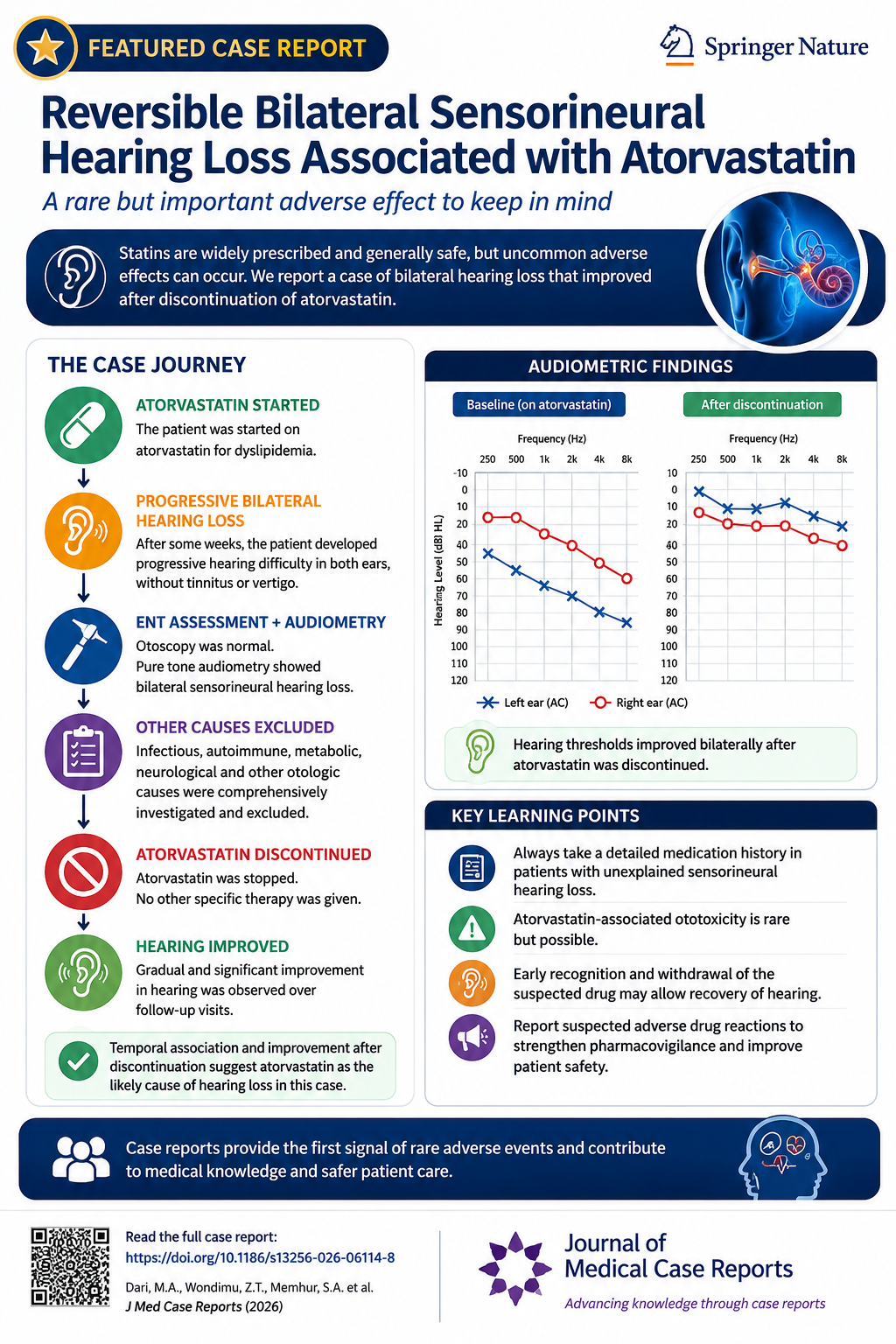
Our recently published case report describes a patient who developed bilateral sensorineural hearing loss after treatment with atorvastatin, with hearing improving after the medication was discontinued. To our knowledge, reports of reversible atorvastatin-associated hearing loss remain exceptionally rare, making this an important case to share with clinicians.
Why we decided to report this case
As otolaryngologists, we frequently evaluate patients with sudden or progressive sensorineural hearing loss. In many cases, no clear cause is identified despite extensive investigation. During the assessment of this patient, we carefully reviewed potential infectious, autoimmune, neurological, and otologic causes. The patient's history eventually drew our attention to a possible temporal association with atorvastatin use.
Although statins are generally safe and their cardiovascular benefits are substantial, uncommon adverse drug reactions can occur. Recognizing these rare events is important because they may be overlooked if clinicians are unaware of the possibility.
What happened?
The patient presented with bilateral sensorineural hearing loss that developed after starting atorvastatin therapy. Comprehensive clinical evaluation excluded more common causes of hearing loss. Following discontinuation of atorvastatin, the patient's hearing improved, supporting a likely association between the medication and the auditory symptoms.
While a single case report cannot establish causality, documenting carefully evaluated cases contributes to pharmacovigilance and helps generate evidence for future research.
What clinicians can learn
This case highlights several practical messages:
- A detailed medication history is an essential part of evaluating every patient with unexplained sensorineural hearing loss.
- Rare adverse drug reactions should remain in the differential diagnosis, even for medications with well-established safety records.
- Early recognition of potentially medication-related hearing loss may allow timely intervention and, in some cases, recovery of hearing.
- Reporting unusual adverse events strengthens the evidence base and helps clinicians recognize similar cases in the future.
Why this matters
As clinicians, we often focus on identifying diseases. Equally important is recognizing when a treatment itself may contribute to a patient's symptoms. This case reminds us that maintaining a broad differential diagnosis and carefully reviewing medications can directly influence patient outcomes.
Case reports occupy an important place in medical literature because they often provide the first signal of previously unrecognized or extremely rare clinical events. Although they represent the lowest level of evidence for establishing causality, they frequently stimulate further investigation and contribute meaningfully to patient safety.
We hope this report encourages clinicians to consider medication-related causes when evaluating unexplained hearing loss and to report similar observations if they encounter them.
We are grateful to the patient for allowing us to share this case and to the editorial team at the Journal of Medical Case Reports for selecting our article as a Featured Case Report. We hope that sharing this experience will increase awareness of this rare but clinically relevant presentation and ultimately improve patient care.https://doi.org/10.1186/s13256-026-06114-8

I am an Otolaryngologist and Lecturer at Addis Ababa University, Ethiopia, passionate about rhinology, endoscopic sinus surgery, and medical education in resource-limited settings.
I believe in sharing knowledge, learning from others, and building collaborations to improve ENT care globally.
Looking forward to connecting, discussing cases, and growing together with this amazing community!
Follow the Topic
-
Journal of Medical Case Reports
This journal will consider any original case report that expands the field of general medical knowledge, and original research relating to case reports.




Please sign in or register for FREE
If you are a registered user on Research Communities by Springer Nature, please sign in