The resurgence of New World Screwworm in the US
Published in Microbiology
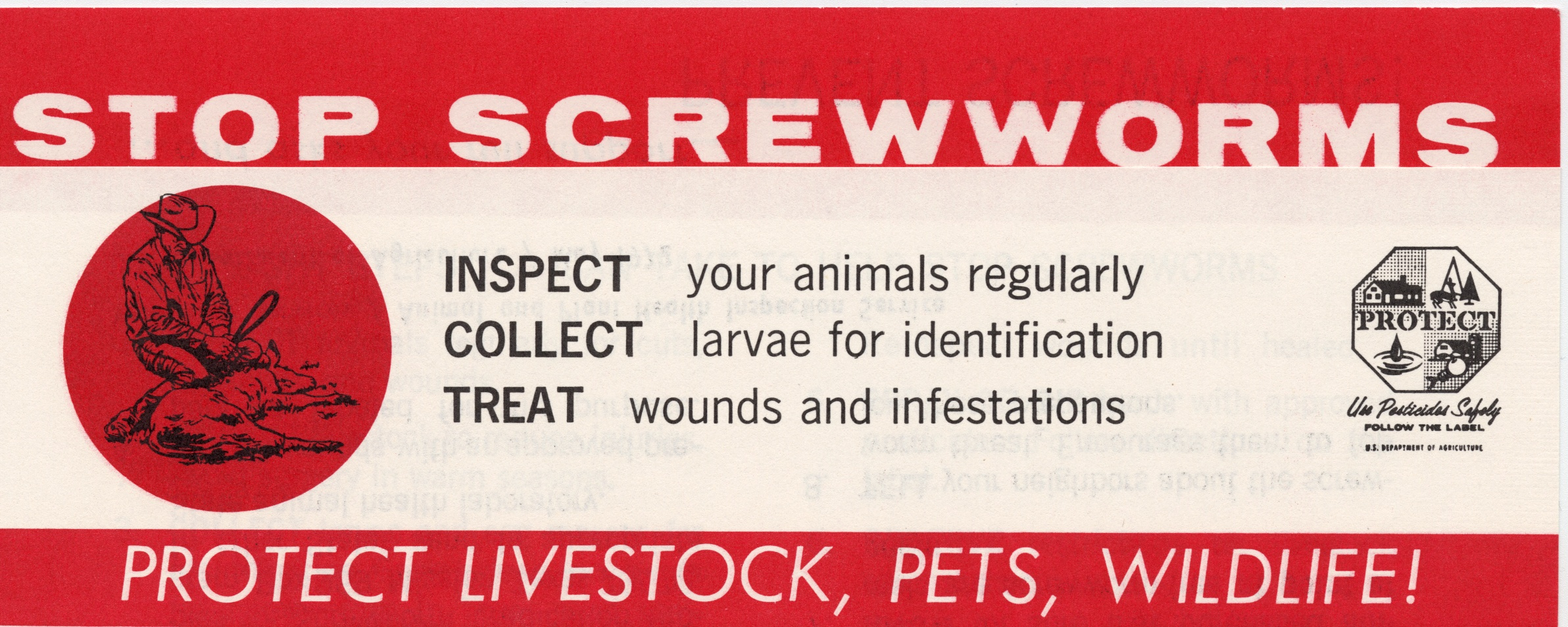
No part of me thought I’d be voluntarily writing a blog about the monstrous sounding New World Screwworm – but here we are! Despite what the name suggests, the pest is a fly, named so because the larvae screw into the flesh of warm-blooded animals and eat their tissue (okay, definitely regretting this topic). New World Screwworm (NWS) has recently been popping up in the news since the parasite has had a resurgence in the US after being previously eradicated, so let’s take a look at the history of this species across the Americas and the situation as it stands.
New World Screwworm (Cochliomyia hominivorax), named to distinguish it from North Africa’s own species, now referred to as Old World Screwworm, is an obligate ectoparasite, a species of Diptera that lays its eggs in open wounds of homeothermic animals. They cause myiasis (a neglected zoonosis) as the larvae hatch and feed on the tissue of their host. The parasite is endemic to South America (excluding Chile) and affects both domestic animals and wildlife. It can infest humans too; however, this is uncommon (phew). NWS frequently infests cattle and can therefore have a huge socioeconomic consequence on highly affected regions. The species was previously endemic in North America and Mexico until, in 1957, a project began with the aim of eradicating the parasite.
Eradication in North America: The Sterile Insect Technique
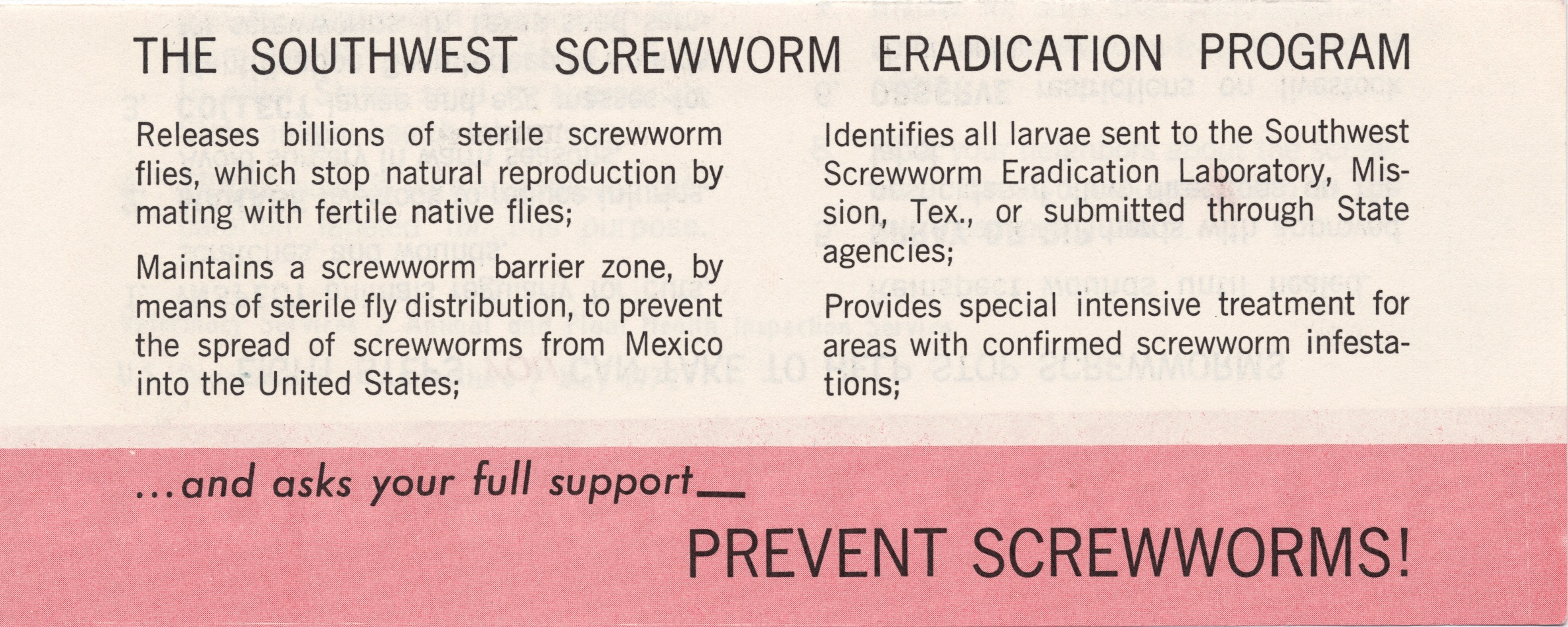
The sterile insect technique (SIT) is a vector control method that uses ionising radiation to induce sterility in males of a target species. It is commonly used today as a technique to control vectors of disease (such as species of mosquito) but it was researchers at the USDA (US Department of Agriculture) working to control a Screwworm outbreak that first successfully applied the technique.
In the 50s and 60s, the SIT project first began in Florida, with ~50 million sterile flies being produced a week. NWS females mate only once in their lives, making this control method particularly effective in this species. This programme cost $11 million but saved the region $20 million in annual losses. The success of the project led to its expansion, with plans to eradicate the species entirely in Mexico. In the mid-70s, 500 million sterile flies were being created a week, and by 1987 much of Mexico had eliminated NWS. The eradication of NWS from North America has saved the US billions of dollars, and its eradication from South America could do the same. However, NWS is adaptable and has wide dispersal, so SIT (effectively a form of population control) must be used in combination with monitoring, treatment and control of livestock movement to be wholly effective at eradicating these vectors.
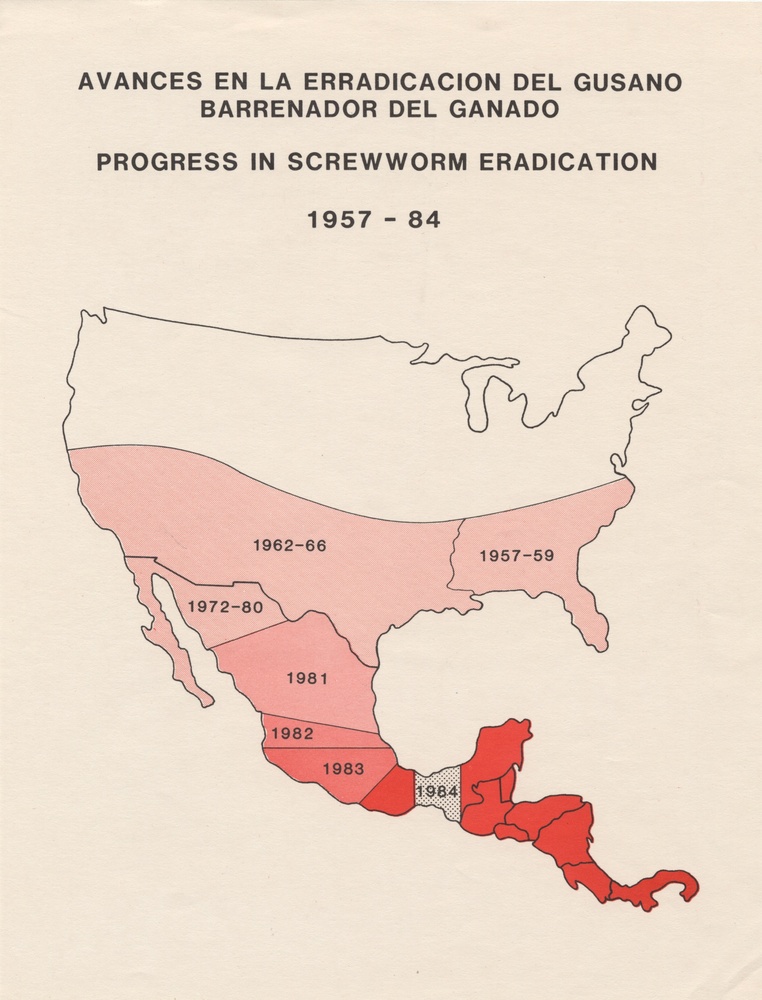
Barrenador del Ganado; Progress in Screwworm Eradication, 1957-1984 .”
Special Collections, USDA National Agricultural Library. https://www.nal.usda.gov/exhibits/speccoll/items/show/7335.
New World Screwworm Resurgence
At the beginning of June, the Governor of Texas warned of the resurgence of NWS after the USDA confirmed a case in a 3-week-old calf (who has since recovered). No humans have been infested, and the USDA has emphasised that the resurgence is not a food safety issue. However, if not properly managed and controlled, the resurgence could be hugely detrimental to the economy of the United States’ largest beef cattle-producing state.
One year ago, the USDA announced a very spirited ‘domestic readiness and response policy initiative’ to control NWS successfully. The plan included sections such as ‘protect the US border at all costs’ and ‘take the fight to the screwworm’. The former is always going to be tricky for a winged species that doesn’t acknowledge the same borders we do, and furthermore, NWS flies can travel up to 300km in under two weeks when searching for favourable environments. However, actions such as restricting the movement of cattle, identifying stray or illegally imported individuals, and monitoring wild animal movement are all viable actions. Despite manning the border, the flies managed to slip past, and now, on June 29th, 27 cases have been identified, all in Texas and New Mexico, and mainly in cattle and sheep.
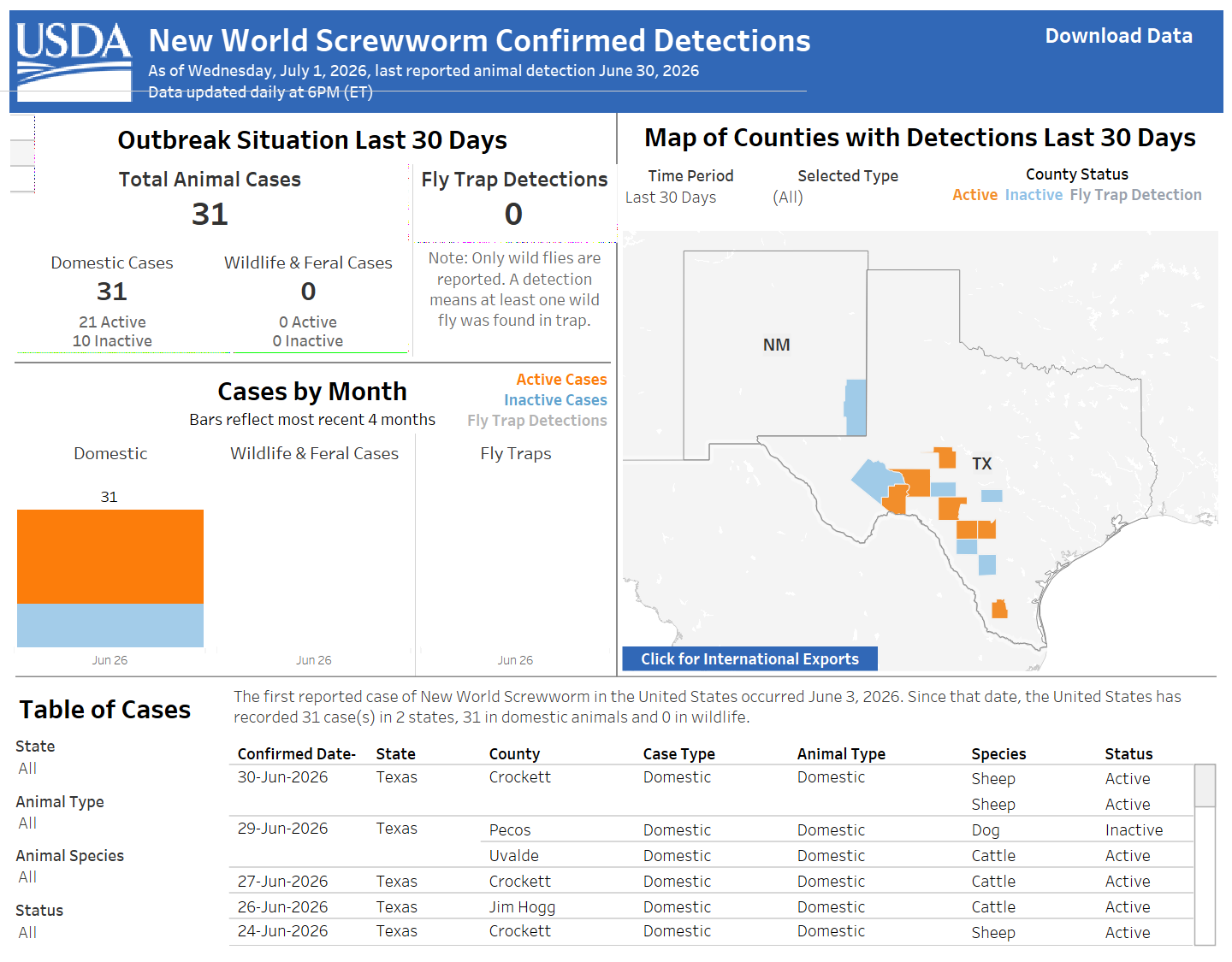
The dashboard captures individual animal cases by county and state, animal type and species,
confirmation date and status. USDA accessed 2nd July 2026.
Since the resurgence this June, the USA has invested in the upgrading of a sterile fly-producing facility in Mexico and is importing 100 million flies a week from a facility it co-owns with Panama. The country has also built its own facility in Texas (although not open yet), and the state has put into effect various quarantines across its counties, restricting the movement of animals. These techniques have been used historically to control NWS outbreaks, but the US is now looking at how to build on the existing SIT method to develop advanced suppression technologies. Texas Biomedical Research Institute announced this week a new partnership with biosecurity platform Flyttr (formerly Oxitec) to develop new solutions to rapidly suppress and push back screwworm populations. This partnership has only just begun, however, so for now the US will have to rely on traditional SIT and other monitoring and control techniques to contain this outbreak. I hope by the time I write my next blog, the US has managed to eradicate New World Screwworm once more.
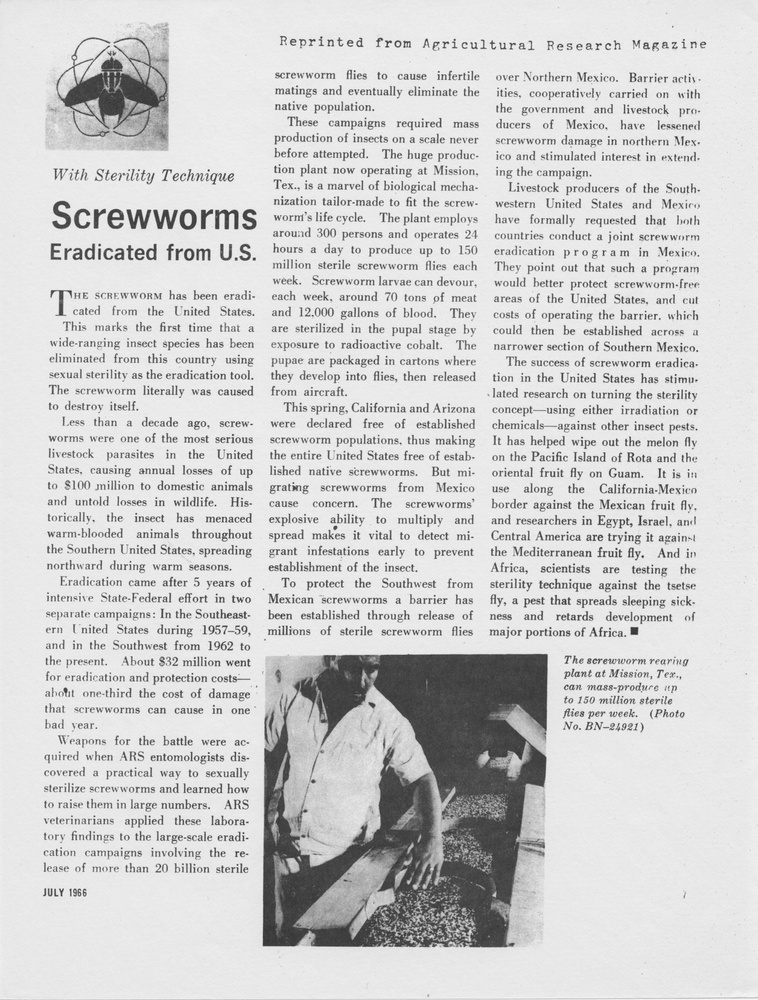
Special Collections, USDA National Agricultural Library.
https://www.nal.usda.gov/exhibits/speccoll/items/show/7334.

Freyja has a BSc in Zoology, and an MSc in the History of Science, Technology and Medicine from The University of Manchester. She currently works as an Associate Publisher for BMC's open access portfolio.
Follow the Topic
-
Parasites & Vectors
This journal publishes articles on the biology of parasites, parasitic diseases, intermediate hosts, vectors and vector-borne pathogens.
-
BugBitten
A blog for the parasitology and vector biology community.

Related Collections
With Collections, you can get published faster and increase your visibility.
Translational leishmaniasis
This collection focuses on leishmaniasis as a central model while also encompassing related parasites that share comparable biological traits, pathogenic mechanisms, and clinical relevance. The aim is to create a translational bridge between basic research and practical applications, highlighting insights that can be extended across the spectrum of kinetoplastids and other closely linked parasites.
Topics of interest include:
• Analytical and omics-based advances for parasite detection, monitoring, and characterization.
• Comparative biology of Leishmania and related parasites, with emphasis on shared mechanisms of infection and survival.
• Host-pathogen interactions and immune responses.
• Epidemiology and transmission dynamics, including drawing parallels between leishmaniasis and other parasitic infections.
• Translational strategies in drug discovery, vaccine development, and therapeutic interventions applicable to leishmaniasis and related parasitic diseases.
By linking leishmaniasis with other parasitic diseases of similar characteristics, this collection seeks to foster integrative approaches, stimulate cross-disciplinary dialogue, and accelerate the translation of knowledge into innovative diagnostic, preventive, and therapeutic solutions.
Publishing Model: Open Access
Deadline: Nov 27, 2026
Credelio Quattro
This collection was created to facilitate access to manuscripts published in Parasites & Vectors focusing on Credelio Quattro™ (lotilaner, moxidectin, praziquantel, and pyrantel chewable tablets).
Articles published in the collection have already gone through the systematic peer review process of the journal.
Publishing Model: Open Access
Deadline: Ongoing