SDG 3 Newsletter: Infectious Diseases
Published in Social Sciences, Microbiology, and Biomedical Research

What are we learning from the UK's Meningitis B outbreak?
An outbreak of Meningitis B rippled through the UK's student population in March. Have we learnt anything about how the public react to infectious disease outbreaks since Covid? UK readers, learn how to check if you're vaccinated. 
Regional bias in research on land use change, ecosystem restoration and zoonotic disease risk
Research has long shown that land use change can impact zoonotic disease transmission, but there is a regional bias across the literature leaving glaring gaps where research is needed most, in countries with high levels of land use change and high risk of zoonotic disease infection.
SDG3 and Me Video Series: Albert Osterhaus
Virologist and Editor-in-Chief of One Health Outlook, Professor Albert Osterhaus, discusses his research on virus discovery, particularly animal viruses that cross the species barrier to humans. Learn how his work supports intervention strategies such as new vaccines, which are key to achieving SDG 3 target 3.3 by 2030.

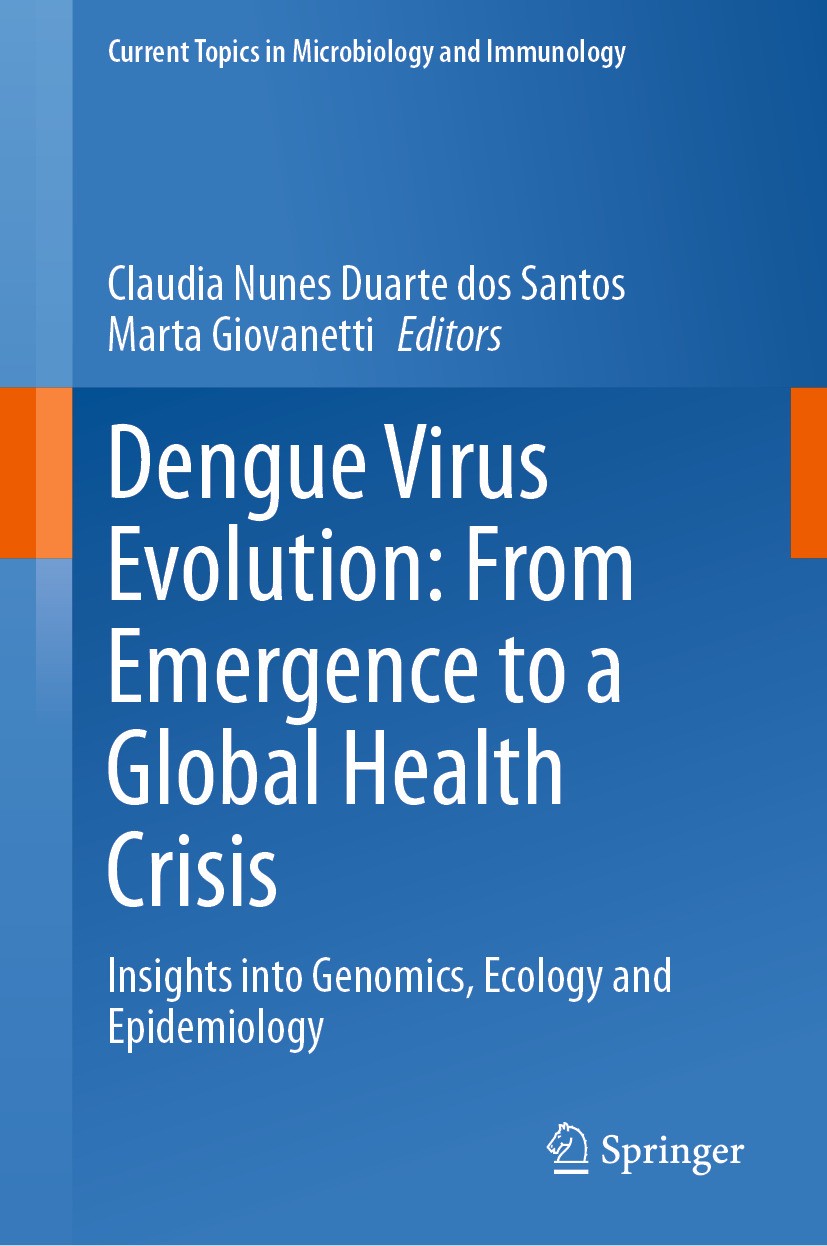
Book Q&A: Dengue Virus Evolution: From Emergence to a Global Health Crisis
As climate change has worsened, so has dengue. But there’s hope. In this blog, we hear from Dr Duarte dos Santos and Dr Giovanetti about dengue virus, their book's connection to SDG 3 and the next steps forward.
Advances in infectious disease diagnostics – how can they help us achieve SDG3.3?
Diagnostic tools for infectious diseases have advanced dramatically in recent years. How important are these tools in achieving SDG3.3, and which options should we invest in? Discover more in this blog.

SN BEN, SDG 3 & SDG 10: Ebola
Members of Springer Nature’s Black Employee Network (SN BEN) explore how Ebola virus disease disproportionately affects African communities, and how collective action with charities and public awareness can help destigmatise Ebola and advance good health (SDG 3) and reduced inequalities (SDG 10).
BMC Global and Public Health: Infectious Diseases and SDG 3
As global health is called into focus, don't miss this blog championing some of BMC Global and Public Health's key infectious disease publications.
Nature, BMC & Discover Collections: health policy, digital and personalised medicine
Researchers, don’t miss these open collections. Two blogs from Nature Communications and npj journals showcase collections focusing on health policy and digital medicine. Discover Nano's Collection focuses on the application of nanomedicines in the treatment of infectious diseases. Meanwhile, BMC Infectious Diseases calls for submissions to Collections on personalised medicine, HIV, malaria, and tropical vector‑borne diseases.
Documenting Disruption: Harm Reduction Research on Infectious Disease is Urgently Needed
Global health gains are being undone by aid cuts, conflict and political retreat. Harm Reduction Journal is calling for content to document the impact on infectious disease.
In other news...
A call to action from the Global Think-tank on Steatotic Liver Disease
SLD is no longer an emerging issue. It is an established component of the global metabolic public health threat. The question is not whether solutions exist, but whether they will be implemented at scale. Learn more about the authors' publication in this blog.
European Public Health Week 4-8 May
Want to write a blog about your research? Wish to highlight a public health cause close to your heart? Contact us last-minute to contribute a blog for our campaign, which goes live next week! Email campaign lead Alex Goodridge at alex.goodridge@springernature.com
Get involved!
If you would like to be involved with our SDG 3 initiatives, contact me or Virginia Mercer. Follow me, Alice Coe, on Research Communities to be notified of future SDG 3 newsletters.
With special thanks to this newsletter's 21 contributors: Anthony Armenta, Freyja Austin, Binta Bah, Vivian Bai, Emma Brode, Emma Campbell, Rebecca Chen, Ben Cranfield, India Sapsed-Foster, Louis Gautier, Dr Marta Giovanetti, Sophie Gray, Natasha Hirst, Amy Joint, Abiola Lawal, Dr Jeffrey Lazarus, Virginia Mercer, Dr Claudia Nunes Duarte dos Santos, Prof Albert Osterhaus, Will Shadbolt and Rebecca Shen
Follow the Topic
-
BMC Global and Public Health
An open access, transparent peer review journal publishing outstanding and influential research and opinion of broad interest to all professional communities involved in global and public health research, policy-making, implementation and delivery worldwide.
-
BMC Infectious Diseases
This journal is an open access, peer-reviewed journal that considers articles on all aspects of the prevention, diagnosis and management of infectious and sexually transmitted diseases in humans, as well as related molecular genetics, pathophysiology, and epidemiology.
-
Nature Communications
An open access, multidisciplinary journal dedicated to publishing high-quality research in all areas of the biological, health, physical, chemical and Earth sciences.
-
Journal of Epidemiology and Global Health
The journal aims to impact global epidemiology and international health with articles focused on innovative scholarship and strategies to advance global health policy.
-
One Health Outlook
This journal is a new open access journal published by BMC in collaboration with the Global One Health Community.
-
Harm Reduction Journal
This journal publishes research and commentary on approaches diminishing the harm of stigmatization, marginalization and criminalization of public health, human rights and social justice issues, as well as rebuking the de facto criminalization of marginalized and stigmatized communities.
-
Nature Health
Nature Health publishes health research across the medical, social and environmental sciences and requires meaningful engagement with research participants and their communities.
-
Communications Health
This is an open access journal from Nature Portfolio publishing high-quality research, reviews and commentary in all population health-related areas of research.








Related Collections
With Collections, you can get published faster and increase your visibility.
Personalized medicine in infectious diseases
BMC Infectious Diseases invites submissions for a Collection on Personalized medicine in infectious diseases.
The field of personalized medicine is rapidly advancing, particularly among infectious diseases, where the traditional ‘one-size-fits-all’ treatment approaches are increasingly inadequate. As our understanding of the genetic, environmental, and lifestyle factors influencing disease susceptibility and treatment response grows, this Collection aims to explore innovative strategies and technologies that can enhance the application of personalized medicine in combating infections.
Recent advancements in genomics, pharmacogenomics, and bioinformatics are transforming the application of personalized approaches for infectious diseases. These developments have enabled the identification of specific biomarkers that inform individualized treatment strategies, improving patient outcomes and minimizing adverse effects. In parallel, advances in molecular diagnostics and tailored antimicrobial therapies offer new opportunities to address the escalating challenge of antimicrobial resistance.
Improved understanding of host-pathogen interactions and the genetic determinants of infections may support the development of targeted antiviral and antimicrobial strategies that enhance their effectiveness, while limiting the emergence of resistance. Research in this area may also enable personalized antimicrobial dosing and optimized treatment guidelines that balance individual patient benefits with broader public health considerations.
This Collection welcomes original research articles on topics including but not limited to:
- Tailored antimicrobial therapy in infectious diseases
- Patient-specific interventions to improve clinical outcomes
- Personalized strategies to address antimicrobial resistance
- Precision medicine approaches in antiviral therapy
- Novel methodologies for disease modelling and therapeutic targeting
- Precision diagnostics, including biomarker validation and metagenomic sequencing
- Model-informed personalized dosing in infectious diseases
- Therapeutic drug monitoring in anti-infective therapy
This Collection supports and amplifies research related to SDG 3 (Good Health and Well-being).
All manuscripts submitted to this journal, including those submitted to collections and special issues, are assessed in line with our editorial policies and the journal’s peer review process. Reviewers and editors are required to declare competing interests and can be excluded from the peer review process if a competing interest exists.
Publishing Model: Open Access
Deadline: Dec 16, 2026
Advanced data-driven analytical frameworks to support and improve policy decisions
BMC Global and Public Health is calling for submissions to our Collection on how the integration of advanced data-driven methods in public health policy is rapidly transforming how we understand and respond to global health challenges. This Collection focuses on the application of innovative statistical modelling, machine learning, and geographic information systems (GIS) to inform health policy decisions. By integrating data from surveys and health records with information on social and environmental determinants, researchers can uncover actionable insights that enhance the effectiveness and efficiency of health interventions across diverse populations.
The relevance of these advanced methodologies is underscored by recent advancements in methods for data collection and analysis, which have enabled researchers to create more precise models for predicting disease outbreaks, evaluating health interventions, and addressing health disparities. As public health continues to confront complex issues such as pandemics and non-communicable diseases, the ability to leverage data-driven strategies becomes increasingly vital for crafting evidence-based policies that are responsive to real-world challenges.
Continued research in this area could lead to groundbreaking methodologies that enhance our understanding of health dynamics and improve public health responses. Future advancements may include the development of real-time data analytics for tracking disease spread, enhanced spatial epidemiological models that account for environmental variables, and improved collaboration between data scientists and public health professionals. By further integrating data science with public health, we can pave the way for more effective interventions and ultimately improve health outcomes globally.
We encourage submissions in the following areas, with a particular interest in studies relevant to low- and middle-income countries (LMICs); however, contributions from all settings are welcome, including:
- Applications of Machine Learning in Public Health
- Spatial Epidemiology and Disease Mapping
- Statistical Modeling for Health Policy Decisions
- GIS in Public Health Decision Making
- Evidence-Based Approaches to Infectious and Non-communicable Diseases
This Collection supports and amplifies research related to SDG 3: Good Health and Well-being.
All manuscripts submitted to this journal, including those submitted to collections and special issues, are assessed in line with our editorial policies and the journal’s peer-review process. Reviewers and editors are required to declare competing interests and can be excluded from the peer review process if a competing interest exists.
Publishing Model: Open Access
Deadline: Nov 14, 2026


