Self-filtering narrowband organic photodetectors enabled by manipulating localized Frenkel exciton dissociation
Published in Electrical & Electronic Engineering



Narrowband detection is crucial for full-color and near-infrared imaging, and also shows very wide application in emerging artificial intelligence networks, such as humanoid robots and advanced driver-assistance systems. Commercially available narrowband photodetectors are made of broadband silicon photodiodes integrated with optical filters. In comparison with its inorganic counterpart, organic semiconductors are suitable for wide applications that require inexpensive, flexible, and moldable photodetectors, However, the typical high binding energy and short diffusion length of the excitons in organic semiconductors bring some challenges for their applications in photon-electron conversion devices.
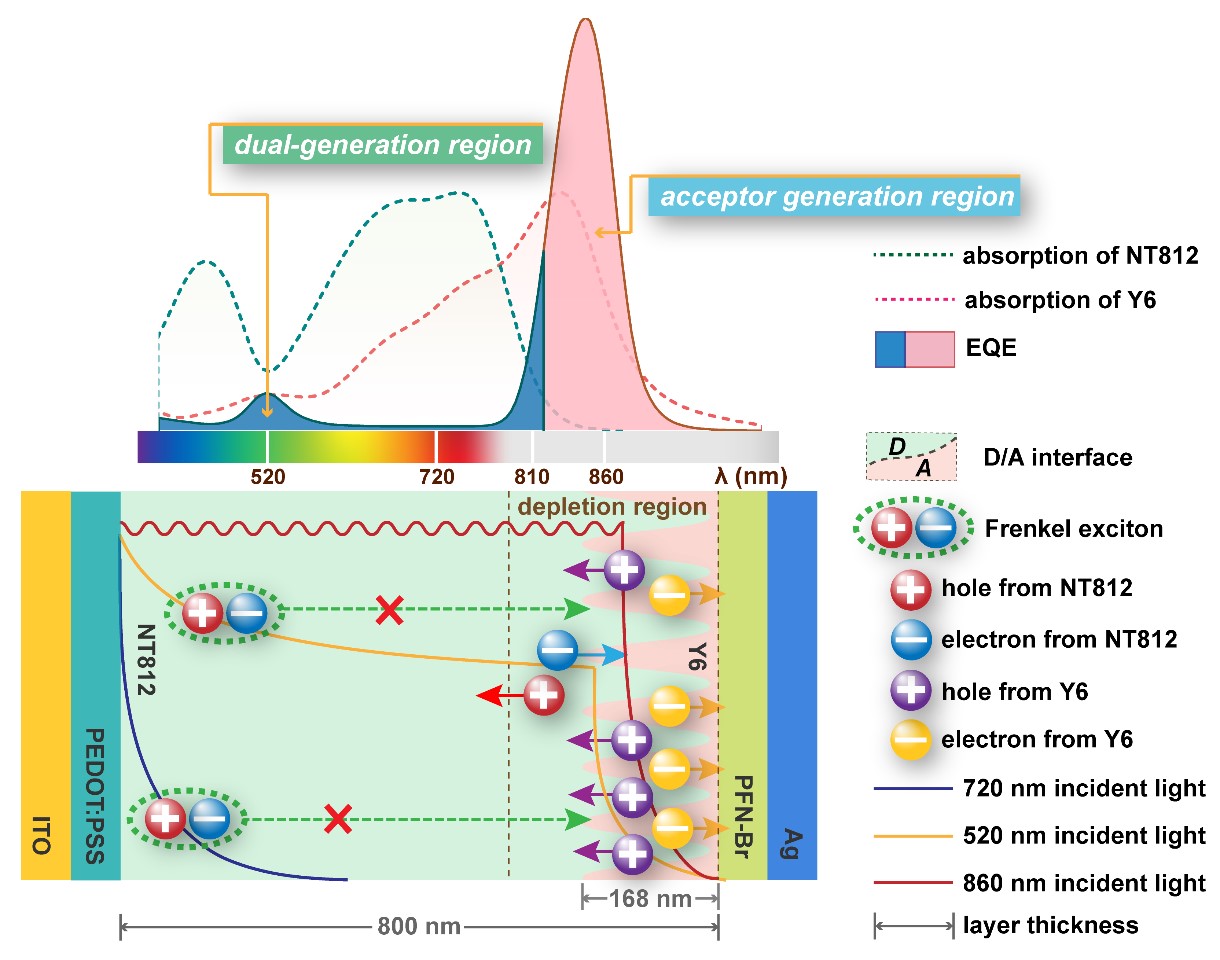
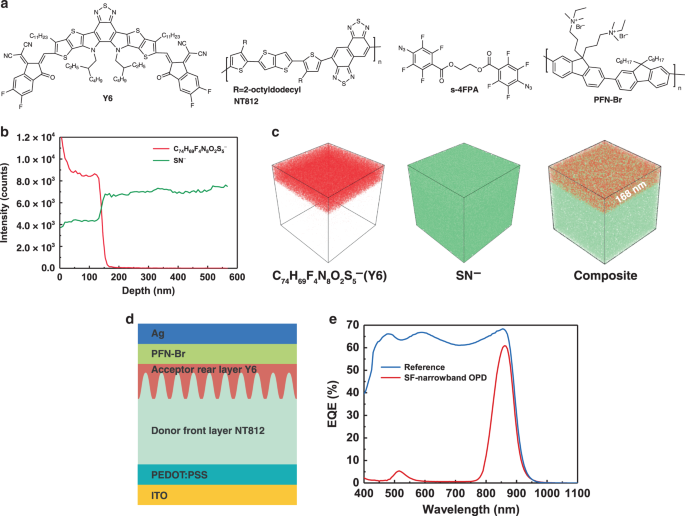
In our work, we find that these intrinsic “poor” properties of Frenkel excitons actually offer organic semiconductors great opportunities to achieve filter-free narrowband organic photodetectors. We propose a simple strategy to produce narrowband organic photodetectors by manipulating exciton dissociation (named as “exciton dissociation narrowing” [EDN]), with a hierarchical device structure where thick larger bandgap donor layers followed by a lower bandgap acceptor layer. During the operation, excitons generated by high-energy photons in donor front layers fail to separate into free charges due to the absence of donor/acceptor interfaces, thus dissipated. Only low-energy photons with a long penetration depth can reach the donor/acceptor interfaces and produce free charges for collection. It was found that this novel methodology can efficiently suppress the response outside the detection window while retaining high sensitivity in the detection region. Moreover, the utilizing of Frenkel exciton endows the resulting detector with electrically stable spectral selectivity. In addition, the multilayer structure improved the charge injection barrier and effectively suppressed dark current, leading to higher detectivity. As consequence, filter-free narrowband organic photodetectors centered at 860 nm with full-width-at-half-maximum of around 50 nm, peak external quantum efficiency around 65% and peak specific detectivity over 1013 Jones are obtained.
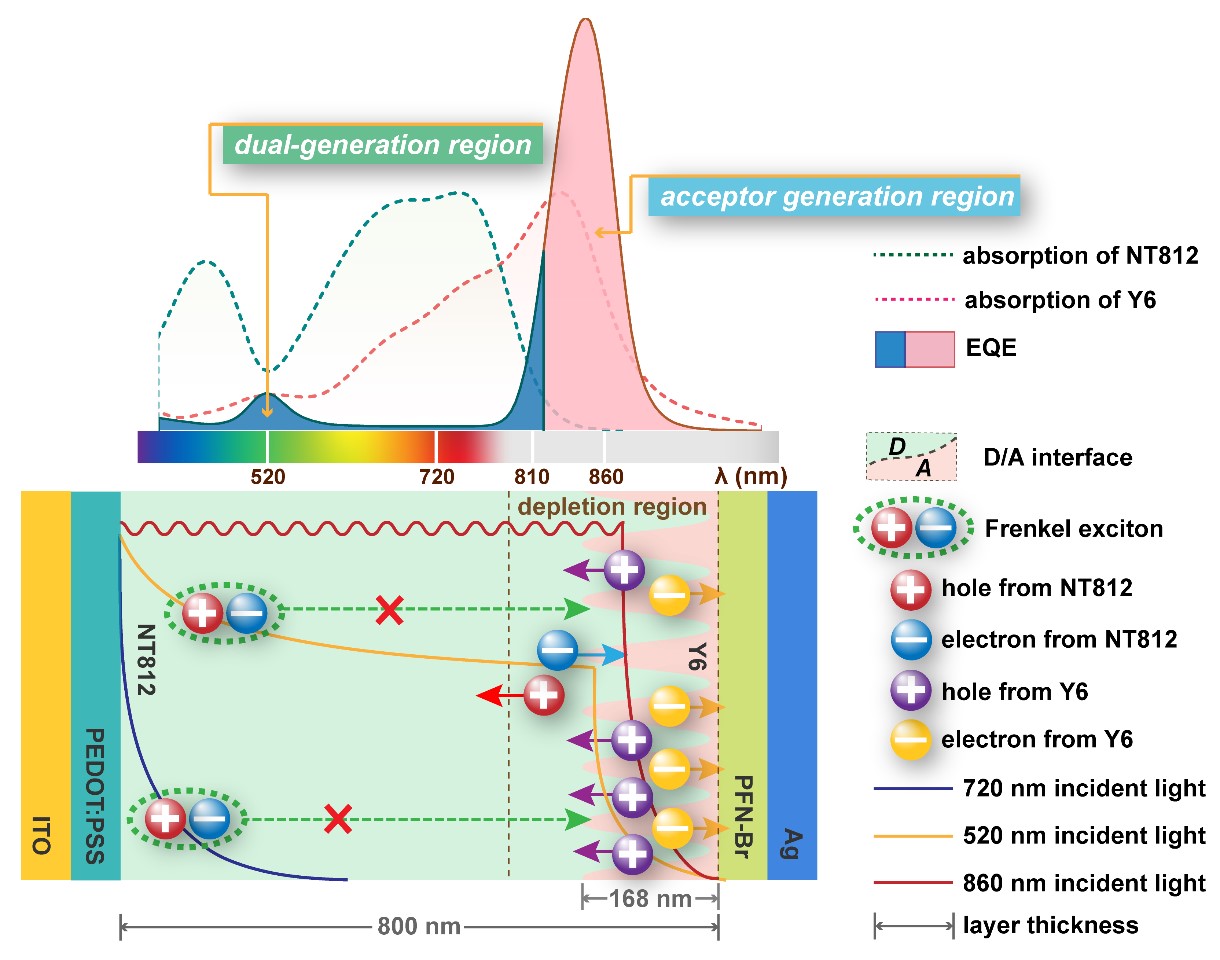
Figure 1. Diagrammatic illustration of the working mechanism of self-filtering narrowband photodetectors.
Furthermore, this methodology is also applicable for other common organic semiconductor materials. The position and full-width-at-half-maximum of the response peak are unique and critical parameters for narrowband organic photodetectors, and both are tunable by simply adjusting the combination of the p-type material and the n-type material in this study. For example, filter-free narrowband organic photodetectors with wavelength selectivity at 910 nm and 940 nm, full-width-at-half-maximum of around 50 nm and specific detectivity about 1013 Jones are also obtained by using this concept. This novel device structure along with its design concept may endow organic semiconductors with the ability to create low cost and reliable narrowband organic photodetectors for practical applications.
For more details, please see our recent work in Nature Communications: Self-filtering narrowband organic photodetectors enabled by manipulating localized Frenkel exciton dissociation
Follow the Topic
-
Nature Communications
An open access, multidisciplinary journal dedicated to publishing high-quality research in all areas of the biological, health, physical, chemical and Earth sciences.

Related Collections
With Collections, you can get published faster and increase your visibility.
Women's Health
Publishing Model: Hybrid
Deadline: Ongoing
Tumor Microenvironment Crosstalk and Therapeutic Implications
Publishing Model: Hybrid
Deadline: Nov 02, 2026