Social Media and Teen Nutrition in Kenya: New Insights
Published in Healthcare & Nursing, Social Sciences, and Arts & Humanities


🔑 Key Findings
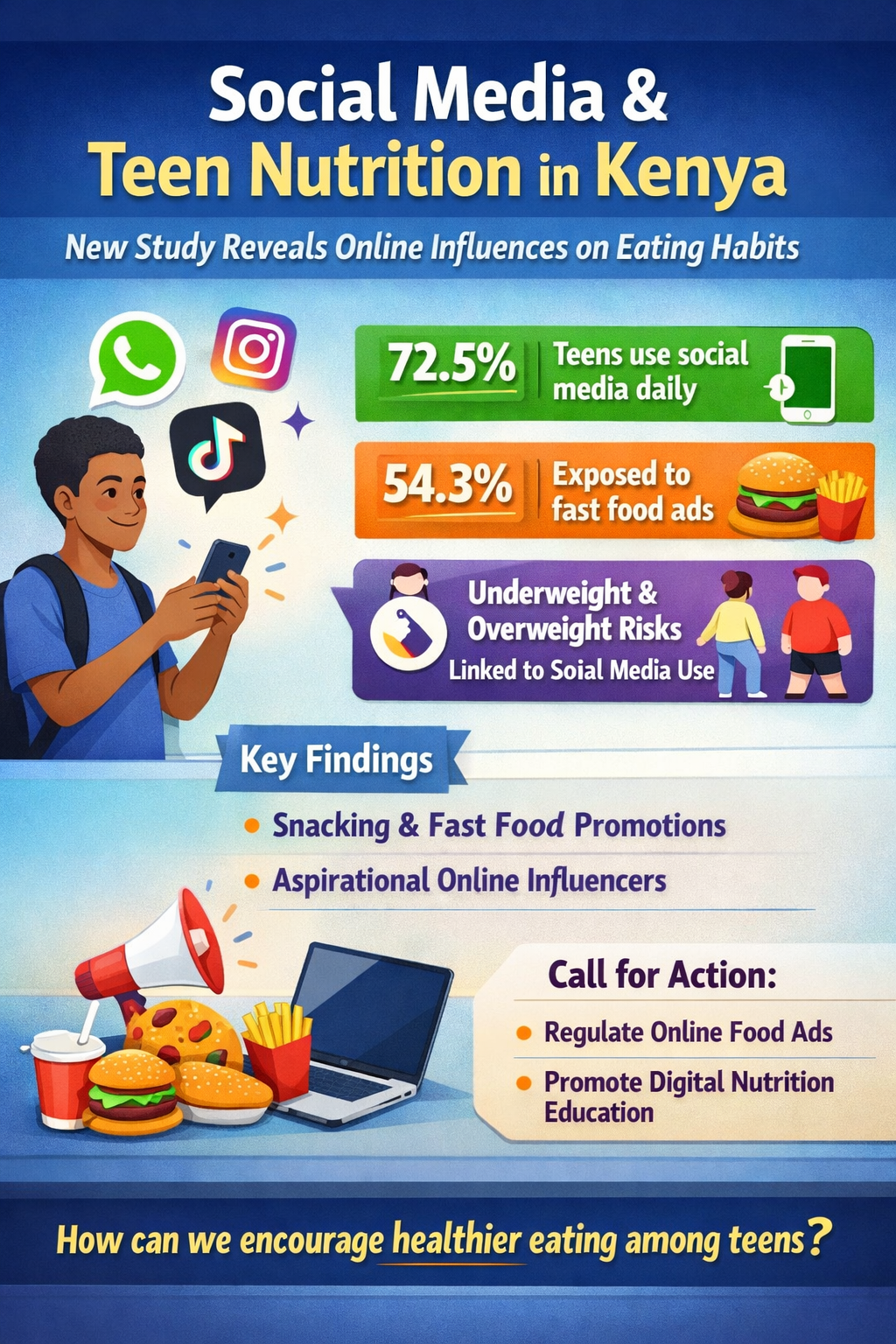
- High social media use: 72.5% of teenagers reported daily use, averaging 2.6 hours on weekdays and 3.1 hours on weekends.
- Popular platforms: WhatsApp, Instagram, and TikTok were the most accessed.
- Food-related behaviors:
- 34.5% watched food-related videos.
- 32.8% snacked while browsing.
- 54.3% were exposed to food advertisements, mostly fast food.
- Health impact:
- Access to WhatsApp and Instagram was linked to higher odds of being underweight.
- Exposure to food ads was associated with both underweight and overweight risks.
- Qualitative insights: Teens described aspirational consumption patterns influenced by online trends, habitual snacking during browsing, and strong exposure to fast-food promotions.
📌 Public Health Implications
The study concludes that social media is a double-edged sword:
- It promotes unhealthy eating through energy-dense, nutrient-poor food advertising.
- Yet, it remains an untapped opportunity for nutrition education.
For discussion:
- How can policymakers regulate online food advertising to protect adolescents?
- What strategies could schools and parents use to leverage social media for healthier eating behaviors?
- Could digital literacy programs help teenagers critically evaluate food content online?
👉 Read the full article here: https://link.springer.com/article/10.1186/s40795-026-01276-6

Public Health Nutrition professional passionate about advancing community health through evidence-based nutrition strategies and digital communication. Skilled in translating complex nutrition science into engaging, accessible content across social media platforms to combat misinformation and inspire healthier lifestyles. Experienced in program design, policy advocacy, and building online communities that drive sustainable dietary change.
Follow the Topic
-
BMC Nutrition

BMC Nutrition is an open access, peer-reviewed journal that considers articles on all aspects of nutritional sciences.
Related Collections
With Collections, you can get published faster and increase your visibility.
Nutritional interventions to prevent non-communicable diseases in the aging population
BMC Nutrition is calling for submissions to our Collection that explores the nutritional interventions aimed at preventing non-communicable diseases in the aging population. We welcome research that examines dietary patterns, nutrient deficiencies, and innovative strategies to enhance health outcomes in older adults, ultimately contributing to the global understanding of nutrition's role in promoting longevity and well-being.
The aging population is increasingly at risk for non-communicable diseases (NCDs) such as diabetes, cardiovascular disease, neurological disorders, and certain cancers. These conditions not only diminish quality of life but also impose a substantial burden on healthcare systems globally. Nutritional interventions have emerged as a promising strategy to mitigate these risks, focusing on the role of diet in managing and preventing chronic diseases. By examining how specific nutrients and dietary patterns can influence health outcomes in older adults, we can foster a deeper understanding of effective prevention strategies tailored to this demographic.
Advancements in nutritional science have highlighted the critical link between diet and health outcomes, particularly in the context of aging. Recent studies suggest that targeted nutritional interventions can significantly reduce the incidence and progression of NCDs among older individuals. Innovations in food for special medical purposes and a growing awareness of nutrient deficiencies have opened new avenues for research. By emphasizing the importance of nutrition in aging populations, we aim to equip healthcare providers and policymakers with the knowledge needed to implement effective preventive strategies.
Ongoing research in this field holds the potential to revolutionize how we approach dietary recommendations for aging populations. As we gain insights into the interplay between nutrition and chronic disease prevention, future advancements may lead to more personalized dietary interventions, improved guidelines for nutrient intake, and enhanced public health initiatives aimed at promoting longevity and well-being among older adults.
Topics of interest include but are not limited to:
- Nutrition interventions for diabetes prevention
- Dietary patterns and cardiovascular health in aging
- Nutritional strategies for neurological disease prevention
- The role of nutrition in cancer prevention among older adults
- Addressing nutrient deficiencies in aging populations
All manuscripts submitted to this journal, including those submitted to collections and special issues, are assessed in line with our editorial policies and the journal’s peer review process. Reviewers and editors are required to declare competing interests and can be excluded from the peer review process if a competing interest exists.
This Collection supports and amplifies research related to SDG 3: Good Health & Well-Being
Publishing Model: Open Access
Deadline: Jun 04, 2026
Food policies in low- and middle-income countries
BMC Nutrition is calling for submissions to our Collection on food policies in low- to middle-income countries (LMICs), focusing on their role in enhancing food security and nutrition. This Collection aims to explore the development and implementation of effective food policies that can foster sustainable agricultural practices, enhance trade, and ultimately contribute to the health and well-being of populations in LMICs. By supporting innovative research, we aim to contribute to the global discourse on effective solutions to combat hunger and improve nutritional outcomes.
Food policies play a critical role in addressing the unique challenges faced by LMICs in achieving food security and improving nutritional outcomes. These nations often grapple with a complex interplay of economic, social, and environmental factors that impact food access, availability, and affordability. The significance of robust food policies in LMICs is underscored by recent advancements in understanding the links between nutrition, health, and economic development. As countries confront rising global hunger and malnutrition, innovative policy interventions are being crafted to address these pressing issues. Research has highlighted successful strategies for improving food access and fostering sustainable agricultural practices, demonstrating that comprehensive food policies can serve as a catalyst for positive change in these regions.
Continued research in this field holds the promise of uncovering new insights and strategies that can further enhance food security and nutrition in LMICs. Future advancements may include more integrated approaches that combine agricultural, trade, and health policies, as well as the development of context-specific interventions that address local challenges. By fostering collaboration among stakeholders, including governments, NGOs, and communities, we can work towards more resilient food systems that support sustainable development.
Topics of interest include but are not limited to:
- Evaluating food policy interventions in LMICs
- Sustainable agriculture practices for food security
- Trade policy impacts on nutrition and food access
- Economic development and its role in food security
This Collection supports and amplifies research related to SDG 2 (Zero Hunger).
Publishing Model: Open Access
Deadline: Jun 16, 2026

Please sign in or register for FREE
If you are a registered user on Research Communities by Springer Nature, please sign in
Read more here; https://link.springer.com/article/10.1186/s40795-026-01276-6