Strengthening Soybean Performance Through a Nano-Biofertilizer Approach
Published in Microbiology, Plant Science, and Agricultural & Food Science




Improving nutrient use while reducing dependence on conventional fertilizers remains one of the central challenges in agriculture. Biofertilizers and nanomaterials have both attracted considerable attention in recent years, but they are often studied separately. A new article published in the Journal of Soil Science and Plant Nutrition explores what happens when these two approaches are brought together in soybean cultivation.
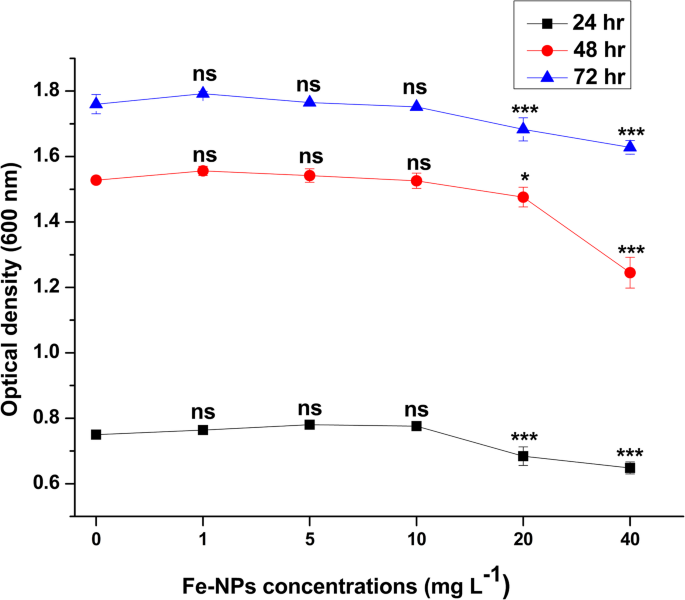
The study examined a nano-biofertilizer based on iron oxide nanoparticles and Bradyrhizobium japonicum, the well-known nitrogen-fixing bacterium that forms nodules on soybean roots. The researchers first evaluated the effects of different nanoparticle concentrations on bacterial growth and identified conditions that were compatible with the microorganism. They then used the combined formulation as a seed-priming treatment and assessed its influence on germination, plant growth, nodulation, and photosynthetic performance.
One of the most interesting findings was that the combination treatment performed better than either iron nanoparticles or B. japonicum alone. Seeds primed with the nano-biofertilizer showed faster and more vigorous early development, with improvements in root and shoot growth. The treatment also increased the number and biomass of active nodules, suggesting a positive effect on the soybean–rhizobium partnership that underpins biological nitrogen fixation.
Higher chlorophyll levels
The authors looked beyond growth measurements and examined how the plants were functioning physiologically. Using chlorophyll fluorescence analysis, they found evidence of enhanced photosystem II performance and more efficient electron transport in plants receiving the nano-biofertilizer treatment. These changes were accompanied by higher chlorophyll levels and stronger overall photosynthetic performance, indicating that the benefits were not limited to seedling establishment alone.
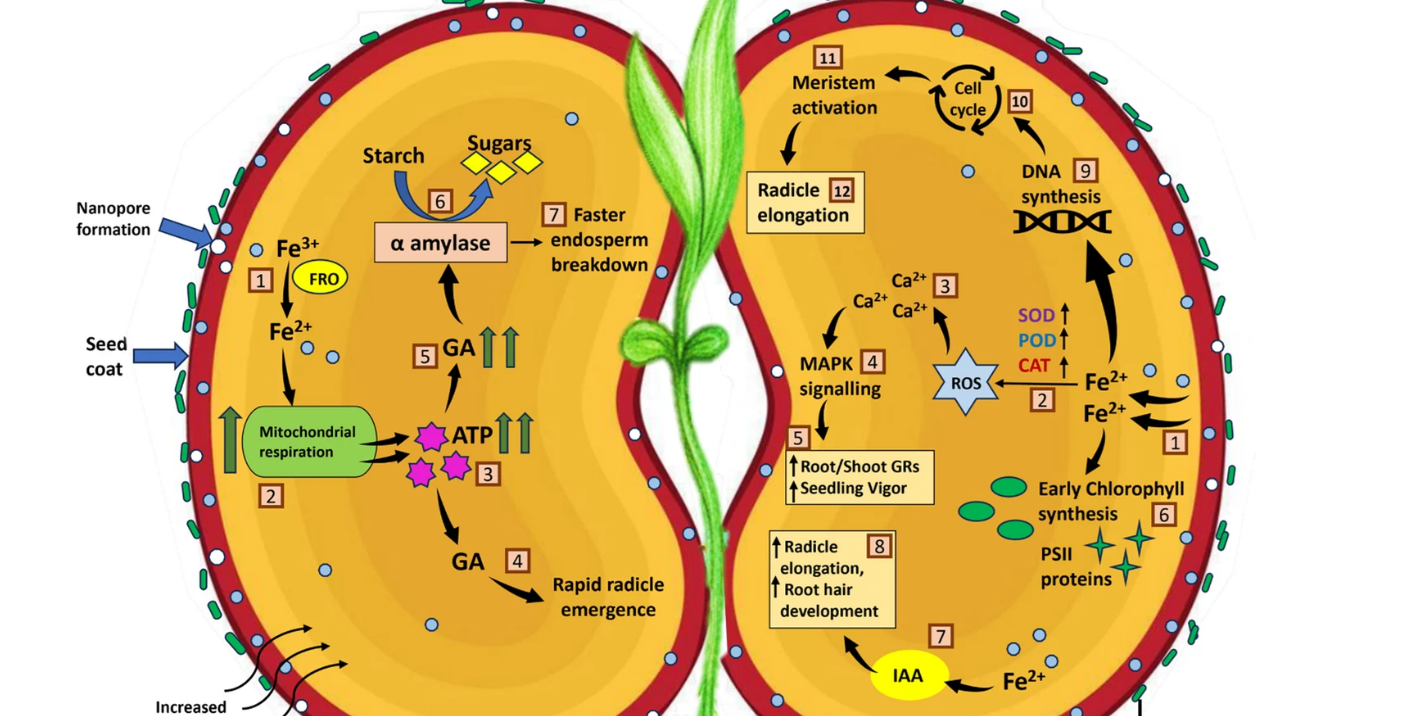
To explain these responses, the researchers proposed a mechanism in which iron nanoparticles improve iron availability during germination and early growth, while B. japonicum contributes to rhizosphere activity, nodulation, and nitrogen fixation. Together, these processes may support plant metabolism, photosynthesis, and biomass accumulation more effectively than either component on its own. The study contributes to a growing body of work investigating how nanotechnology and microbial inoculants can be integrated into agricultural systems.
As with many promising greenhouse and pot-scale studies, questions remain about performance under field conditions. The authors explicitly note that their work did not evaluate grain yield, seed quality, or long-term sustainability outcomes, and they highlight the need for future field-based research. Even so, the findings provide an interesting example of how combined biological and nanotechnology-based strategies may help support crop production while advancing the search for more sustainable fertilization approaches.
Author's note: I used Microsoft Copilot to assist in creating this post.

Follow the Topic
-
Journal of Soil Science and Plant Nutrition
The Journal of Soil Science and Plant Nutrition is an international, peer reviewed journal devoted to publishing original research findings in the areas of soil science, plant nutrition, agriculture, and environmental science.