The Culture Dividend: Why Measurement Matters for Culture as Infrastructure
Published in Social Sciences, Statistics, and Economics


This blog entry builds on our recent work published in Humanities & Social Sciences Communications (Nature Portfolio) and the World Economic Forum, where we argued that cultural institutions should be understood not as symbolic assets or static repositories of artefacts, but as economic and social infrastructure. Across these publications, a recurring question emerges: why do systems that demonstrably support long-term economic stability, wellbeing, and resilience, remain underrepresented in mainstream measurement frameworks?
Museums and heritage ecosystems are central to this paradox. While they absorb sustained public and private investment, their returns are assessed through narrow proxies - attendance figures, tourism receipts, or isolated GDP effects.The Nature paper highlighted how this measurement gap systematically underrepresents the contribution of heritage practices to innovation, economic development, and societal change, while the WEF contribution translated this insight into the Cultural Capital Financing framework, defining culture as a form of patient capital aligned with sustainability and long-term value creation. This perspective includes acknowledging culture as both a driver and an enabler of sustainable development: to design truly regenerative economies, the economic contributions of informal and biocultural practices cannot be ignored.
Value that culture helps accumulate over time - where investment in culture is investment in youth and in the future , and across sectors - as cultural elements are embedded in most human activities, from healthcare to construction, allows the rewards from investment in culture to be understood as culture dividends. This way of thinking helps align cultural institutions with inclusive growth, environmental resilience, and future-ready governance, in line with the 2030 Agenda for Sustainable Development. However, the scale and value of the returns from investments in culture only become visible once appropriate measurements are in place, as conventional balance sheets and GDP metrics do not tell the whole story.
Museums: Anchored institutions, long-horizon returns
Museums represent the most institutionally visible component of cultural infrastructure. Empirically, they operate at the intersection of investment, skilled employment, education, tourism, and the creative economy. Their economic behavior resembles that of long-horizon infrastructure: they require upfront capital, generate gradual returns, and embed activity locally.
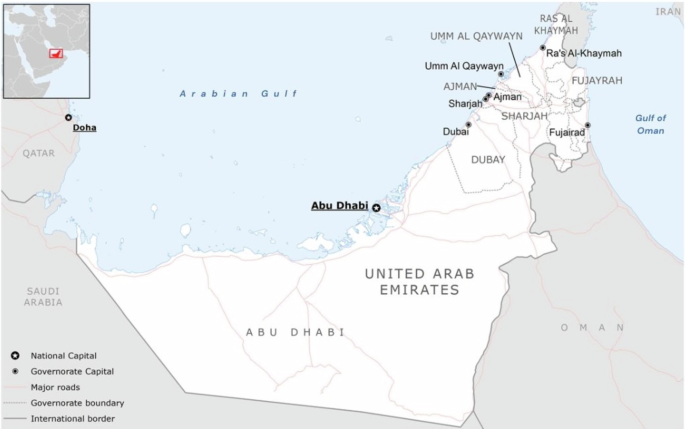
Recent developments in Abu Dhabi’s museum ecosystem illustrate this dynamic. New museums are set to function simultaneously as anchors for creative economy growth, platforms for social inclusion and wellbeing, and laboratories for climate-responsive architecture and sustainable urban design. These effects unfold over decades, further reinforcing the globally observable mismatch between museums’ long-term performance and short-term evaluation tools.
The research underpinning the Nature and WEF publications shows that when museums are assessed through broader indicator systems -linking cultural participation, digital innovation, knowledge spillovers, environmental performance and social entrepreneurship - their contribution to economic resilience becomes both measurable and policy-relevant. The challenge, therefore, is not whether museums create value, but whether our accounting systems are capable of recognizing it.
Heritage ecosystems: Embedded value, distributed resilience
Heritage extends the infrastructure logic beyond buildings to place-based systems of knowledge, skills, landscapes, and social practices. Unlike museums, heritage ecosystems are often decentralized, intergenerational, and deeply embedded in local economies. Their economic effects are diffuse but persistent: supporting livelihoods, reinforcing identity, and aligning everyday economic activity with ecological stewardship.
Evidence from Africa, Latin America and the Caribbean, and parts of East and Southeast Asia shows how heritage-based models contribute to climate-resilient development and regenerative growth. These systems embed resilience directly into production and social organization, rather than retrofitting it through corrective policy measures. Yet precisely because their value is distributed and preventative, heritage ecosystems remain among the least visible within financial and sustainability frameworks.
The indicator-based approaches discussed in the Nature publication suggest a way forward: translating heritage participation, ecosystem vitality, and institutional continuity into metrics that speak to policymakers and investors without reducing cultural complexity. When heritage is understood as infrastructure -rather than as legacy or nostalgia - it becomes a strategic asset for long-term stability in an era of climate uncertainty and geopolitical fragmentation.
From accounting blind spots to new measurement models
Existing measurement systems are increasingly moving toward the recognition of the culture dividend through advanced modeling approaches that combine cultural and non-cultural dimensions, revealing culture as a systemic, value-creating element. The challenge now is to operationalize these measurements in ways that are scalable, context-sensitive, and internationally comparable.
Newly adopted 2025 UNESCO Framework for Cultural Statistics enables the measurement of a wide range of cultural expressions, irrespective of the economic or social mode of their production, through a praxeological lens and a focus on Cultural and Creative Ecosystems (CCEs). The 2025 UNESCO FCS approach introduces methodological innovation and develops an updated cultural value-generation model to better represent the ways in which economic, natural, human, and social capitals are created through the complex synergies established by the diverse stakeholders in various CCEs.
Complementing these advances, work by the World Intellectual Property Organization (WIPO) on the international implementation of the Creative Economy Data Model has emphasized the need for robust modeling approaches to better capture the economic dynamics of cultural and creative ecosystems. The Organisation for Economic Co-operation and Development (OECD) further contributes by identifying good practice initiatives at the international level and by providing guidance to national and local governments on how to assess the impact of cultural and creative ecosystems on innovation and evolving business models within their respective contexts.
Amid global competition between cities, the ability to attract creative people and businesses -often described as urban “magnetism” - is not driven by a single dimension of urban power. Rather, it emerges from the overall performance of a city as an integrated system. The Global Power City Index, developed by the Mori Memorial Foundation’s Institute for Urban Strategies, evaluates and ranks the comprehensive power of the world’s major cities by positioning cultural interaction alongside non-cultural dimensions, including livability, environmental quality, transport accessibility, academic and research capacity, and the characteristics of local economic markets.
Read more:
- Culture as Infrastructure: Policy Lessons from Abu Dhabi's Creative Economy (OECD Cogito): https://oecdcogito.blog/2026/07/07/culture-as-infrastructure-policy-lessons-from-abu-dhabis-creative-economy/
- Beyond Data: Why Culture and Human Judgement Matter for Institutions in the Age of AI (World Economic Forum): https://www.weforum.org/stories/artificial-intelligence/beyond-data-culture-human-judgement-institutions-ai/

My research examines how public institutions can make better strategic decisions by integrating evidence, expertise, organisational knowledge, human judgement, and emerging technologies.
Since 2019, I have led the development of CultureSTATS-AD, the MENA region's first government-led cultural evidence programme. Developed with institutional partners, it supports cultural policy, strategic planning, resource allocation, sector development, and investment across Abu Dhabi's cultural ecosystem.
This experience raises a broader question: how can institutions evaluate different forms of knowledge, balance competing priorities, and make decisions that are transparent, implementable, and aligned with long-term objectives?
To address this question, I am developing Institutional Intelligence as a practical framework for understanding institutional decision-making. It examines how organisations generate and interpret evidence, mobilise expertise, exercise judgement, and translate knowledge into action while operating within political, administrative, financial, and regulatory constraints.
Through CultureSTATS-AD, I have led the development of Abu Dhabi's cultural evidence infrastructure, including metrics supporting the development of culture satellite account, heritage policy, and foundational sector datasets. I also contribute to working and advisory groups at the OECD, UNESCO, IFACCA, ENCATC, and the World Cities Culture Forum (WCCF).
My current research explores how stronger institutional capabilities can improve the quality, accountability, and strategic value of public sector decision-making.
I hold a PhD from the École des Hautes Études en Sciences Sociales (EHESS) and have taught in France at the University of Avignon and in India at the Indian Institute of Management Rohtak (IIM Rohtak).
I write on evidence-informed governance, institutional decision-making, and cultural policy for the World Economic Forum, OECD Cogito, and WeiyangX.
🔗 LinkedIn: Dr. Elena Raevskikh on LinkedIn
🎓 Academia.edu: Elena Raevskikh on Academia.edu
🆔 ORCID: ORCID Profile (0000-0002-2836-0345)
Follow the Topic
-
Humanities and Social Sciences Communications
A fully open-access, online journal publishing peer-reviewed research from across—and between—all areas of the humanities, behavioral and social sciences.

Related Collections
With Collections, you can get published faster and increase your visibility.
Environmental advocacy: psychological and behavioural dynamics
Publishing Model: Open Access
Deadline: Nov 25, 2026
Loneliness and social isolation
Publishing Model: Open Access
Deadline: Feb 09, 2027