The Educators Are Addicted: Why Preservice Teachers' Internet Addiction Threatens the Classroom
Published in General & Internal Medicine, Behavioural Sciences & Psychology, and Education

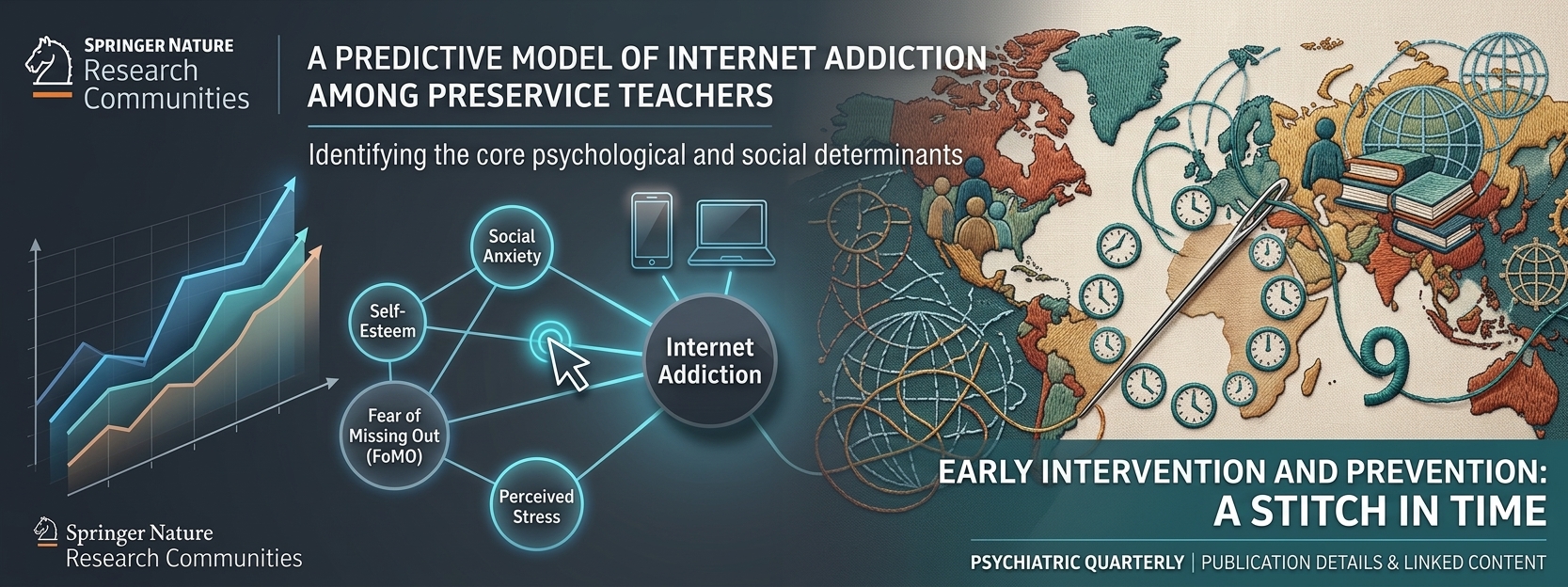

When we picture a highly dedicated student studying intensely outside of class, we typically imagine a focused, disciplined individual who is largely immune to digital distractions. We assume that robust extracurricular study habits act as a natural defense against wasted time. However, in our recent research published in Psychiatric Quarterly, our team set out to test this assumption among future educators, and we discovered a deeply counterintuitive reality.
The catalyst for this study was born out of observing the immense pressures placed on preservice teachers in Türkiye. These students exist at a complex intersection. On one hand, global educational frameworks like TPACK, SAMR, and DigCompEdu mandate that future teachers become highly proficient in digital environments. On the other hand, they face the grueling reality of the KPSS—the highly competitive public personnel selection exam required to secure a teaching position in state institutions. Preparing for this exam requires massive amounts of extracurricular study outside of their standard university curriculum. We wanted to know: how is this high-stakes pressure cooker impacting their psychological well-being and their relationship with the digital world?
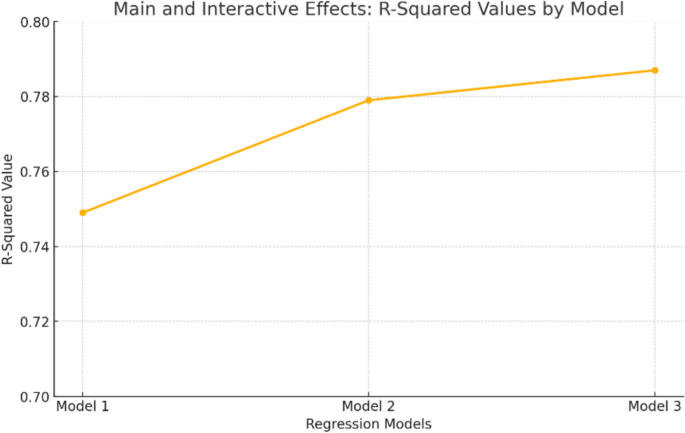
To answer this, we surveyed 492 preservice teachers across 10 different universities in Türkiye. Our objective was to look beyond just tracking screen time. We wanted to examine the complex interactions between Extracurricular Study Habits (ESH), Emotion Regulation (ER) skills, Daily Internet Usage Time (DIUT), and Internet Addiction (IA).
The data revealed our first major "oh, wow" moment: Extracurricular study habits actually positively predict internet addiction. Our correlational and regression analyses showed a strong relationship indicating that as students engaged more heavily in outside study, their levels of internet addiction increased.
Why does this happen? When we look behind the scenes of the data, the narrative becomes clear. Preservice teachers are carrying an immense cognitive load. In the absence of strong, structured academic support within their residential environments or dormitories, they turn to the internet. The digital world becomes both a vital academic resource and a necessary psychological escape from uninspiring or highly stressful environments. The very act of studying relentlessly for the KPSS pushes them toward the internet as a coping mechanism, rendering them highly vulnerable to maladaptive behavioral patterns.
This brings us to the second, and arguably most critical, finding of our study: the protective shield of Emotion Regulation. If intense studying and high daily internet usage (which averaged 7.51 hours among our participants) drive addiction, how do we protect these future educators?
We measured two specific types of emotion regulation: Cognitive Reappraisal (the ability to reframe a situation to change its emotional impact) and Expressive Suppression (hiding or ignoring emotions to adapt to environmental demands). Our structural modeling proved that cognitive reappraisal acts as a powerful protective buffer. We found that high levels of reappraisal emotion regulation were linked to lower levels of internet addiction, regardless of how much time the students spent online. Conversely, for individuals with lower reappraisal abilities, a positive correlation emerged between their internet usage time and their addiction levels.
Furthermore, our data revealed a complex four-way interaction between gender, internet usage time, emotion regulation, and study habits. We found that elevated daily internet usage can actually serve as a protective mechanism, attenuating the detrimental consequences of negative emotion suppression, but only when students have developed effective coping strategies for disengagement.
What does this mean for the future of higher education and teacher training?
We can no longer solve the problem of digital distraction by simply lecturing future teachers about screen time limits or praising them for studying long hours. If we do not actively teach them how to process and regulate the stress of those long hours, we are inadvertently pushing them toward digital addiction. Teacher training programs must move beyond basic digital literacy and actively embed emotion management and cognitive reappraisal techniques into the core curriculum.
We are sharing these behind-the-scenes insights with the Research Community because we believe we need a paradigm shift in how we support our preservice teachers. We invite our fellow educators, curriculum designers, and higher education policymakers to reflect on their own programs.
Are your current teacher training models actively teaching cognitive reappraisal, or are you leaving your students to navigate exam stress alone in the digital void? We encourage you to read the full open-access paper to explore our predictive models and join us in rethinking how we build psychological resilience in the next generation of educators.
Follow the Topic
-
Psychiatric Quarterly
This journal accepts original research, theoretical papers, and review articles addressing the assessment and treatment of mental health conditions