Old Habits Die Hard: Are Teachers as Resistant to Technology as Police Officers?
Published in Social Sciences and Education



When we consider the professions that shape the foundational stability of our society, teaching and policing stand out as two pillars with vastly different daily realities. One operates in the classroom, focusing on proactive development and nurturing positive behaviors; the other operates in the field, often reacting to crisis and decreasing negative behaviors. Yet, behind these differing facades lies a shared, deeply entrenched bureaucratic culture. We inherently expect educators to be the adaptable innovators, open to digital transformation, while stereotyping law enforcement as a rigid, inflexible institution.
However, in our recent open-access research published in Education and Information Technologies, we put this assumption to the empirical test and uncovered a starkly different reality.
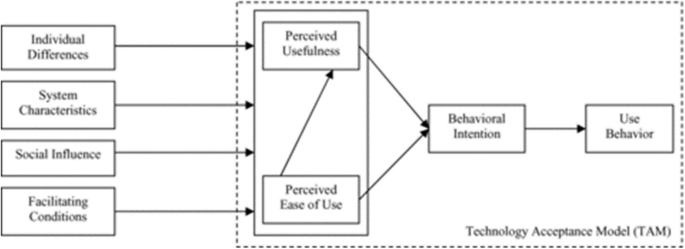
The catalyst for this study was the observation that despite massive investments in educational technology, teachers consistently struggle to integrate these tools into their daily workflows. We wanted to move beyond the standard variables of "perceived usefulness" and understand the deeper behavioral and cultural barriers at play. To do this, we utilized the Extended Unified Theory of Acceptance and Use of Technology (UTAUT2) model, which incorporates crucial dimensions like Habit, Facilitating Conditions, and Social Influence. We surveyed 408 middle school teachers and 310 police officers in the Eastern Anatolia region of Türkiye to conduct a comparative analysis.
The "behind-the-scenes" reality of gathering this data involved navigating the post-earthquake realities of the region, which has experienced severe demographic shifts and high emigration rates. Despite these logistical hurdles, the data we extracted offered an uncompromising look at professional inertia.
The most startling revelation was the significant discrepancy in technology acceptance scores. Police officers exhibited a markedly higher technology acceptance level, with a median score of 78.6, compared to middle school teachers, who lagged significantly with a median score of 63.1. Furthermore, demographic breakdowns revealed concerning disparities within the education sector itself: female middle school teachers recorded the lowest median acceptance score (54.2), significantly trailing their male colleagues (68.5) and both male and female police officers.
Why are educators falling behind? The UTAUT2 structural modeling provided the exact mechanism of this resistance. The phrase "old habits die hard" is not merely an idiom; it is the dominant behavioral barrier to digital transformation.
Our analysis proved that Habit—defined as prior experience and automatic routines—exerted the most substantial positive influence on Behavioral Intention, followed by Facilitating Conditions, Price Value, and Social Influence. In contrast, theoretical Performance Expectancy and Effort Expectancy had much weaker impacts on actual usage behavior.
What does this mean in practical terms? It means that established routines entirely override the perceived utility of a new tool. It does not matter how objectively efficient a new educational software is. If it disrupts a teacher’s established daily workflow, and if that disruption is not managed by actively rewiring their automatic habits, the technology is dead on arrival. Police officers, whose work is inherently reactive and rapidly shifting, appear more culturally primed to adapt their habits to new technological tools. Educators, paradoxically, seem to suffer from a sense of professional self-sufficiency, where the cognitive cost of breaking pedagogical habits outweighs the promised benefits of the technology.
This comparative data exposes a critical flaw in how educational institutions approach digital transformation. We cannot simply distribute hardware, provide a one-day training seminar, and expect a revolution. The failure to adopt technology is not a hardware problem; it is a cultural and behavioral problem.
Our findings indicate that leadership must radically shift their implementation strategies. Because Facilitating Conditions (technical infrastructure, continuous support) and Social Influence strongly predict behavioral intention, school administrators must stop relying on top-down IT mandates. Instead, they must actively foster supportive environments where peer-to-peer modeling is incentivized, and where teachers are given the structural time to transition new tools into automatic daily habits.
We are sharing this comparative analysis with the Research Community because the systemic inertia we identified in Eastern Anatolia is a microcosm of a global challenge. If we do not actively dismantle the occupational subcultures and psychological barriers embedded in the teaching profession, our investments in educational technology will continue to yield superficial results.
We invite fellow researchers, curriculum designers, and public policy directors to examine their own institutional rollouts. How is your organization actively addressing "Habit" when introducing new technologies? Are you merely upgrading the hardware, or are you actually rewiring the culture? We encourage you to review the full comparative dataset and our structural models in the open-access paper, and join the conversation on dismantling professional resistance.
Follow the Topic
-
Education and Information Technologies
This is the official journal of the IFIP Technical Committee on Education and it covers the complex relationships between information and communication technologies and education.