The molecular foundation of the sophisticated hide & seek game of African trypanosomes
Published in Microbiology
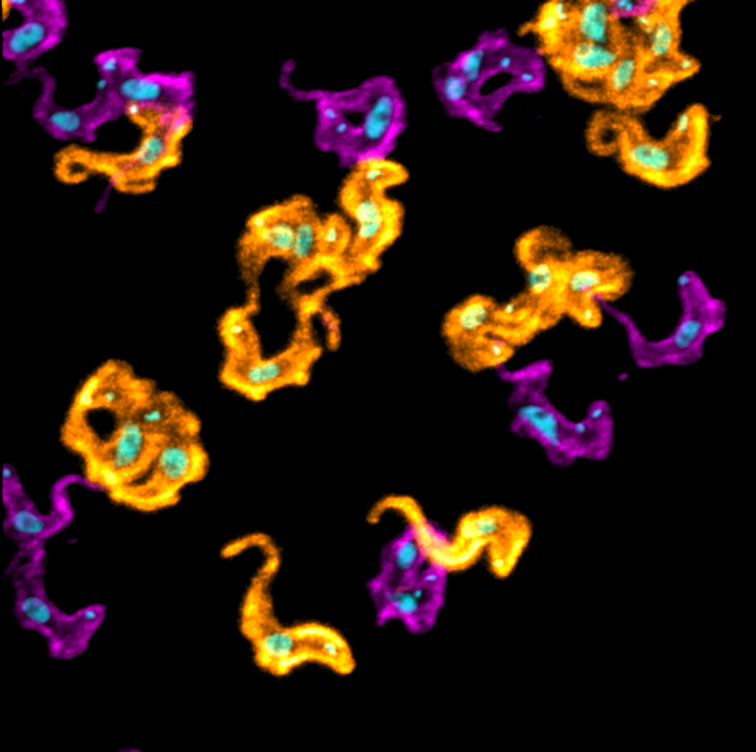





In the evolutionary arms race between humans and pathogens, our immune system has evolved a clever solution to fight with an unlimited diversity of pathogens. By randomly fusing three different gene segments, B-cells create an unlimited diversity of antibodies, which are capable of targeting every possible antigen. But our immune system is not the only one that has developed a sophisticated way to diversify a specific protein … so have our enemies.
A striking example is Trypanosoma brucei, a deadly unicellular parasite that causes human African trypanosomiasis in Sub-Saharan Africa. These organisms live freely in our blood and several tissues and are therefore constantly exposed to our immune response. Impressively, the parasite can maintain infections for years by playing a sophisticated game of hide & seek with our antibody response, employing an immune evasion strategy known as antigenic variation.
Trypanosomes escape our immune response by periodically changing their protein surface coat, a dense layer of a single protein--the Variant Surface Glycoprotein (VSG). Astonishingly, VSG genes make up ~25% of their whole genomic content, and unknown by many, the largest gene family in eukaryotes--an exquisite example of extreme biology. Despite this huge library, this pool of VSGs would be quickly depleted in a chronic infection, raising the question how trypanosomes can maintain infections for years.
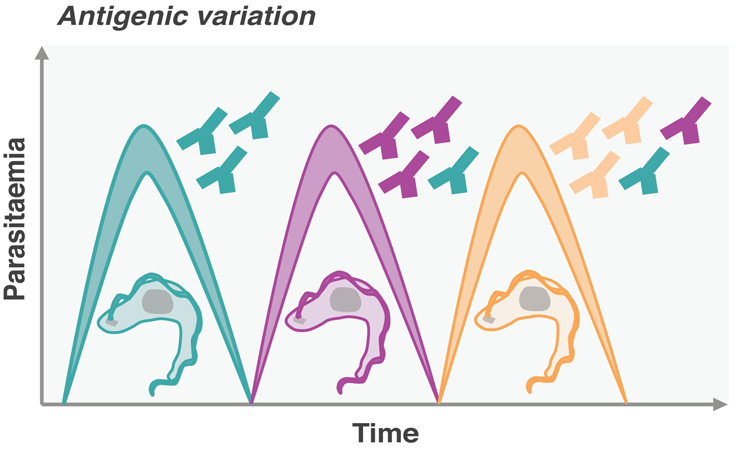
Previous research discovered that African trypanosomes create novel VSG sequences to diversify their repertoire. They are thought to be formed by de novo point mutations or the fusion of segments from different VSG templates, so called ‘mosaic’ VSGs. Even though it is known that a double-strand break in the active VSG gene can trigger a VSG switch, we do not fully understand the repair process nor how this could potentially create novel VSG sequences. One of the major obstacles in studying this process was of a technical nature, as it was simply not possible to differentiate these genetic shuffles from sequencing artefacts.
Building on the previous work of many researchers, Jaclyn E. Smith and colleagues describe for the first time the specific rules governing the creation of novel VSG sequences and reveal the molecular machinery it involves.
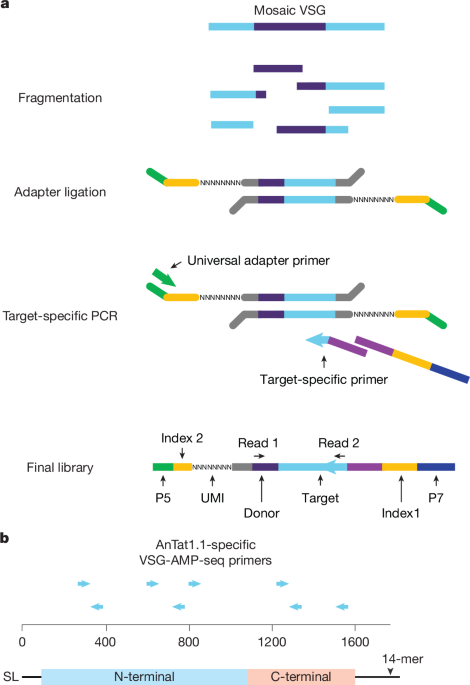
The authors overcame the previous technical limitations by developing a highly accurate high throughput sequencing technique that made it possible to reliably observe individual VSG gene diversification events with single-base resolution. Importantly, the gene diversification events they studied following CRISPR-Cas9 induced double strand breaks was similar to their observations in experimental mice infections--highlighting the relevance to natural infections.
Their new sequencing method showed that only the VSG gene fusion products--mosaic VSGs--play a role in VSG diversification. Importantly, those VSGs are formed during the DNA damage repair process by Rad51- and BRCA2-dependent homologous recombination. This process uses sequence similar genes as templates to repair the damaged DNA strand--in this case other VSG sequences from the genome. But what stood out was the small size and error-tolerance of the template sequence chosen compared to what was observed in humans. This error tolerance is possibly a specific adaptation that helps fast diversification of VSGs for more efficient immune escape.
Another novel observation is the positional bias of recombination events. They are more frequent the closer the double strand break is at the centre of the VSG gene, which is the area that encodes the immunogenic N-terminus of the VSG protein. This fits nicely into the observation that this region was already identified to be highly variable in human infections.
Finally, the authors conclude that mosaic VSG formation undergoes a strict selection process within the infected compartments of the host. They observed a higher diversity of VSG mosaic sequences in the immune “protected” tissue spaces compared to those in blood, therefore proposing the tissue to be a safe playground to develop highly immune evasive VSGs via iterative homological recombination. Those results complement previous findings of trypanosome tissue reservoirs to be essential in chronic infections.
This research opens the question of whether similar repair pathways could be involved in several other parasites that employ antigenic variation, for example Plasmodium and Giardia or even in our own genome for example in the diversification of olfactory receptors.
Cover image credit: Image by Joana R. C. Faria
I am passionate about all sorts related to parasites and neglected tropical diseases :)
Follow the Topic
-
Nature
A weekly international journal publishing the finest peer-reviewed research in all fields of science and technology on the basis of its originality, importance, interdisciplinary interest, timeliness, accessibility, elegance and surprising conclusions.
-
BugBitten
A blog for the parasitology and vector biology community.


Related Collections
With Collections, you can get published faster and increase your visibility.
Carbon Dioxide Removal
Publishing Model: Hybrid
Deadline: Jan 16, 2027
Cancer Neuroscience: from mechanisms to therapy
Publishing Model: Hybrid
Deadline: Jan 30, 2027




Please sign in or register for FREE
If you are a registered user on Research Communities by Springer Nature, please sign in