The Plot Twist: How an Extra Chromosome Took Centre Stage
Published in Microbiology




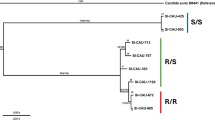

In science, some questions have straightforward answers. Others feel like a treasure hunt. Every answer you uncover turns out to be another clue, leading you to the next question. Then there are those questions that wait patiently until the biology catches up. When I joined Prof. Kaustuv Sanyal's laboratory at JNCASR in Bangalore, we began studying centromeres in the newly emerging fungal pathogen Candida auris (PMID: 33975937). Centromeres are the primary constrictions of chromosomes and, in many fungi, their neighbourhoods are surprisingly dynamic. One question kept returning to me: were some regions of the genome inherently more prone to structural change than others? The idea floated around for a while, but never really took root. Like many scientific questions, it just waited.
Along the way, we also identified unique DNA sequences that distinguished the major geographical clades of C. auris (PMID: 35343775,PMID: 38414264). One thing quickly became apparent: C. auris possesses a remarkably flexible genome. That naturally led to another question. Could this remarkable genome plasticity also explain why C. auris adapts so successfully to antifungal drugs? At the same time, experimental evolution was rapidly becoming one of the most powerful approaches for studying C. auris antifungal resistance. Most studies focused on point mutations, transcriptional changes and large-scale genome alterations. During a collaborative project, we decided to examine the chromosomes themselves using electrophoretic karyotyping in a few experimentally evolved strains.
What appeared on the gel immediately caught our attention. The resistant strains carried an additional chromosome.
Tracing its origin led us back to... the centromere (The centromeres just refused to leave the story).
The extra chromosome had formed through a centromere-inclusive segmental duplication of a native chromosome. Even more intriguing, repeated passage in a drug-free medium caused the chromosome to disappear—taking the acquired drug resistance with it (PMID: 36445083).
But experimental evolution always leaves one nagging question. Does evolution in the laboratory resemble evolution in the clinic? As I began thinking about clinical isolates, I realised I was circling back to an old question. I had always wondered whether some regions of the genome were intrinsically more prone to structural change than others. Perhaps this was finally the opportunity to ask it.
We assembled a diverse collection of Indian clinical isolates spanning multiple geographical regions, body sites and antifungal susceptibility profiles. We finally searched across their genomes for copy-number variations. When the CNV profiles finally came together, two genomic "crime scenes" immediately stood out.
The first centred on ERG11—the usual suspect in azole resistance.
The second looked completely different.
The duplicated DNA spanned a much larger region—and it contained an entire centromere.
We had seen this signature before.
Could these clinical isolates also carry extra chromosomes?
The next few weeks became my favourite part of the project. Every new PFGE gel felt like opening another case file. Some isolates looked ordinary. Others revealed yet another extra chromosome. Slowly, the remarkable extent of chromosome shape-shifting across the clinical collection began to emerge.
Finally, electrophoretic karyotyping gave us the answer.
They did.
History had repeated itself. Clinical isolates carrying centromere-inclusive segmental duplications also carried extra chromosomes.
Suddenly, observations made years apart connected into a single story. Experimental evolution and clinical evolution had independently converged on the same genomic solution- despite two completely different antifungal drug classes. Somehow, the superbug had arrived at the same solution twice.
But solving one mystery immediately created another. What was this chromosome actually doing? To understand this, we returned to the clinical isolates. By repeatedly passaging them in drug-free medium, we obtained closely related strains that either retained or lost the extra chromosome. This gave us a rare opportunity to compare the chromosome's contribution directly.
That was the tip of the iceberg.
Instead of behaving like a classically resistant strain, these isolates did something completely unexpected. They survived extremely high concentrations of caspofungin while remaining susceptible at lower concentrations. This unusual behaviour is known as paradoxical growth—or the Eagle effect—a phenomenon linked to fungal stress responses and cell-wall remodelling. Here, somehow, a tiny extra chromosome appeared to orchestrate the entire response.
Looking back, this journey was about following a question that refused to go away. Every experiment answered one question only to uncover another. I first encountered it as an unexpected band on a pulsed-field gel. Today, it is the centrepiece of a study in Nature Communications. Everything in between feels like the chromosome quietly revealing a little more of itself. Perhaps that's what I enjoy most about science.
The best questions don't end with answers—they simply become better questions.
(Poster art: Illustration created by the author using OpenAI's ChatGPT image generation tool)
Interested in fungal biology, antifungal drug resistance, chromosomes, centromeres, karyotype and genome evolution.
Follow the Topic
-
Nature Communications
An open access, multidisciplinary journal dedicated to publishing high-quality research in all areas of the biological, health, physical, chemical and Earth sciences.

Related Collections
With Collections, you can get published faster and increase your visibility.
Women's Health
Publishing Model: Hybrid
Deadline: Ongoing
Tumor Microenvironment Crosstalk and Therapeutic Implications
Publishing Model: Hybrid
Deadline: Nov 02, 2026