The Publication Journey: When Mathematical Modeling Meets AI
Published in Earth & Environment, Electrical & Electronic Engineering, and Mathematics
|
Photo Creator: Qianhui Gao, Yiming He, and Ke-ke Shang |
My academic journey began in Control Science and Information Science, where I was deeply immersed in the rigorous logic of natural sciences and data systems. Although I later transitioned to a faculty position in Computational Communication driven by my passion for complex networks and the data-driven paradigm of social science, I never abandoned the mathematical strictness instilled in me during my doctoral training.
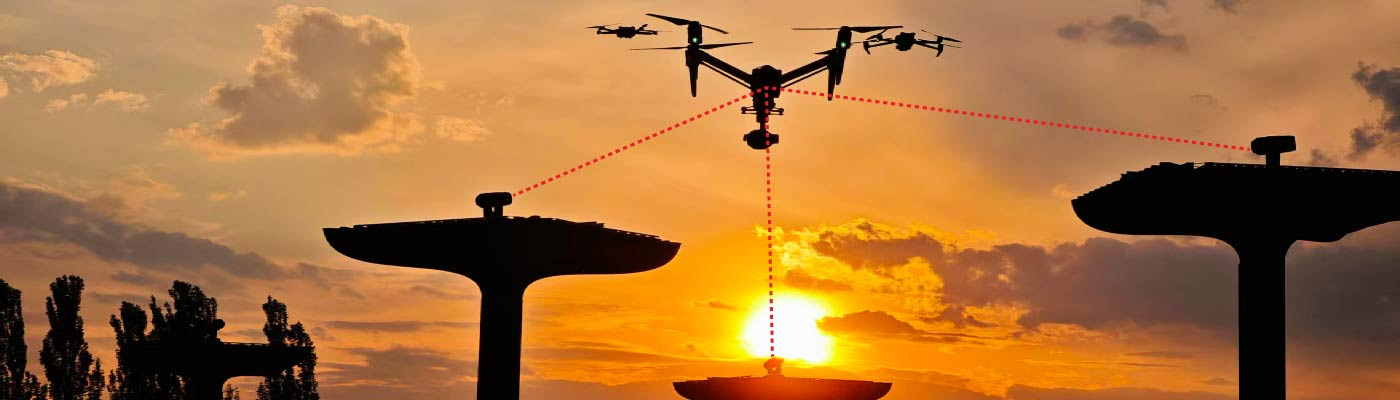
At times, this commitment to computational rigor felt like an anomaly in a predominantly humanities-oriented environment. Yet, paradoxically, it led to an unexpected turn of events rather than a planned spark. During an elective course on Network Science and AI, a master’s student from a Geography background approached me with a daunting challenge. Skilled in engineering practice but struggling to formalize his work into mathematical theory, he asked: How can we achieve precise 3D localization of low-altitude objects without relying on expensive professional equipment?
This accidental encounter in the classroom became the catalyst that propelled me back into the realm of pure engineering and mathematics, resulting in a research paper firmly rooted in hard science. Viewing the problem through the lens of Control Science and Applied Mathematics, we realized the solution lay not in better hardware, but in more elegant mathematical modeling. We constructed a theoretical framework combining AI-based computer vision for 2D detection with Singular Value Decomposition (SVD) to mathematically reconstruct 3D coordinates from simple 2D images.
The path to publication was incredibly arduous. Lacking institutional support or funding from my social science center, and with the student having no budget, we relied entirely on borrowed, makeshift equipment. Over the course of three to four winter and summer breaks, fueled solely by our passion for scientific inquiry and our command of linear algebra, we managed to validate this low-cost framework.
I am profoundly grateful to my supervisor, Professor Michael Small, a leading applied mathematician in Australia. His insightful guidance helped refine our raw ideas into a coherent narrative. His support went far beyond intellectual mentorship; he not only brought relevant research projects that provided the essential framework for our work but also generously supplied the financial resources needed to bring this paper to life in the absence of institutional funding. This work stands as a testament to the power of cross-disciplinary logic and the belief that scientific value is derived from insight rather than resources.
Pursuing pure science is a lonely climb: it requires funding, visionary leadership, and the patience to translate computational rigor for a humanities-dominated world.
Cite this article
Yi, J., Shang, Kk. & Small, M. Bridging mathematical modeling and AI for 3D coordinate recognition of moving objects without external reference and attitude measurement. Commun Eng (2026). https://doi.org/10.1038/s44172-026-00648-x
我的博士学术生涯始于控制科学与信息科学,那里有着自然科学严密的逻辑体系与信息系统的深厚根基。尽管后来出于对复杂网络和数据驱动的社会科学范式的热爱,我转型到了计算传播学任教,但我从未放弃博士期间培养出的数学严谨性。这种对计算严谨性的坚持,在以人文社科为主的环境中常显得格格不入,却意外成为了一次跨界合作的关键。一位来自地理背景的硕士生,工程实践能力很强,却苦于无法将实践梳理成数理理论,他带着一个难题向我请教:如何在没有昂贵专业设备的情况下,实现对低空飞行物的精准三维定位?
透过控制科学与应用数学的视角,我们意识到解决之道不在于更好的硬件,而在于更优雅的数学建模。我们构建了一个理论框架,结合基于人工智能的计算机视觉进行二维检测,并利用奇异值分解(SVD)从简单的二维图像中数学重构出三维坐标。发表之路异常艰难;由于我所在的社科研究中心无法提供此类硬科学实验的支持,加上学生没有任何预算,我们完全依赖借来的简陋设备。在三个到四个寒暑假的时间里,仅凭对科研探索的热忱和对线性代数的熟练掌握,我们成功验证了这一低成本框架。
我由衷地感谢我的导师 Michael Small 教授,他是澳大利亚顶尖的应用数学家。他富有洞见的指导帮助我们将粗糙的想法打磨成连贯的学术叙述。他的支持超越了单纯的学术指点:他不仅带来了相关的项目,为我们的研究提供了至关重要的框架,而且在缺乏机构资金的情况下,慷慨地提供了让这篇论文得以问世所需的经费。这项工作证明了跨学科逻辑的力量,也印证了这样一个信念:科学价值源于洞察力,而非资源堆砌。