The Story Behind a Famous Quote on the “Harmfulness” of Philosophy in 1850s Russia
Published in Social Sciences



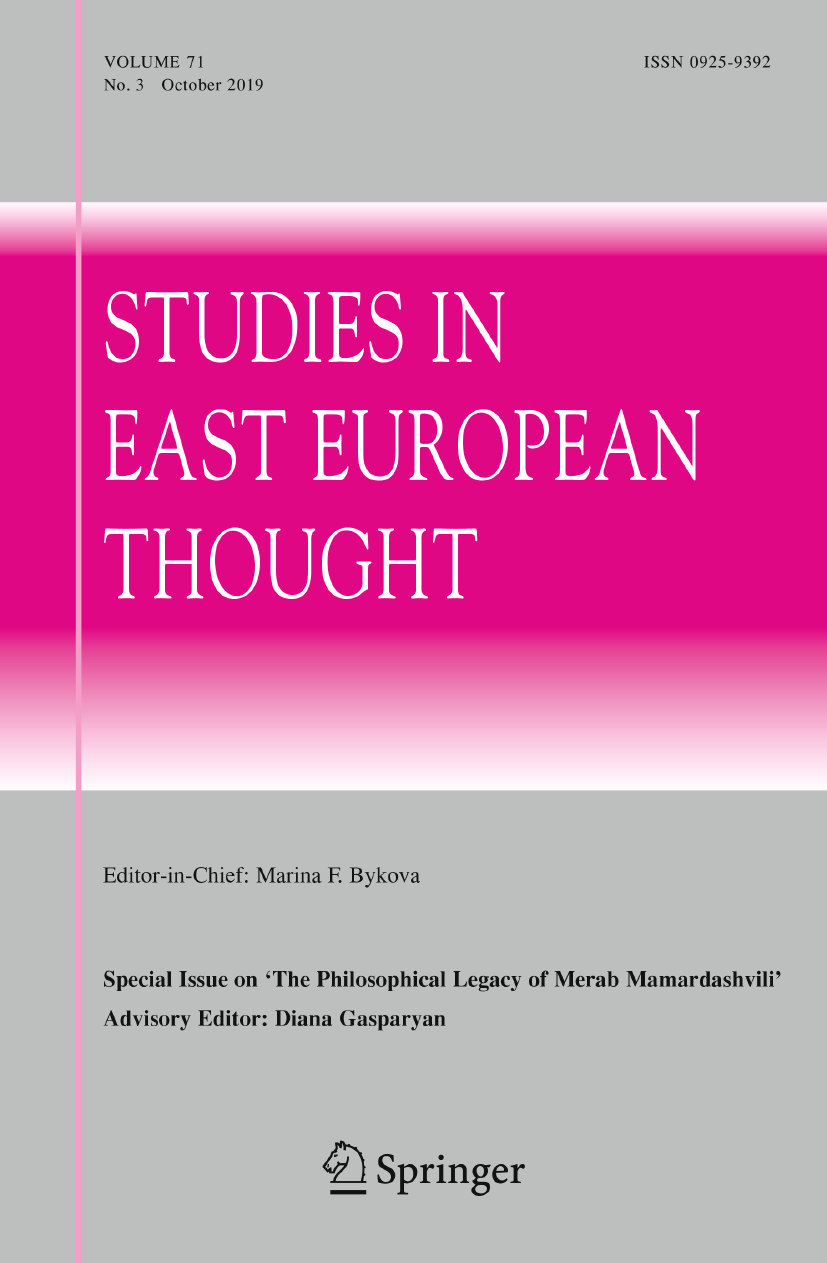

For anyone interested in Russian intellectual history, one may be familiar with the phrase: “The uselessness of philosophy has not been proven, but the possibility of its being harmful is a fact.” It has often been cited as a symbol of governmental hostility toward free rational thought and attributed to Count Platon Shirinskii-Shikhmatov, Minister of Education from 1850 to 1853. The statement has been taken to encapsulate the rationale behind restrictions on the teaching of philosophy that lasted for more than a decade and were lifted only with the university reform of 1863.
Yet the evidentiary basis for this attribution is surprisingly thin. The only known reference appears in a diary entry by the literary historian Aleksandr Nikitenko (Nikitenko 1975, p. 125), who recorded the phrase second-hand from the philosopher Adam Fischer, allegedly present at the ministerial meeting where the decision was taken.
As is often the case with famous quotations, the history of their origin is usually far more complicated than it seems. Despite the extensive scholarship on the influence of German philosophy on Russian thought, Adam Fischer himself remains a largely obscure figure. Together with historian and archives specialist Andrey Ashikhmin, I became interested in reconstructing his biography and clarifying the circumstances surrounding the prohibition.
In the Russian State Historical Archive (St. Petersburg), within the Department of Education collection, there exists a substantial body of primary material related to the preparation and implementation of the decree regulating the teaching of philosophy, comprising nearly six hundred pages of documentation. These materials were not entirely unknown; they had previously been accessed by scholars such as Bobrov (1901, 1–15) and Emelianov (1989).
A fresh reading and critical analysis of this documentary record suggests that the famous phrase was most likely never uttered and that the motivations behind the restrictions were different from those traditionally assumed. They also reveal a different picture of Shirinskii-Shikhmatov’s role.
The initiative to revise philosophical teaching probably belongs to Nicholas I himself, who is ordering Shirinskii-Shikhmatov to prepare possible measures. The minister consulted Adam Fischer, an Austrian-born Catholic and graduate of the University of Vienna, who was at that time a full professor of philosophy at St Petersburg University. Fischer prepared an analytical note that formed the basis of Shirinskii-Shikhmatov’s report. The manuscript, which is preserved in the archive, visually distinguishes the minister’s own contributions from the passages that reproduce Fischer’s opinions, which are marked by left-indented paragraphs. Fischer's proposal aimed to limit the influence of Protestant German speculative philosophy and redirect philosophical teaching towards disciplines that he considered to be much more cutting-edge and practical, especially empirical psychology and logic.
This reformist project was supported by Nicholas I, as evidenced by the resolution written in his own hand that appears on the first page of the official report. However, while endorsing its main ideas, the Tsar insisted that the teaching of psychology should be entrusted exclusively to individuals holding an Orthodox clerical rank. In effect, this decision prohibited Fischer from teaching psychology, even though he was appointed to serve on the commission that drafted the subject's curriculum.
The archival record also shows that the emperor’s intervention created considerable administrative complications. Despite the prospect of a substantial salary supplement, there was little desire among Orthodox clergy to assume responsibility for teaching psychology. Moreover, the additional funds were to be allocated from the ministry’s own resources, which had no existing budget for this purpose. This situation prompted further bureaucratic negotiations, resulting in the expectation that clerical instructors would teach not only psychology but also logic. Particularly problematic for the implementation of this initiative was the case of the predominantly Protestant University of Dorpat, then part of the Russian Empire. In this process, Shirinskii-Shikhmatov appears less as an ideological censor and more as an official managing the implementation of a complex institutional decision.
Working with archival materials on this topic has been particularly engaging for me, both intellectually and methodologically. This research is part of a wider attempt to re-examine well-known narratives of intellectual repression by investigating the documentary evidence on which they are based. Sometimes, it reveals that what seems obvious in retrospect was historically much more complex. Encountering manuscripts, marginal notes, and the bureaucratic traces of decision-making processes serves as a reminder that intellectual history unfolds not only in published texts but also in the layered, contingent processes preserved in archives.
Nikitenko, Aleksandr. 1975. The Diary of a Russian Censor. ed. & trans: Helen S. Jackobson. Amherst: University of Massachusetts.
Bobrov, Evgenii. 1901. Filosofiia v Rossii: Materialy, issledovaniia i zametki (Philosophy in Russia. Materials, research and notes). Vol. 5. Kazan’: University Printing House.
Emelianov, Boris Vladimirovich. 1989. Zapreshchenie prepodavaniia filosofii v russkikh universitetakh (po arhkivnym materialam) (Prohibition of teaching philosophy in Russian universities (according to archival materials)). In Otechestvennaya filosofiya: opyt, problemy, orientiry issledovaniya (Russian philosophy: Experience, problems, research guidelines). Vol. 1, 5–22. Moscow: Academy of Social Sciences.

I am a research fellow at Ruhr University Bochum (Germany). My primary field of interest is post-Hegelian philosophy and its intellectual development in German-speaking countries during the nineteenth century. Before moving to Bochum, I worked for nearly a decade at the National Research University – Higher School of Economics (HSE) in St. Petersburg and Moscow, where I taught courses in critical thinking, philosophy of science, metaethics, and moral psychology. I am currently working on the philosophical and public debates surrounding the emergence of studies of human and animal psychology and mental phenomena. My project examines the transfer of psychological studies from the early nineteenth century in the Russian Empire to the early years of the Soviet regime.
Follow the Topic
-
Studies in East European Thought

This is a scholarly platform focusing on the philosophical thought and intellectual history of East and Central Europe, Russia, and post-Soviet states.
Related Collections
With Collections, you can get published faster and increase your visibility.
The Question Concerning Technology in Russia
We are pleased to announce a call for papers for a special issue of Studies in East European Thought (SEET) dedicated to the theme The Question Concerning Technology in Russia. The aim of this issue is to present new approaches to rethinking the status of technology, with a focus on its philosophical reception in Russian culture and history.
Description
This special issue explores the question of technology in Russia in a broad sense, examining what Russian philosophy can contribute to addressing the challenges posed by modern technology. The theme is inspired by German philosopher Martin Heidegger's essay "The Question Concerning Technology" and Hong Kong philosopher Yuk Hui’s paper "The Question Concerning Technology in China." According to Hui's core thesis, technology is not a universal concept across cultures. Building on this idea, our issue aims to highlight the unique perspectives on technology that have emerged within Russian and Soviet philosophy and culture.
Given the broad scope of the topic, the issue invites contributions from both historical research in philosophy and studies on the contemporary status of technology in Russian culture. The history of Russian philosophy of technology—developed by theologians, scientists, and engineers since the second half of the 19th century—encompasses diverse approaches and distinctive features. During this period, Russian thinkers formulated numerous theories about the role of technology in human culture, its essence, and its social significance. Revisiting the ideas of Engelmeyer, Vernadsky, Bogdanov, Platonov, Berdyaev, Ilyenkov, and others in the context of modern technology offers fruitful avenues for exploring alternative relationships between humans and technology—relationships that move beyond the dominant instrumental attitude toward technology, which Heidegger criticized as Gestell. Within the history of Russian philosophy and culture, there exists both theoretical and practical groundwork for envisioning an alternative understanding of scientific and technological progress—one that prioritizes public welfare and environmental preservation rather than destruction.
Additionally, the issue will explore the highly relevant topic of artificial intelligence. The technical features of AI, particularly its greater autonomy and unpredictability compared to prior technologies, provide fertile ground for philosophical inquiry. This topic is particularly pertinent in the Russian context, where AI ethics has gained significant attention.
We invite contributions that address (but are not limited to):
● Historical-philosophical perspectives on technology in Russian and Soviet thought.
● Russian and Soviet contributions to alternative frameworks for human-technology interaction.
● Theoretical reflections on the ethical and social implications of AI, with a focus on Russian perspectives.
● Comparative studies of Russian and global philosophical approaches to technology.
● Cultural, literary, or interdisciplinary explorations of technology in Russian history
The Special Issue Guest Editors:
Andrei Glukhovskii (glukhovsky.andrew@gmail.com)
Natalia Bragina (nibragina97@gmail.com)
How to Participate
To participate, please submit your proposal (including an abstract of approximately 500 words) to the issue Guest Editor, Andrei Glukhovskii at glukhovsky.andrew@gmail.com. Should you have any queries or anticipate difficulties in meeting the deadlines, you are encouraged to contact the Guest Editors in advance. We look forward to receiving your contributions.
Please note the following key dates:
The deadline for the submission of proposals is 16 March 2025.
Applicants will be informed of the outcome of their application by 16 April 2025.
Submission online in our new SNAPP platform starts as of 23rd of April 2025.The deadline for submission of the final paper is 31 August 2026.
Publication policy and submission details
We are seeking original research papers that meet the highest academic standards. Submissions should adhere to the following criteria:
● All submissions must be written in English.
● The abstract should be clear and concise and include four to six keywords.
● Please adhere to the formatting and style guidelines set forth by the journal (for further details, please consult the Instructions for Authors).
All papers will be subject to a double-blind peer review process in order to guarantee their quality and relevance. Please submit your work online via the online submission system, selecting the option designated as "SI: The Question Concerning Technology in Russia" from the Article Type menu.
We encourage you to follow SEET’s editorial procedures Peer Review Policy, Process and Guidance and read the detailed information about how reviewers are selected Peer Reviewer Selection.
This journal offers the option to publish Open Access. You are allowed to publish open access through Open Choice. Please explore the OA options available through your institution by referring to our list of OA Transformative Agreements.
Following acceptance, papers will be published online first and will remain accessible until they are formally included in an issue and showcased on the collection page.
Why Publish in This Special Issue?
● Gain greater visibility and impact for your research within a focused, relevant audience.
● Accepted papers will be published online first, ensuring timely dissemination.
● The journal is indexed in the Web of Science and has an IF of 0.200 and CiteScore of 0.3.
We are available to provide assistance. Should you have any queries pertaining to your submission or the submission process, you are encouraged to contact the Guest Editors.
Publishing Model: Hybrid
Deadline: Aug 31, 2026
A Critical Reassessment of Russian Thought: History, Ideas, and Contemporary Challenges
A Critical Reassessment of Russian Thought: History, Ideas, and Contemporary Challenges aims to provide a rigorous and historically informed examination of Russian intellectual and cultural traditions. The collection seeks to move beyond both uncritical admiration and simplistic dismissal, situating literature, philosophy, and other forms of cultural expression within their complex historical, social, and political contexts. Contributors explore the interplay between ideas and power, the tensions between creativity and ideology, and the enduring relevance of Russian thought in shaping both national identity and global intellectual discourse. While the focus is on Russia due to the urgency of current historical and political circumstances, the collection models an approach to cultural critique that is attentive, critical, and dialogical, emphasizing engagement with ideas rather than ideological closure.
Publishing Model: Hybrid
Deadline: Ongoing

Please sign in or register for FREE
If you are a registered user on Research Communities by Springer Nature, please sign in