The Story Behind the Paper — When my First Research Paper Became My Reality
Published in Cancer, Protocols & Methods, and Research Data




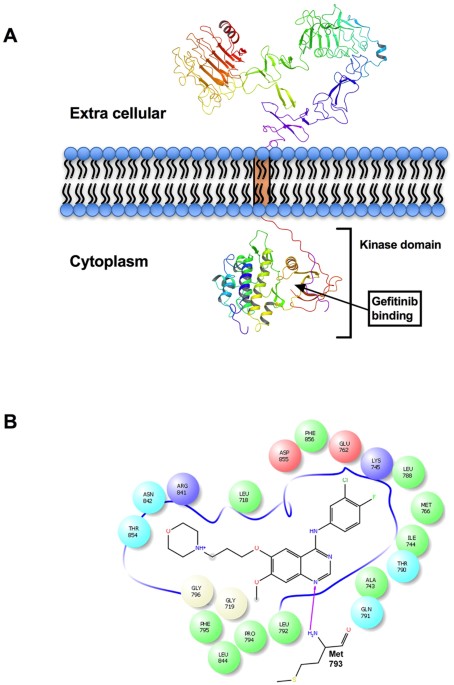

This paper was my first research article during my doctoral studies, born from a spark of scientific curiosity in cancer biology that grew into a lifelong personal truth. When I investigated gefitinib’s off-target interactions, my motivation was purely scientific. Gefitinib was already an established therapy targeting the epidermal growth factor receptor (EGFR) in cancer, but its side effects—and occasional surprising benefits—hinted it was acting beyond its main target. We wanted to know why. Using structure-based systems biology, reverse docking, and retrospective data mining, we showed that gefitinib interacts with multiple proteins and pathways, explaining both its adverse effects and its hidden therapeutic potential. At that time, the work felt thorough, rigorous, and far removed from my personal life.
Then, soon after publication in 2021, everything changed. My father was diagnosed with stage III non-small cell lung cancer. Overnight, cancer biology shifted from my computer screen to hospital rooms, medical files, scans, and waiting areas. Terms I once used clinically—chemotherapy, targeted therapy, resistance, toxicity—became part of daily life. I watched him endure countless tests, treatment cycles, and the exhausting uncertainty that came with every report. The side effects of chemotherapy and other drugs were the hardest to witness—fatigue, nausea, and pain.
Despite courage, resilience, and multiple treatment efforts, my father is no longer with us. His loss permanently reshaped me—not only as a daughter, but also as a scientist.
This story is now part of the rest of my life. It has changed how I view drug discovery, cancer research, and success in science. For me, this paper is no longer just a publication. It is a reminder that behind every pathway is a patient, behind every adverse effect is a family, and behind every dataset is a lived experience.

- Interdisciplinary researcher with expertise in molecular biology, bioinformatics, and microbiology.
- Led collaborative projects resulting in 5 peer-reviewed publications and 3 book chapters, with impact factors ranging from 6.7 to 2.1 (74 citations, h-index 3).
- In-depth knowledge of Computational Biology and structure-guided drug discovery, including molecular docking and dynamics studies.
- Seeking to further develop research skills and contribute to the application of computational methods in drug design, focusing on microbial clinical infections and antimicrobial resistance.
Follow the Topic
-
Scientific Reports
An open access journal publishing original research from across all areas of the natural sciences, psychology, medicine and engineering.

Related Collections
With Collections, you can get published faster and increase your visibility.
Cancer Prevention and Control
Publishing Model: Hybrid
Deadline: Feb 19, 2027
Healthy Aging
Publishing Model: Open Access
Deadline: Dec 31, 2026