Three decades searching for a managed recharge solution for Brazil’s invisible waters
Published in Earth & Environment and Sustainability

The Paradox of Abundance and Scarcity
Brazil holds one of the world’s largest freshwater reserves, yet suffers frequent water crises. Groundwater is increasingly used, but most wells are informal and unmonitored. MAR offers a strategic way to intentionally replenish aquifers—but remains absent from national policy.
Managed Aquifer Recharge?
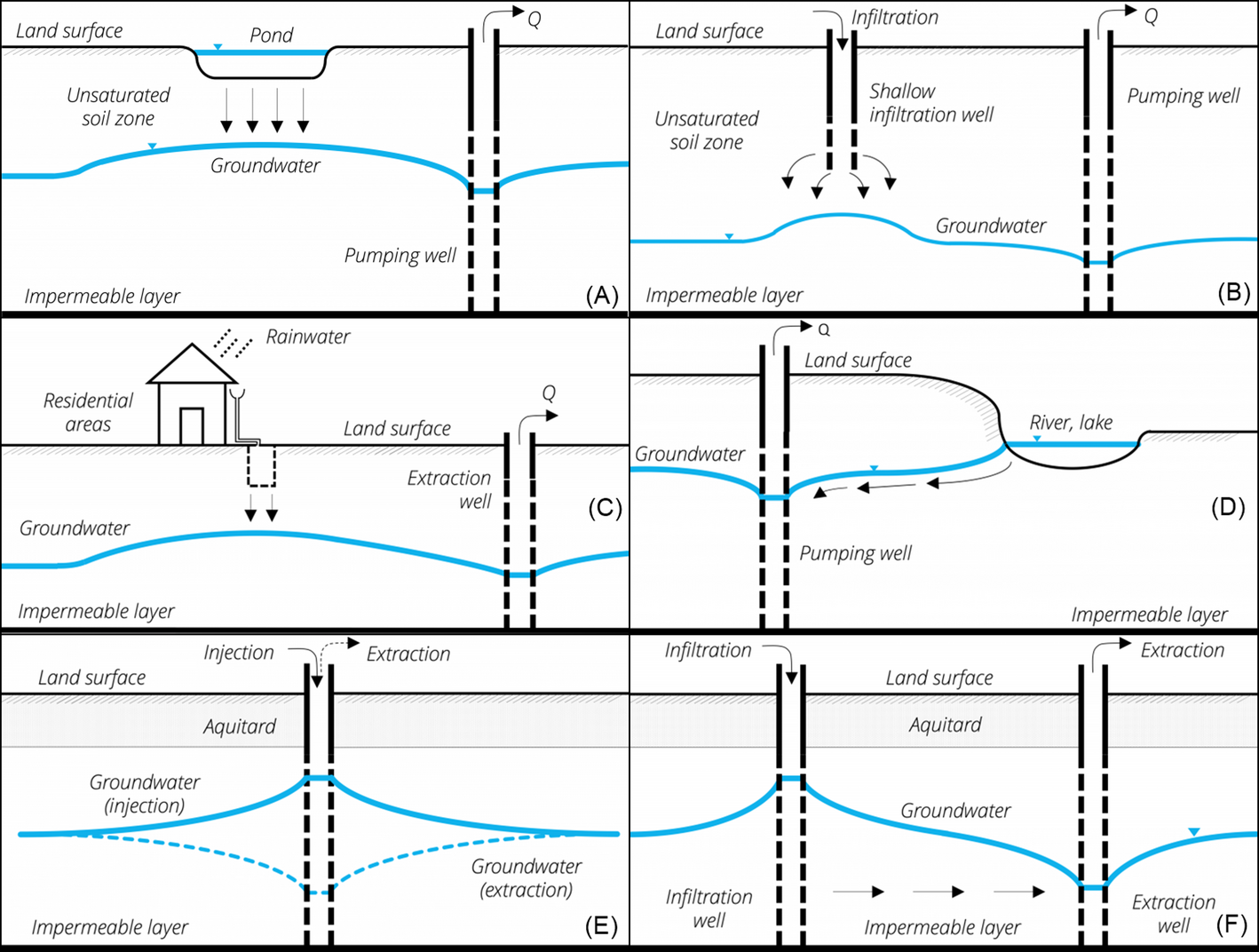
Yes! Managed Aquifer Recharge (MAR) is the intentional storage of surface water into underground aquifers for later use. Unlike natural recharge, MAR uses engineered systems like infiltration ponds and injection wells to enhance groundwater availability.
It reduces evaporation, improves water quality through natural filtration, and supports drought resilience. However, the MAR strategies are still lacking in Brazil’s water management policies.
Mapping Thirty Years of MAR Research in Brazil
We reviewed thousands of articles to identify MAR-related studies in Brazil, mapping techniques, regional applications, and research gaps to understand how MAR is being explored in the country.
Fragmented Knowledge on Aquifer Recharge in Brazil
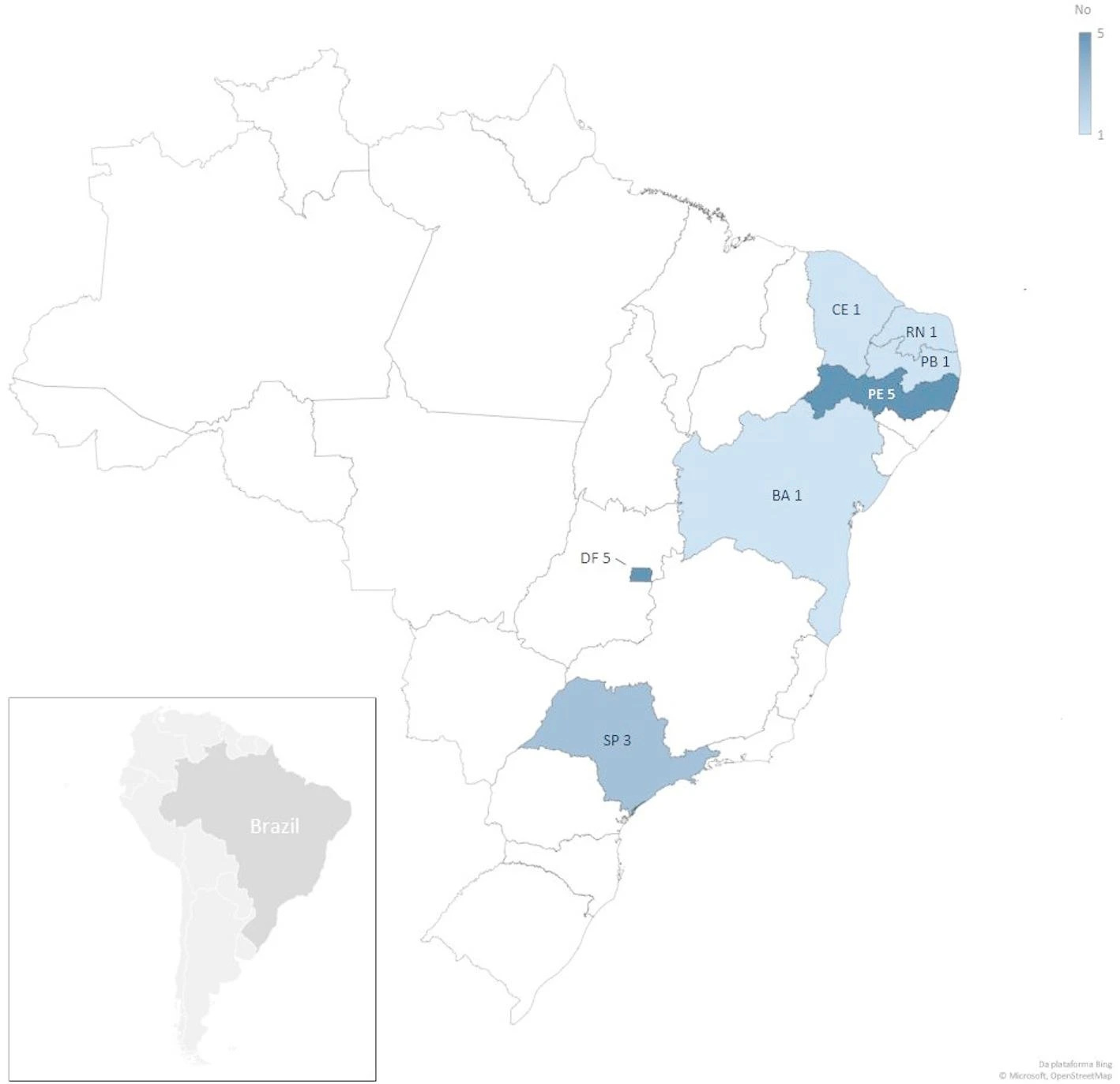
Scientific research on MAR in Brazil remains limited and dispersed. Most documented cases are small-scale and rural, using infiltration ponds, open wells, and riverbank filtration. The Northeast and other semi-arid regions are the most studied, reflecting their chronic water stress. São Paulo, despite being the most populous state and a major groundwater user, has relatively few MAR publications so far - though research is beginning to expand.
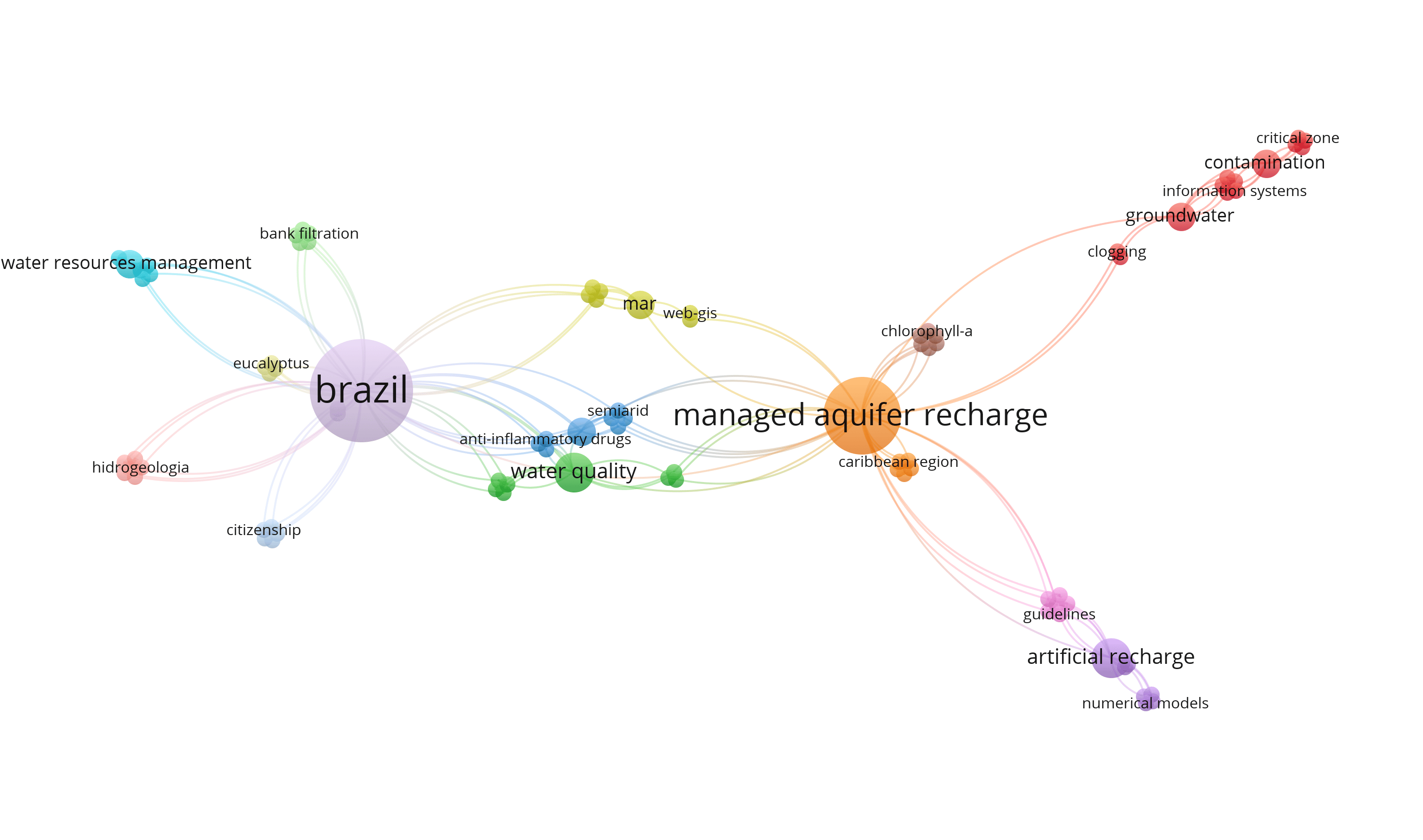
Simple recharge techniques, like small infiltration dams and subsurface dams, are widely implemented but underrepresented in academic literature. While current studies are scattered, the growing network of researchers shows potential for stronger collaboration and integration in the near future.
A Strategy Still Missing
Although MAR offers clear benefits for drought resilience and water security, Brazil still lacks a coordinated national strategy to support its implementation. Existing policies are limited and fragmented, and recharge practices are often treated as isolated or experimental efforts.
Pilot projects remain scarce and are rarely monitored or publicly disseminated. Without clear standards, regional assessments, and integration into water governance, MAR continues to be overlooked in formal planning.
To unlock its full potential, Brazil needs targeted policies, technical guidance, and inclusive planning - especially in regions most vulnerable to climate change.
From Knowledge to Action
This review was developed by researchers from the University of São Paulo’s (USP) Groundwater Research Center (CEPAS), within Project SACRE – Integrated Water Solutions for Resilient Cities. Supported by FAPESP, CNPq, and USPSusten, the team works to advance MAR in Brazil by translating research into actionable frameworks and promoting its integration into planning, regulation, and locally adapted water management practices.
Read the Full Study
Explore the complete article at Discover Water.

Leonardo is an Environmental Engineer and PhD in Soil Science. Had a postdoctoral fellowship from the University of São Paulo, working with groundwater. Primarily focuses on pollution, environmental monitoring, water resources, water treatment, the Amazon, and science communication. Currently conducting postdoctoral research at the Massachusetts Institute of Technology (MIT).
Follow the Topic
-
Discover Water
This journal is part of the Discover journal series. It is an open access, community-focussed journal publishing research from across all fields relevant to water research.

What are SDG Topics?
An introduction to Sustainable Development Goals (SDGs) Topics and their role in highlighting sustainable development research.
Continue reading announcementRelated Collections
With Collections, you can get published faster and increase your visibility.
Integrated Water Management: Science, Governance and Sustainable Solutions for Global Water Challenges
In order to solve present and future water concerns, this Collection brings together interdisciplinary research centered on technology innovation and sustainable engineering solutions. Recognizing the essential role of water in public health, industrial development, environmental protection, and energy systems, it places an emphasis on the development of cutting-edge technologies for enhancing water quality, treatment efficiency, resource recovery, and sustainable water usage.
Emerging water treatment and remediation technologies, such as sophisticated materials, adsorption procedures, membrane systems, wastewater treatment, desalination, pollutant monitoring, and circular water management techniques, are given special consideration. The collection also examines the expanding relationship between energy and water systems, emphasizing resource recovery, decentralized treatment systems, energy-efficient treatment technologies, and innovations that support sustainable energy development and water security at the same time.
This Collection aims to promote high-impact research that integrates fundamental science, applied engineering, and technological innovation to develop resilient and sustainable solutions for future water and energy challenges.
Keywords: Sustainable materials, water contamination; advanced water treatment; integrated water management; adsorption process.
This Collection supports and amplifies research related to SDG 6.
Publishing Model: Open Access
Deadline: Apr 15, 2027
Transdisciplinary Approaches for Investigating Human-Water Interactions across Scales
Scientific and technological advancements are improving water governance, modelling and monitoring that are nowadays more and more supported by a wealth of high resolution digital earth data and numerical simulations. Earth observation, geospatial and hydrodynamic models allow to develop effective studies of complex physical dynamics of urban, land and fluvial processes and features. Nonetheless, despite the greater availability of accurate natural resource and risk knowledge bases and management plans, nuisance effects of natural disasters and climate change are increasingly impacting the safety of human settlements from global to local scales. While the quest for tackling water risk and resource knowledge gaps continues, there is a growing consensus in the scientific community that science-driven technological advancements cannot address the climate crisis alone. Transdisciplinary approaches are needed interlinking earth and water sciences, social sciences and humanities in order to assess and consider the human component. Cultural, social and behavioural processes play a pivotal role for operationalizing sustainable earth, hydrological and geophysical science and management approaches while considering mutual interdependencies of heterogeneous human-water evolving phenomena. This Collection aims to stimulate the development of synergies of water, earth and environmental data and models with qualitative and quantitative social, economic, historical and behavioural studies focusing on human-water assessments and investigations. From geospatial to artificial intelligence, from stakeholder engagement to citizen science, from disaster risk reduction to Water Energy Food Ecosystem (WEFE) Nexus, from international governance and policies to regional guidelines and case studies, from historical to future projections, this Collection is prone to receive a wide variety of topics addressing the need of transdisciplinary technological, policy and engineering approaches to address hydro-climate challenges.
Keywords: hydrology, geomorphology, geospatial analysis, citizen science, floods, droughts, disaster risk reduction, WEFE Nexus, socio-hydrology, stakeholder engagement, human-water.
This Collection supports and amplifies research related SDG 6, SDG 11 and SDG 13.
Publishing Model: Open Access
Deadline: Nov 30, 2026