Today's Recommendation: Influences of redox electrolyte containing AuNPs on microscopic surface structure, material removal and surface roughness of 20MnCr5 steel alloy during electrochemical machining
Published in Mechanical Engineering

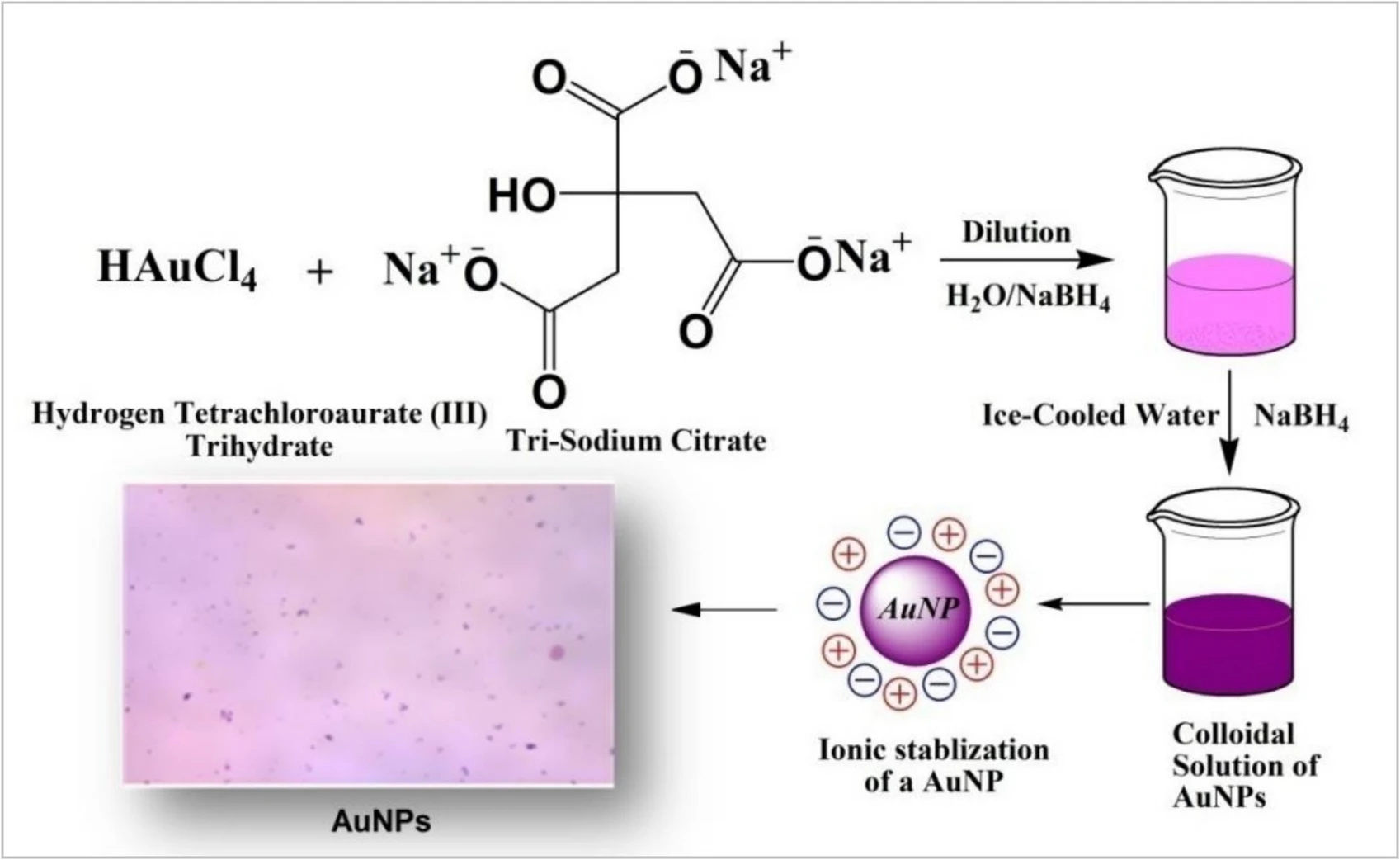

The chemical electrolytes are widely used in electrochemical machining (ECM) and have a significant effect on both the material removal rate (MRR) and the surface finish (Ra) of the workpiece. The process parameters of ECM, such as current density, electrolyte composition, and feed rate, are vital for optimizing machining performance. Research has indicated that high current density can create localized non-conductive passivating films, which impede metal dissolution. In this study, the aqueous solution of sodium nitrate (NaNO3) combined with gold nanoparticles (AuNPs) has been used as a novel electrolyte to evaluate the machining performance of the 20MnCr5 steel alloy. The inclusion of AuNPs in the NaNO3 solution enhanced local surface effects and promoted low-valence metal dissolution. The results demonstrated that the MRR and average surface roughness of the 20MnCr5 workpiece improved by 19.6% and 35.5%, respectively, when AuNPs were utilized compared to the alone NaNO3 electrolytic system. The experimental results also showed that the MRR increased within the current density range of 5.5 A/cm2 to 15.8 A/cm2, but declined in the range of 15.8 A/cm2 to 32.5 A/cm2. This decrease in the MRR at higher current densities can be attributed to the formation of non-conductive metal oxide passive layers. The oxygen evolution reaction (OER) was observed with the NaNO3 electrolyte at higher current densities, resulting in the formation of numerous micropores on the surface of the workpiece. In contrast, when the electrolyte was combined with AuNPs, these micropores ruptured quickly, creating new sites for the re-dissolution of metal ions. The microstructural changes on the machining surfaces under different operating conditions were analyzed using field emission scanning electron microscopy (FESEM), and the results are presented. Possible surface reactions, such as the formation of metal oxides and the release of oxygen gas, are discussed based on energy-dispersive X-ray (EDX) analysis and cyclic voltammetry (CV) studies.
Editor of Surface Science and Technology, which is an a peer-reviewed, open- access journal (free of APC), aiming to promote the scientific and technological innovations on science, technology and engineering in surface and interface science, and to bridge the transformation of innovations and application in engineering. The journal is published by Springer Nature and indexed by SCI, EI, SCOPUS.
Follow the Topic
-
Surface Science and Technology
This is an open access journal, to promote innovations on science, technology and engineering in surface and interface science.

Related Collections
With Collections, you can get published faster and increase your visibility.
Corrosion and Protection
This collection is mainly about the corrosion mechanism, technology and process of anti-corrosion; anti-corrosion materials, film and coating.
Topics include but not limited:
- Corrosion mechanism
- Corrosion preventive technology
- Corrosion-resistant material
- Coatings and films
Publishing Model: Open Access
Deadline: Ongoing
Functional coatings
This collection is mainly about the thermal barrier coating, environmental barrier, high temperature stealth coating, wear-resistant corrosion resistant coating, high temperature oxidation resistance and thermal corrosion resistant coating, sealing coating and ablative coating.
Topics include but not limited:
- Thermal barrier coating
- Environmental barrier
- High temperature stealth coating
- Wear-resistant corrosion resistant coating
- High temperature oxidation resistance and thermal corrosion resistant coating
- Sealing coating and ablative coating
Publishing Model: Open Access
Deadline: Ongoing