Trash to Treasure: Turning Waste to Bionutrient for an Equitable Circular Bionutrient Economy
Published in Sustainability and Agricultural & Food Science

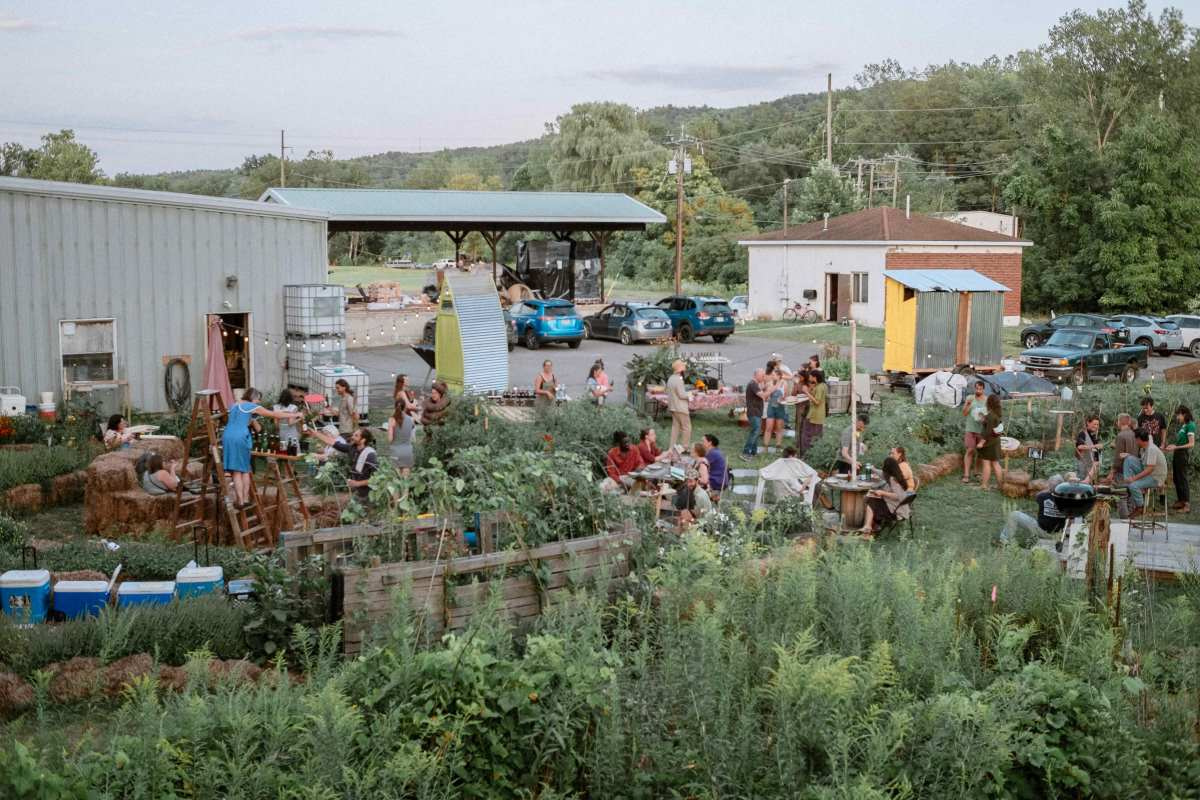

In recent years, a growing number of researchers and practitioners have begun to rethink what we call “waste.” At Cornell University, efforts to close nutrient loops have taken surprisingly practical forms, from exploring how food waste from campus dining halls can be repurposed, to discussions about recovering nutrients from human waste streams in dormitories, to managing manure from dairy farms more efficiently. Initiatives such as The Soil Factory have pushed this vision even further, advocating for systems that transform waste into valuable agricultural inputs.
These efforts reflect a broader idea: nutrients already exist within our systems; we are just not using them well. Before synthetic fertilizers, farmers used organic waste, primarily from manure, to nourish soil for thousands of years. Even today, farmers in China and many other developing countries continue to rely on human and animal waste as a substitute for synthetic fertilizers.
But working at the campus or community scale raises a natural question. If circular bionutrient systems are technically and socially feasible in localized settings, what would this look like at the scale of an entire country? Could waste-derived nutrients meaningfully contribute to agricultural production in the United States? And if so, who benefits and who bears the costs? Our recent study began with this shift in perspective: from local experimentation to national possibility.
In affluent settings such as the United States, agriculture relies heavily on synthetic fertilizers. This reliance has caused not only environmental and health concerns but also inequities. For example, large agribusiness and corporate farms can afford synthetic fertilizers, while smallholder farmers are disproportionately affected when fertilizer prices spike due to geopolitical conflicts and associated supply chain disruptions.
In our recent study, Realizing an Equitable Circular Bionutrient Economy in the United States, we explore the potential of waste-derivable nutrients to support a more equitable circular bionutrient economy. Particularly, we seek to answer the following research questions: (1) how are waste-derivable nutrient supplies and agricultural nutrient demands distributed in the United States; (2) can waste-derivable nutrients mitigate socio-environmental inequities; and (3) what should be done to facilitate an equitable circular bionutrient economy?
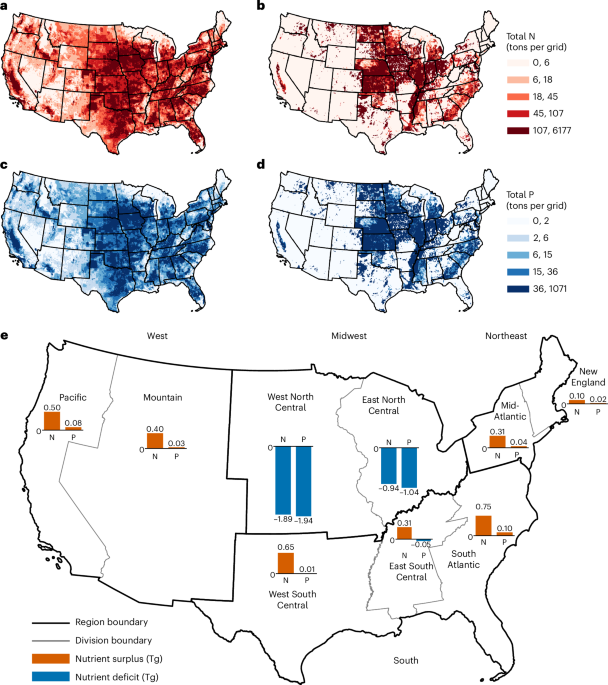
Our findings show that nutrients from human and animal waste could supply 8.56 Tg of nitrogen (N) and 2.80 Tg of phosphorus (P), with an estimated value of $5.71 billion in 2020. This amount satisfies 102% of national N demand and 50% of P demand. However, waste-derivable nutrient supply and agricultural nutrient demand are spatially misaligned: waste-derivable nutrients are concentrated in densely populated coastal areas and livestock-dense regions, while agriculture-intensive Midwest and Great Plains face nutrient deficits.
Such misalignment caused socio-environmental inequities. Regions with unbalanced nutrient supply-demand relationships tend to experience heightened environmental burden, food insecurity, and health vulnerability. To address these issues, we developed a relocation strategy that minimizes transport distance and eutrophication risks by connecting places with nutrient surpluses to the nearest places with similar amounts of nutrient deficits. It turned out that this matching and relocation approach can efficiently and economically relocate 61% of surplus N and 56% of surplus P, helping reduce eutrophication and close nutrient gaps across regions.
These findings suggest that waste-derivable nutrients have great potential to promote a circular bionutrient economy. However, it should be noted that we used the term “waste-derivable nutrient” because nutrient extraction from waste is currently limited to laboratory or small-scale applications; large-scale or industrial-level extraction has not yet been widely available. Meanwhile, although promising, our nutrient relocation strategy is based on a hypothetical scenario. Realizing what we have shown in our analyses requires waste processing technologies, coordinated infrastructure, supportive policies, and cultural and behavioral shifts. Put simply, we contend that nutrient recycling for a circular bionutrient economy is not a resource issue; rather, it is a coordination problem that requires systematic integration across industry, policy incentives, and agricultural practices.
Follow the Topic
-
Nature Sustainability
This journal publishes significant original research from a broad range of natural, social and engineering fields about sustainability, its policy dimensions and possible solutions.

What are SDG Topics?
An introduction to Sustainable Development Goals (SDGs) Topics and their role in highlighting sustainable development research.
Continue reading announcement