Two Weeks Before Snow: Building a 288-Site Microclimate Network in National Park on Foot
Published in Earth & Environment, Ecology & Evolution, and Agricultural & Food Science
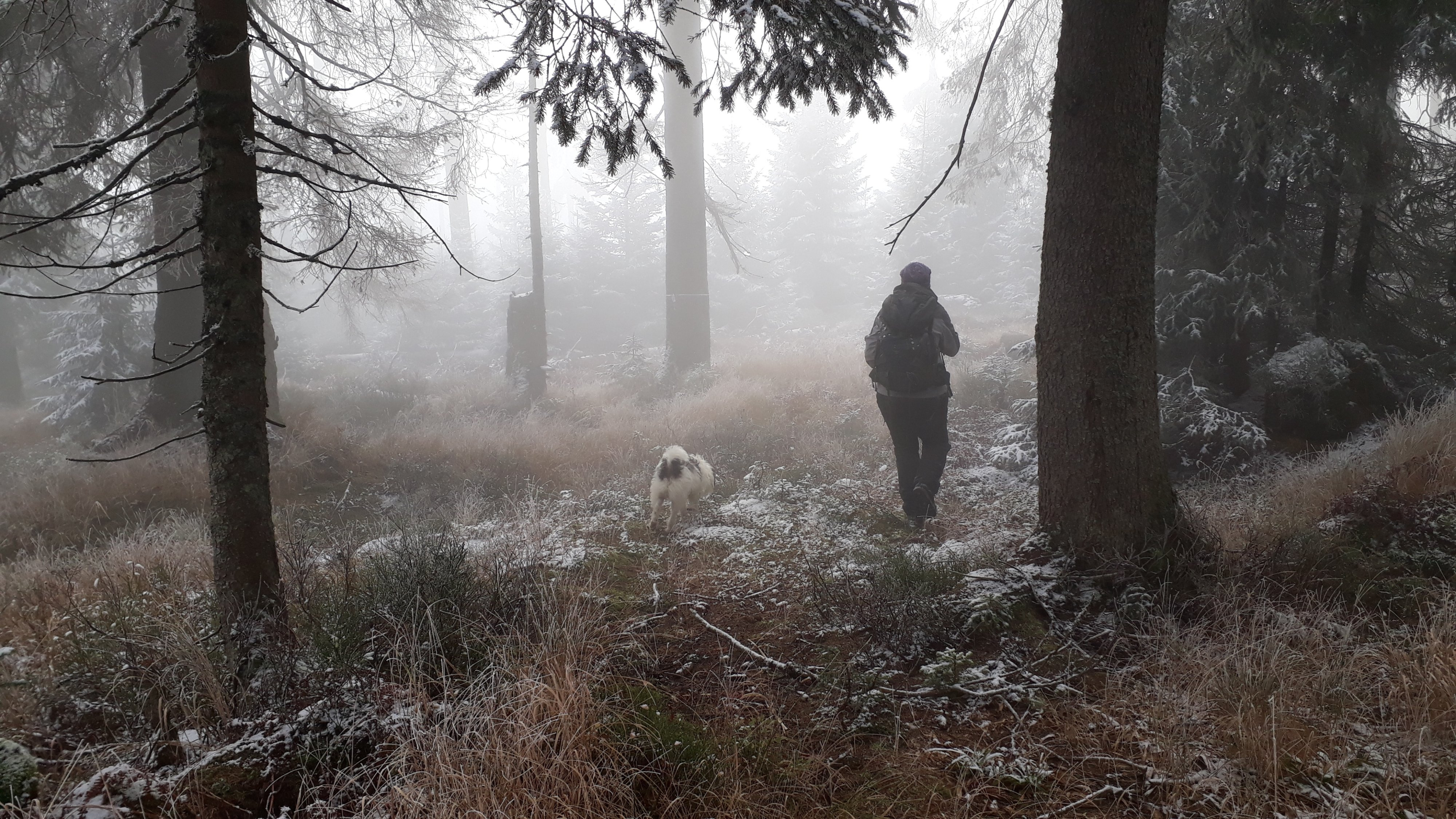
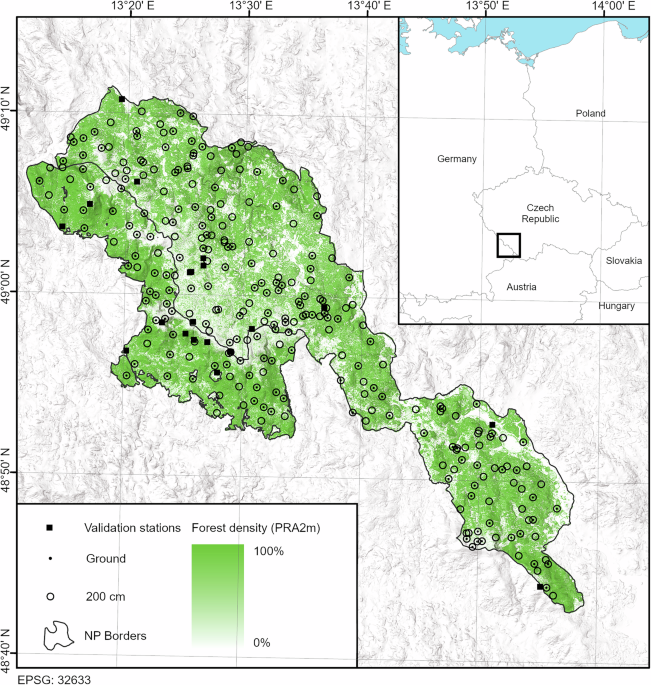

To provide high-resolution microclimatic grids for the ecologically and biologically important Bohemian Forest Ecosystem, we established a dense microclimate network that continuously measures air, near-ground, and soil temperatures. The sites span gradients of elevation, soil moisture, solar radiation exposure, and canopy cover. Our network relied on stratified sampling from permanent forestry plots, but the selected plots were often far apart.
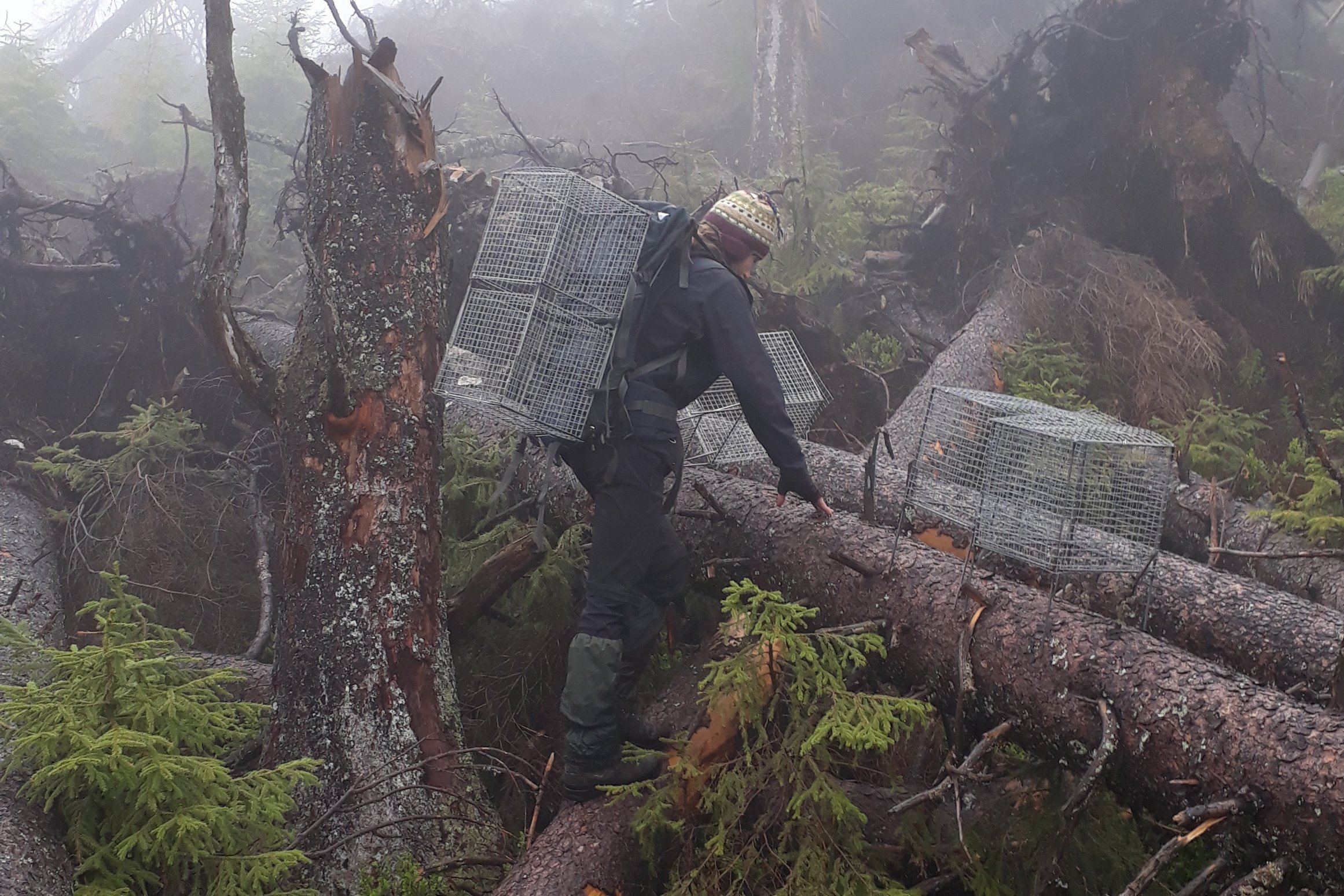
We had only two weeks left before the expected first snow, which would have ended our chances of establishing the network that year. Under that time pressure, we packed everything needed for multiple plots each day—including a high-precision GNSS, a hemispherical camera, notebooks, loggers, and protective cages—and then hiked long distances to set up the sites. We usually carried five cages at a time (roughly 25 kg), although the backpack felt a little lighter with every successful installation. Back at our accommodation, a large paper map helped us divide the work and plan routes starting from the nearest public road.
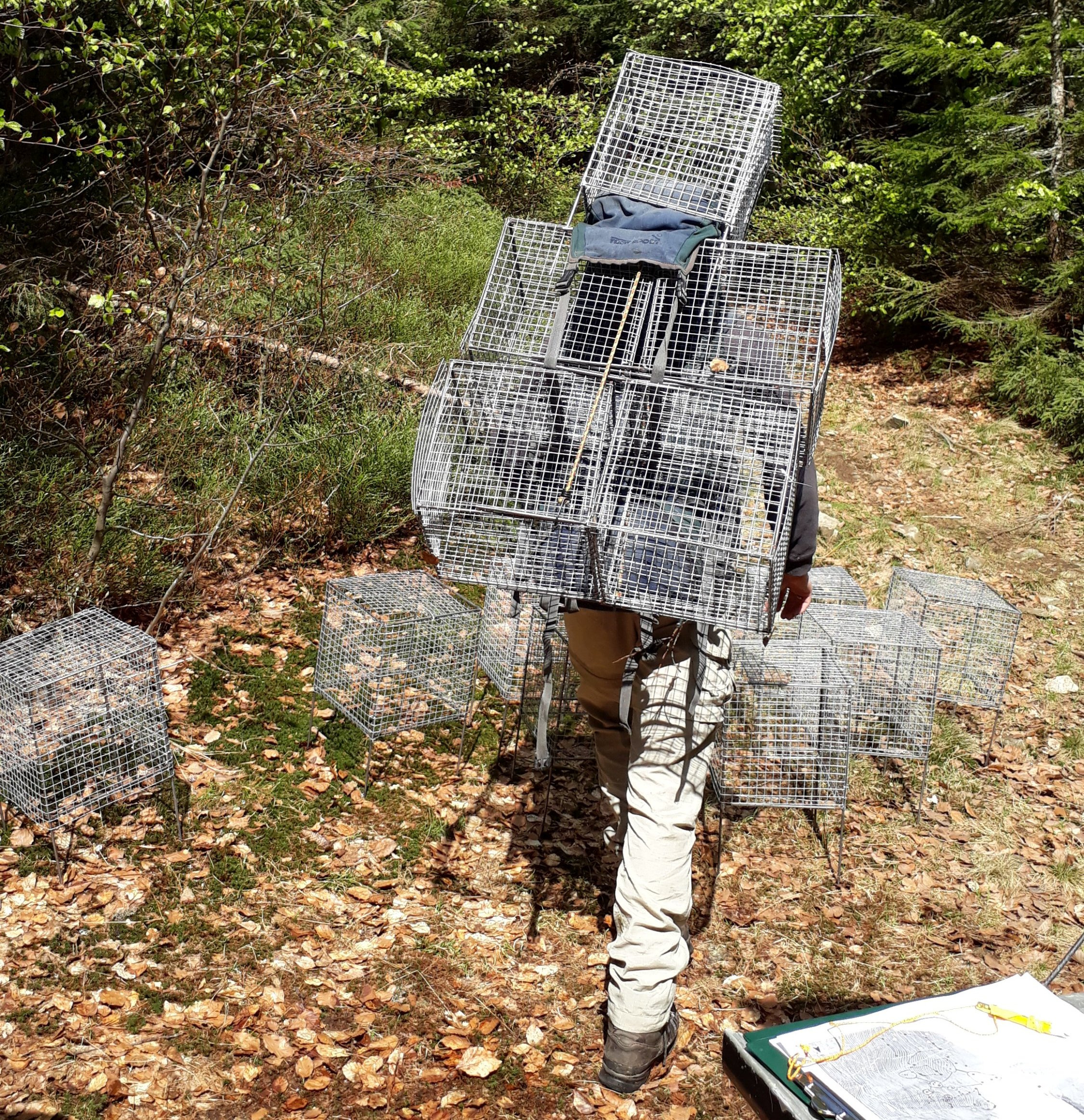
This wasn’t easy—especially in difficult terrain after windthrow at some sites. And because large parts of the area are non-intervention zones, the hikes were often spectacular, but physically demanding.
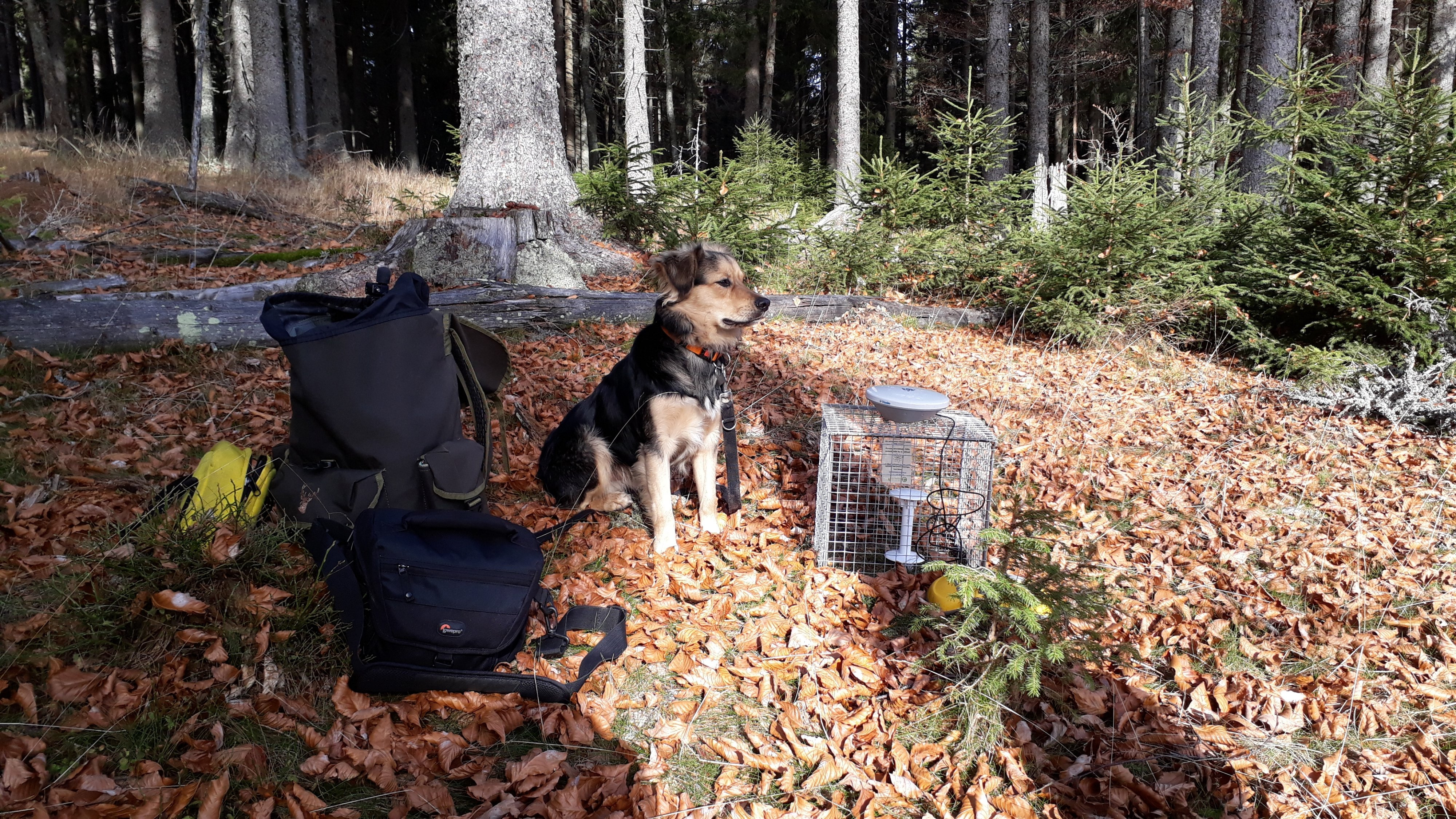
Fortunately, we had faithful companions Šuplík and Theo who helped us. The dogs were invaluable during annual visits: they could sniff out a cage with logger even under fallen branches or dense grass. This became increasingly important over time, because after disturbances it was sometimes surprisingly hard to find sites—even with a high-precision GNSS. Just as importantly, they kept morale up during long days and rough weather.
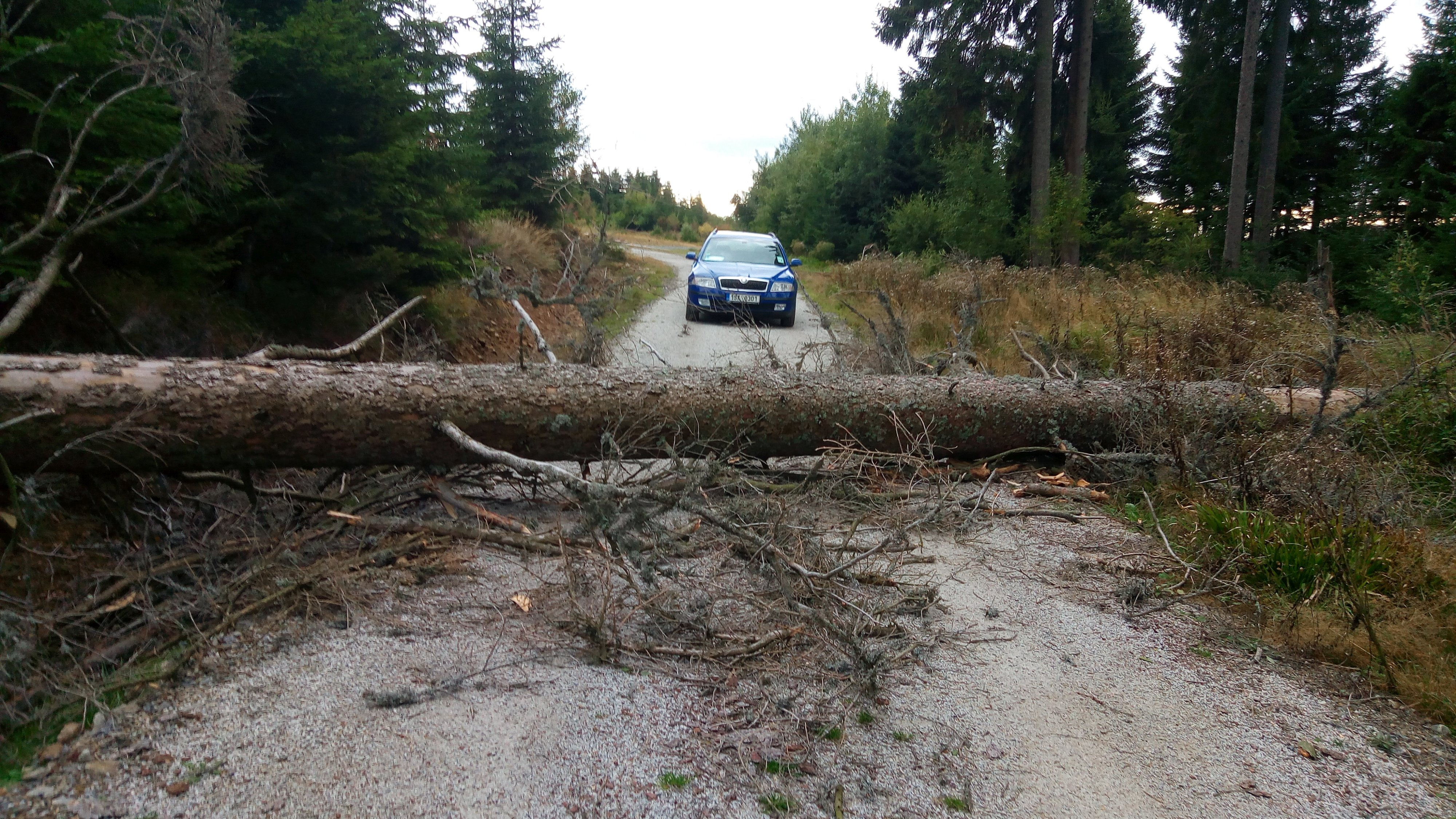
In the end, we managed to establish all sites just before we finally received the permit and before first snow. Even with the permit in hand, the work that followed was sometimes challenging. We revisited each site once or twice a year, and the design proved robust, requiring only a limited number of replacements. We succeeded in maintaining the network for five years, and it is still delivering data on forest microclimate and how it changes through time.
These observations allowed us to build high-resolution microclimate grids by combining the dense in situ logger network with high-resolution LiDAR predictors. The resulting 5-m temperature grids provide annual mean, minimum, maximum, and growing degree days at multiple heights and depths (2 m air temperature, near-ground, and soil). They are especially useful for fine-scale species distribution models and biodiversity analyses, and for forest management and conservation planning that depend on realistic understorey conditions and temperature extremes.
The project also became a starting point for producing comparable grids in other regions—and eventually for the whole Czech Republic.

Follow the Topic
-
Scientific Data
A peer-reviewed, open-access journal for descriptions of datasets, and research that advances the sharing and reuse of scientific data.

Related Collections
With Collections, you can get published faster and increase your visibility.
10 years of the FAIR principles
Publishing Model: Open Access
Deadline: Nov 14, 2026
Data to support cancer treatment, diagnosis, and disease understanding
Publishing Model: Open Access
Deadline: Jan 02, 2027