Understanding the knowledge gap in dental stem cell therapy
Published in Bioengineering & Biotechnology, Biomedical Research, and General & Internal Medicine
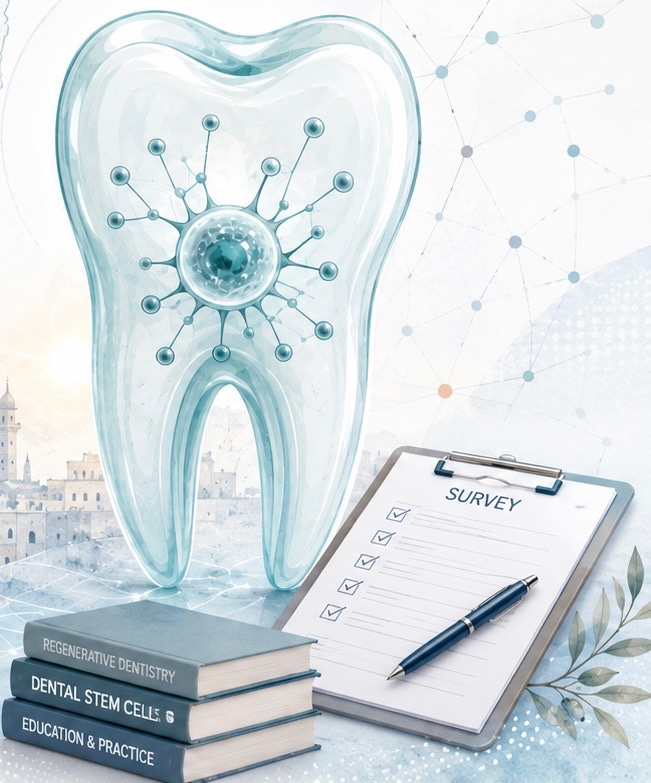




Dental stem cell therapy is often discussed as a potential direction in regenerative dentistry. Yet for me, this study was never only about stem cells, education, or professional attitudes. It was also about a practical question: how prepared are practicing dentists to understand, evaluate, and potentially adopt emerging regenerative approaches in real clinical settings?
This question became the starting point for our recently published article in BMC Medical Education. As a dentist and researcher working in regenerative dentistry and dental stem cells, I was interested not only in the scientific promise of dental stem cell therapy, but also in the educational gap that may shape how such therapies are understood by practicing clinicians.
In contexts where access to specialized training, institutional support, and regulatory guidance may be limited, understanding professional knowledge gaps becomes especially important. Scientific progress alone is not enough if clinicians do not have the educational tools needed to interpret and apply emerging therapies responsibly.
The study focused on Palestinian dentists and explored their knowledge, attitudes, perceived barriers, and willingness to adopt dental stem cell therapy. Using a cross-sectional, web-based survey, we assessed factual knowledge, adoption attitudes, ethical concerns, perceived obstacles, and interest in future education and training.
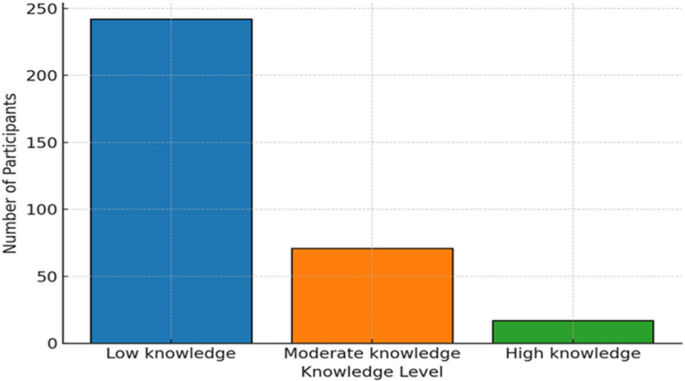
One of the clearest findings was that knowledge remained limited among many respondents, even though willingness to adopt dental stem cell therapy was relatively high. This contrast felt important to us. It suggested that there is genuine interest and openness toward innovation, but interest alone is not enough for safe and responsible implementation. Clinicians also need structured education, clear professional guidance, and access to evidence-based training.
The most commonly reported barrier was lack of knowledge, followed by cost and ethical concerns. These findings suggest that the challenge is not only scientific or technical. It is also educational, regulatory, and practical. For dental stem cell therapy to move responsibly toward clinical contexts, dentists need more than awareness; they need a clear understanding of indications, limitations, safety considerations, regulatory boundaries, and ethical responsibilities.
At the same time, we were careful not to overinterpret the findings. This was a cross-sectional survey, not a measure of clinical competence or actual adoption behavior. Recruitment was conducted through closed professional online groups, which may have reached dentists who were more digitally connected or more education-oriented. Therefore, the results should be interpreted as a context-specific snapshot of knowledge, attitudes, and perceived barriers among the surveyed Palestinian dentists, rather than as a definitive national assessment.
For me, the value of this work lies in highlighting a practical gap between scientific progress and professional readiness. Dental stem cell therapy may hold promise, but responsible translation requires education before implementation. Undergraduate curricula, continuing education programs, and clearer regulatory guidance may all play important roles in preparing dentists to engage with regenerative therapies in a safe and evidence-informed way.
I hope this study contributes to discussions around dental education, regenerative dentistry, and the responsible adoption of emerging therapies, especially in settings where access to specialized training and regulatory guidance may still be limited. Identifying educational gaps is not a small matter; it is one step toward supporting future healthcare education and preparedness.
Published article:
Zahedah R, Jaber M, Dinç B. Exploring the knowledge gap in dental stem cell therapy: educational challenges and adoption attitudes among Palestinian dentists. BMC Medical Education. 2026;26:535. https://doi.org/10.1186/s12909-026-08880-x

Follow the Topic
-
BMC Medical Education
This is an open access journal publishing original peer-reviewed research articles in relation to the education and training of healthcare professionals. It welcomes studies on students and professionals across all levels of education; education delivery aspects; and other education-related topics.

Related Collections
With Collections, you can get published faster and increase your visibility.
Disability in medical education
BMC Medical Education welcomes submissions to our Disability in medical education Collection. As disability impacts so much of our patient population, medical curricula must evolve to address gaps in knowledge, attitudes, and clinical care. Incorporating disability-specific education strengthens inclusive education practices, reduces disparities, and prepares clinicians to deliver person-centered care. Innovative tools, assessments, and instructional approaches, from simulation training to standardized patient encounters to Universal Design for Learning, can be leveraged to improve learners’ understanding of access, communication, ethical, other considerations in clinical practice.
We welcome research covering topics including but not limited to:
• Development and integration of disability curriculum within medical education
• Teaching strategies that promote competency in caring for patients with disabilities
• The role of inclusive education and Universal Design for Learning in clinical training
• Evaluation tools and assessment methods for measuring disability-related knowledge and skills
• Use of patient narratives, simulation, and standardized patients with disabilities in clinical teaching
• Interprofessional education initiatives focused on accessibility and patient-centered care
• Addressing barriers within healthcare training environments
By emphasizing innovation and access, this work supports the development of a medical workforce equipped to deliver compassionate, equitable care for all patients.
All manuscripts submitted to this journal, including those submitted to collections and special issues, are assessed in line with our editorial policies and the journal’s peer review process. Reviewers and editors are required to declare competing interests and can be excluded from the peer review process if a competing interest exists.
This Collection supports and amplifies research related to SDG 4: Quality Education and SDG 10: Reduced Inequalities.
Publishing Model: Open Access
Deadline: Dec 07, 2026
Gamification and virtual reality in medical education and related healthcare professions - Part II
BMC Medical Education calls for submissions to our Collection, Gamification and virtual reality in medical education and healthcare professions - Part II. Fueled by the COVID-19 pandemic, digital teaching formats enhanced by interactive elements have received growing attention from higher education institutions worldwide. While the inclusion of game-based elements (‘gamification’) appears feasible in a number of contexts other than the healthcare sector, virtual reality appears to be especially appealing to medical educators. At the same time, given the potential cost, the use of gamification elements as well as sophisticated software and hardware in order to simulate clinical environments needs to be justified, particularly on the basis of concepts in learning psychology to suggest that these elements will be superior to traditional instructional formats or that they can help achieve learning outcomes that have not been covered in the past.
Most studies on gamification and virtual reality in medical education that have been published to date merely represent descriptions of innovations, and only a few present a thorough rationale for their use or present results of prospective, controlled effectiveness trials with meaningful endpoints (i.e., objective performance indicators linked to the intended learning outcomes). There is a lack of justification and clarification studies, and evaluations of innovations going beyond mere student satisfaction are needed. In order to be able to decide in favor or against the integration of game-based formats and virtual reality sessions in formal curricula, educators need to have access to original studies, reviews, and recommendations on when and how these elements should be employed.
Articles can cover the entire range of health-profession education, including but not limited to undergraduate and postgraduate medical education, nursing, midwifery, physiotherapy, pharmacology, public health, and related fields.
Key themes include:
- Application of concepts from learning psychology to medical education with a focus on gamification and/or virtual reality
- Comparison of traditional instructional formats to innovative approaches including gamification and/or virtual reality with regard to meaningful educational outcomes
- Cost-effectiveness assessments for innovative technology-based solutions compared to a traditional approach
- Constructive alignment between intended learning outcomes, use of gamification and/or virtual reality elements, and formative/summative assessments.
- Added value of gamification/virtual reality elements if used as a supplement to or as a replacement for traditional teaching; effects on curriculum structure and student workload
- Sustainability of new technologies with regard to computing power and waste management of virtual reality devices
All manuscripts submitted to this journal, including those submitted to collections and special issues, are assessed in line with our editorial policies and the journal’s peer review process. Reviewers and editors are required to declare competing interests and can be excluded from the peer review process if a competing interest exists.
This Collection supports and amplifies research related to SDG 3: Good Health and Well-Being.
Publishing Model: Open Access
Deadline: Jan 11, 2027