Uniting for Rare Diseases: When Alignment Accelerates Progress
Published in Biomedical Research and Law, Politics & International Studies



When you read the article, one key word stands out in your mind for the rare diseases community: alignment.
This alignment enables all stakeholders in the ecosystem to move forward together: they identify the challenges, design approaches to address them, and drive their effective implementation, including through policies and other non‑scientific areas. Such synergies yield important benefits for rare disease patients. Alignment helps us to learn from each other's positive examples, organise information more effectively, make the most of our human resources, and avoid duplication, all of which benefits patients.
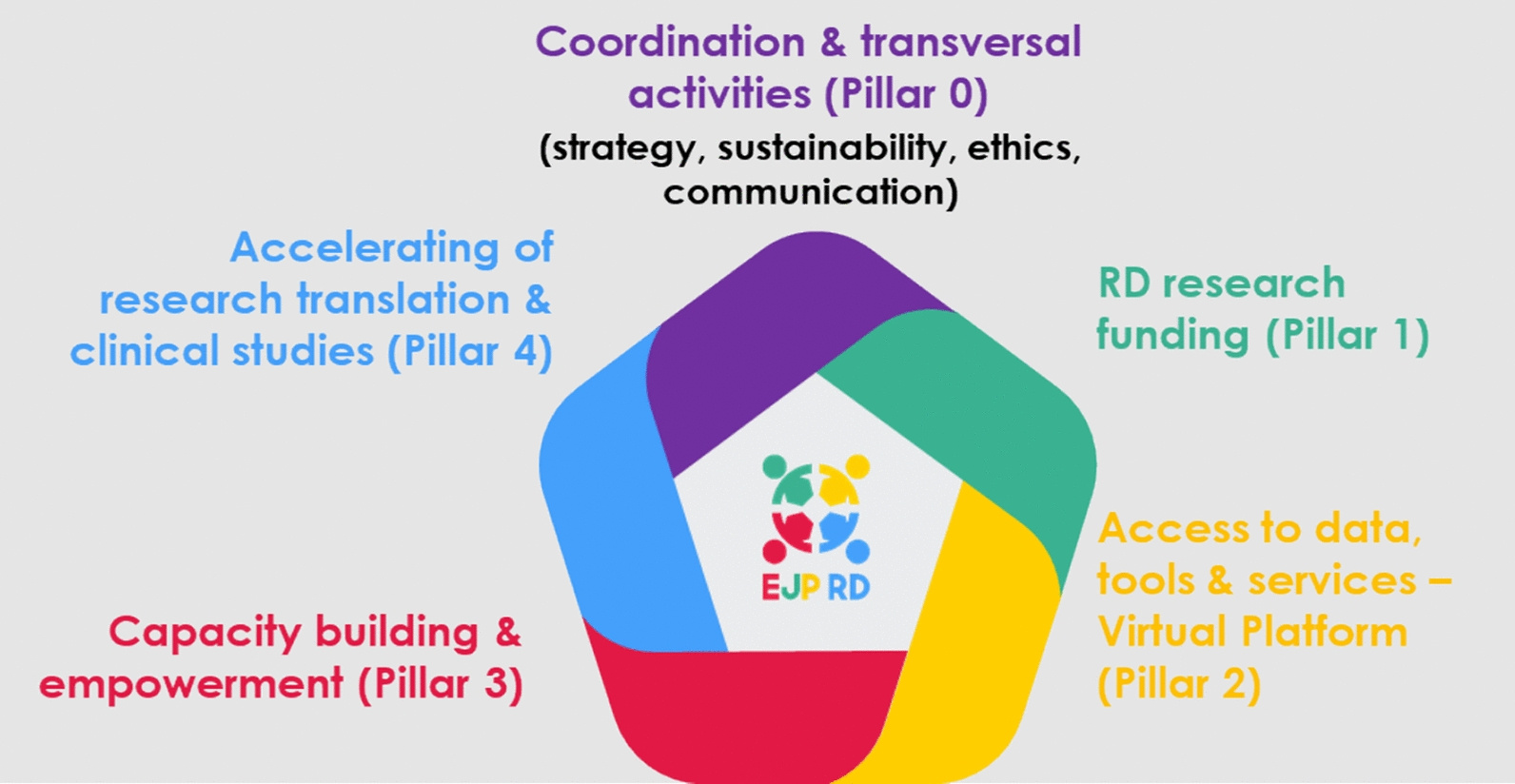
The work presented in the paper, developed over the five years of the European Joint Programme on Rare Diseases (EJP RD), represents a collaborative effort to bring together the research and innovation needs of our ecosystem, the status of national plans and strategies for rare diseases across EJP RD member countries, and discussions on challenges affecting the community, with special focus on those faced by underrepresented countries. The creation of National Mirror Groups was another key pillar within EJP RD’s alignment strategy.
Capturing the landscape of such a rich and challenging environment required multiple methodologies, careful task coordination, data integration, and the collection of sources, needs, discussions, and analyses of the observed outcomes. When we attempted to present all the results and findings on paper, we encountered yet another challenge.
The internal and external information and data we handled were compiled into hundreds of pages of documentation produced over five years. Although some parts of the article could have stood alone as independent papers, when we began designing the manuscript we felt it was essential to integrate all activities, results, and their interconnections to reflect the alignment spirit of the EJP RD framework. We truly wanted to show how each activity was linked and how the outcomes emerged from those connections.
We had to rewrite it several times—restructuring, refining, and condensing the information to make it truly navigable. It was a demanding process, but in the end, we made it happen.
In our results, we observed a clear trend of progress and needs addressed by the program year after year, but there is still a long way to go. Our objectives and goals enter a new chapter with the European Rare Diseases Research Alliance (ERDERA), and we hope to continue tackling the challenges faced by the rare diseases community, with all the previous experience.
M. Sánchez, R. Sarmiento, C. Moreau, E. Bermejo and C.Carta
* Rare Disease Day 2026 is a call for equity, not one-size-fits-all solutions. The campaign, coordinated by EURORDIS – Rare Disease Europe and delivered through 72 national alliances, puts representation and fair access to diagnosis, care and research at the centre.
Follow the Topic
-
Health Research Policy and Systems
This journal covers all aspects of the organisation and use of health research – including agenda setting, building health research capacity, and how research as a whole benefits decision makers, practitioners in health and related fields, and society at large.

Related Collections
With Collections, you can get published faster and increase your visibility.
Institutionalising Evidence-Based Policy
It is well known that there are persistent gaps between research knowledge and the policy and practice initiatives that enable such knowledge to have societal benefit. Despite these efforts, persistent problems in closing the research-policy gap are still frequently reported. The research field generates an overabundance of literature describing the problem (often framed as barriers and facilitators of evidence use), and a shortage of tested and implemented solutions. The COVID pandemic highlighted duplication and haphazard organisation of research effort as well as deficiencies spanning institutional design and processes; capabilities and incentives; and implementation.
At a time of increased global focus on creating a better evidence ecosystem, this collection aims to highlight successful evidence use interventions and consider how best practices can be applied across different sectors and regions. geographic locations and contexts. Sharing these examples can inform and inspire researchers and policymakers around the world in their efforts to harness best-available research to improve life for their communities.
We invite conceptual, empirical, and practice-based contributions focusing on efforts to institutionalise and sustain evidence use across all topic and portfolio domains. Contributions may include empirical studies; theoretical papers; comparative research across multiple jurisdictions or sectors; and efforts centred in or co-ordinated through global organisations.
With the problems and barriers well understood, this collection is solution-focused and designed to inspire and facilitate a better global evidence ecosystem. Specific topics could include, but are not limited to, examples of:
- Academies and secondments
- Embedded researcher models
- Advisory panels that commission research
- Policy advisory entities
- Workforce development - e.g. specialised roles such as ‘boundary spanners’, ‘evidence intermediaries’, ‘knowledge brokers’ and ‘bilinguals’
- Harmonising research delivery within policy constraints
- Evaluation of the impact of research on policy
- Policy labs
- Observational or theoretical studies
- Culture and system features
- Capacity building initiatives
- Network building activities
All submissions in this collection undergo the journal’s standard peer review process. Similarly, all manuscripts authored by a Guest Editor(s) will be handled by the Editor-in-Chief. As an open access publication, this journal levies an article processing fee (details here). We recognize that many key stakeholders may not have access to such resources and are committed to supporting participation in this issue wherever resources are a barrier. For more information about what support may be available, please visit OA funding and support, or email OAfundingpolicy@springernature.com or the Editor-in-Chief.
Publishing Model: Open Access
Deadline: Jul 06, 2027