Unseen Challenges: The Human Stories Behind Waste Management in Shaggar City
Published in Earth & Environment
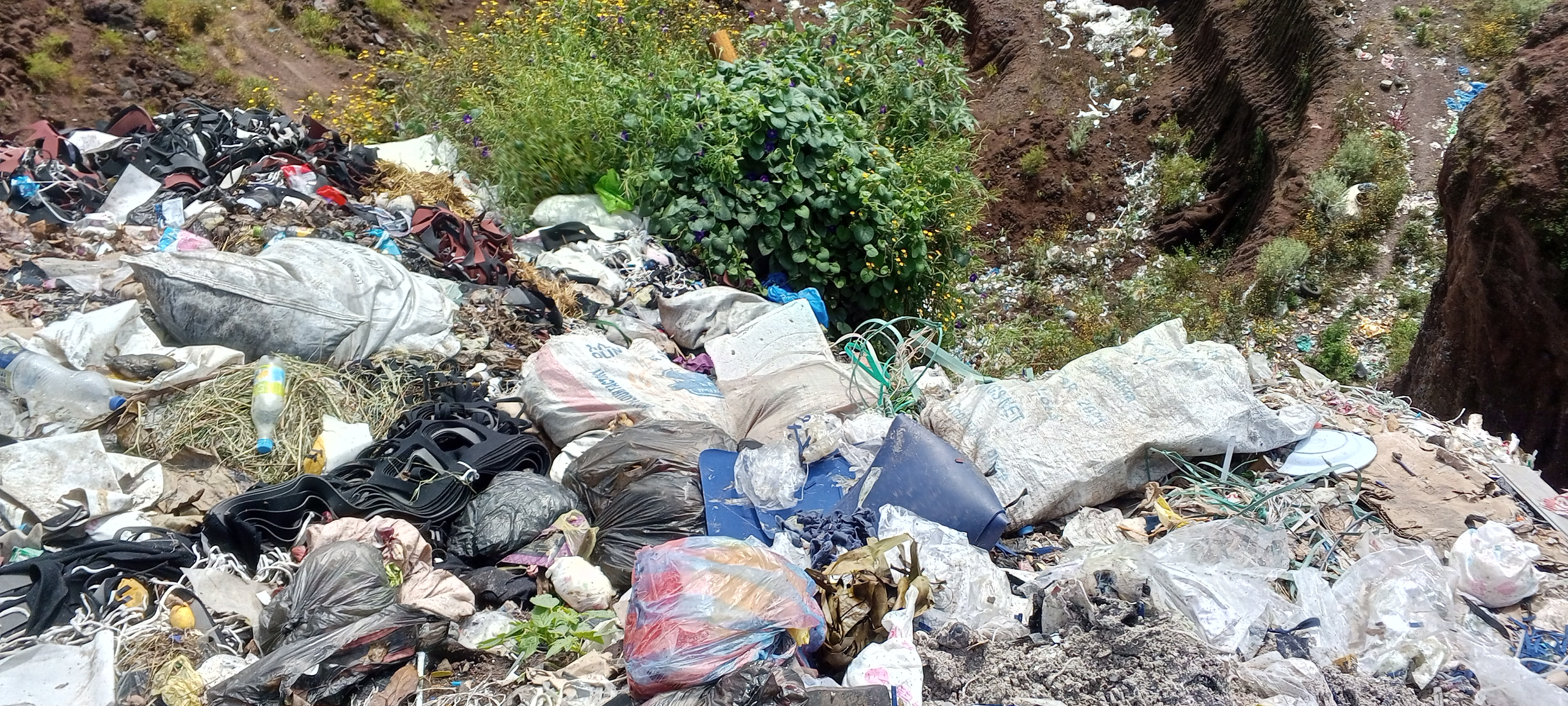







In exploring waste management practices in Shaggar City, Ethiopia, the research shed light on a critical yet underreported issue: the daily struggles and resilience of local communities facing the consequences of inadequate waste management.
The stark reality of waste management in Shaggar City, where communities struggle alongside mounting refuse.
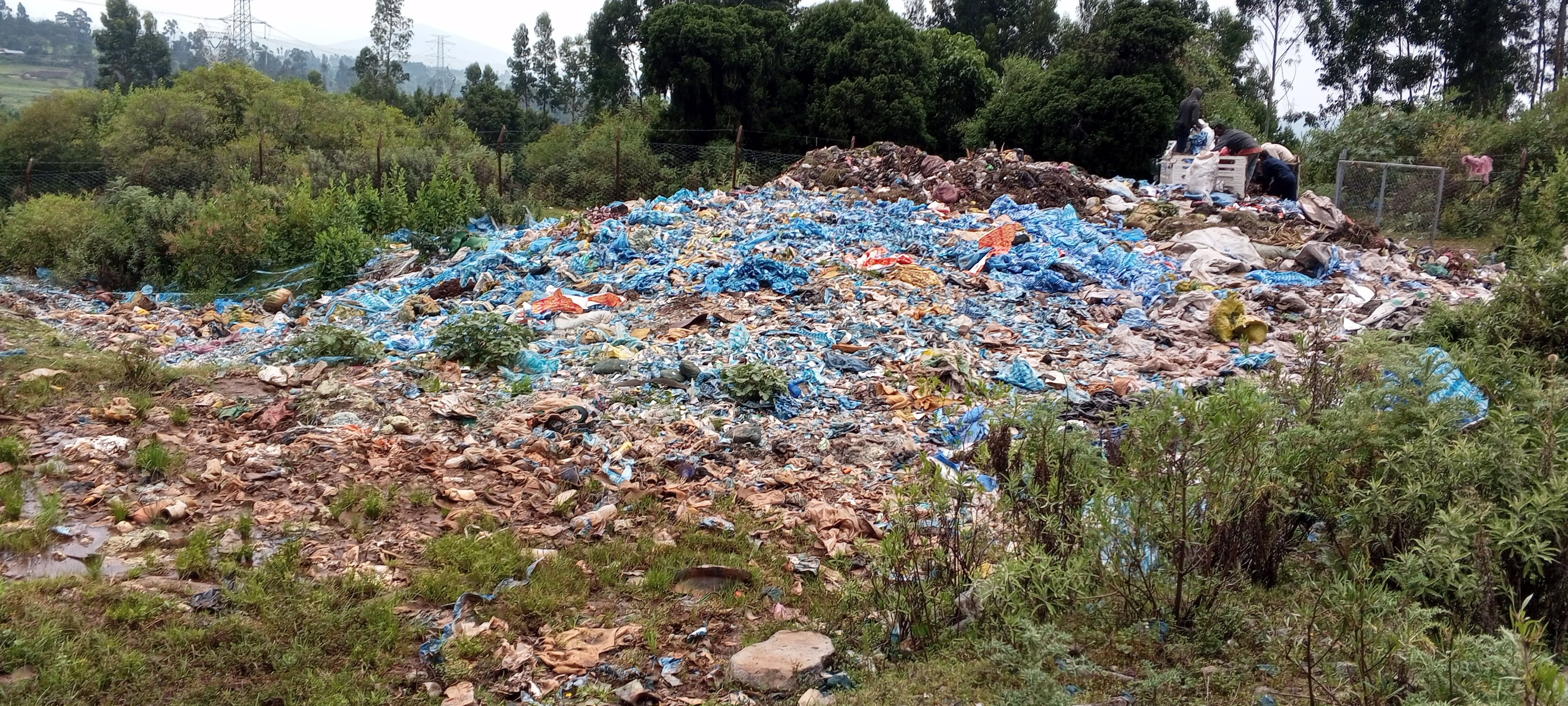
The research, “Waste Management Practices and Perceptions among Firms and Communities in Shaggar City, Ethiopia,” reveals a troubling reality: waste treatment and disposal practices are woefully inadequate, leading to severe environmental and public health challenges.
Residents living near massive landfills or disposal sites face ignored challenges. Just beyond the farmer's home, a chaotic mix of decomposing organic matter and discarded plastics forms a toxic environment. Each day, they navigate this challenging landscape, ensuring their children stay away from hazardous materials while yearning for a better future.
Many community members resist confronting the environmental health risks that permeate their lives due to the glaring lack of awareness and resources. Extensive open dumping and improper waste disposal practices exacerbate these risks, leading to respiratory illnesses and waterborne diseases among vulnerable populations.
Through interviews with community leaders and government officials, researchers learned that many local folks are either uninformed about the dangers of industrial waste or excluded from conversations about waste management practices. Local industries often distance themselves from the communities they affect, prioritizing production over environmental responsibility. Our findings revealed that approximately 72.7% of surveyed firms cited a lack of collaboration as a significant barrier to implementing sustainable waste practices. For many, waste management is not just an environmental issue; it's a daily struggle for survival.
Notably, our study indicates that while 63.7% of firms engaged in innovative practices, many do not perceive their innovations as environmentally impactful. Collaboration between industries and communities is crucial. By fostering partnerships, industries can better understand community concerns and the environmental responsibilities they owe to their neighbors.
The environmental protection authority needs to focus on creating multistakeholder partnerships. Bringing together firms, community representatives, and governmental bodies can bridge the gap that exacerbates waste management issues and enhance overall environmental performance.

Urgessa Bekabil (PhD) is a researcher at Oromia State University. His research interests include industrial waste management, climate change, sustainable development, innovation, and economic development.
Follow the Topic
-
Discover Environment
This is a transdisciplinary, open-access journal that provides a leading platform for the rapid dissemination of knowledge and advances covering the research and innovation that is taking place across the environmental sector.

Related Collections
With Collections, you can get published faster and increase your visibility.
Mapping Sustainability: Geospatial Tools for Environmental Challenges
The escalating complexity of global ecological challenges demands innovative approaches to understanding, monitoring, and managing the environment. Geospatial technologies, including Geographic Information Systems (GIS), remote sensing, and spatial analytics, have become indispensable tools in addressing these issues. These technologies have demonstrated remarkable impact across various domains. For instance, in disaster management, the NASA-Disaster Response Coordination System utilizes satellite imagery and GIS analytics to assess damages from natural calamities, while the Copernicus Emergency Management Service (EMS) provides real-time mapping and early warning systems. In biodiversity conservation, initiatives like Global Forest Watch (GFW) and the Integrated Biodiversity Assessment Tool (IBAT) employ satellite data and spatial datasets to monitor deforestation and support conservation planning. Additionally, in urban sustainability, projects such as the Landsat Urban Heat Mapping Initiative help urban planners mitigate rising temperatures through targeted green infrastructure solutions.
This collection, "Mapping Sustainability: Geospatial Tools for Environmental Challenges," addresses critical gaps in the current literature by showcasing pioneering research that leverages geospatial technologies to confront urgent environmental issues. While existing research extensively explores geospatial methods, there is a significant need for more integrated, interdisciplinary approaches that translate data-driven insights into actionable solutions for sustainability. This collection advances the field by bridging science and policy, enhancing urban sustainability, advancing climate resilience, promoting data-driven conservation, and innovating spatial decision support systems (SDSS). Contributions that emphasize interdisciplinary research, innovative case studies, global perspectives, and policy insights are highly encouraged.
Keywords:Geospatial Technologies; Environmental Sustainability; Climate Change Analysis; Biodiversity Conservation; Pollution Monitoring; Water Resource Management; Spatial Data Analytics; Sustainable Development; Ecological Resilience; Geospatial Modeling; Spatial Decision Support Systems (SDSS); Remote Sensing Applications; Sustainable Urban Planning; Land Use and Land Cover Change (LULC); Disaster Risk Reduction (DRR); Ecosystem Monitoring; GIS-based Policy Analysis; Smart Cities and Resilient Infrastructure
Publishing Model: Open Access
Deadline: Jan 31, 2027
Monitoring environmental pollution and impact on health
The intensification of human activities and the expansion and densification of urban areas cause various damages to the environment, necessitating continuous monitoring to assess the impact and extent of potential risks to both the environment and human health, in order to ensure urban sustainability.
This collection, “Monitoring Environmental Pollution and Impact on Health,” invites contributions that utilize tools related to health impact assessment, human health risk, ecological risk, data modeling, geospatial data, and Geographic Information Systems (GIS) to analyze impacts within urban environments. We also encourage the publication of research on the dynamics of pollution and health in rural and peri-urban areas, interdisciplinary studies between environmental sciences and public health, epidemiology, and urban planning for a holistic assessment of the multifaceted impacts of pollution on human well-being. In addition, studies that contribute actionable policy recommendations for local governments, environmental agencies, or public health institutions dealing with urban pollution are welcome. Research (time series or longitudinal studies) that demonstrate public health trends related to chronic exposure to pollutants, aiming for a better understanding of long-term urban sustainability issues, are also encouraged. Studies addressing health risks for vulnerable populations (such as children, the elderly, or low-income communities) exposed to environmental pollution in densely populated areas are of particular interest. We welcome studies on participatory monitoring and the development of citizen science, empowering communities to act in collaboration with local environmental health surveillance managers. Research involving satellite pollution monitoring and remote sensing is also encouraged. Comparative studies on pollution and health across different regions, identifying critical hotspots and globally replicable mitigation strategies, are of interest. We also welcome research that investigates environmental justice and urban socio-demographic inequalities/disparities in health due to environmental pollution. Review studies and meta-analyses exploring trends, methodologies, and gaps in urban environmental health research are also welcome.
Keywords: Health impact assessment, Environmental quality monitoring (air, water, and soil), Pollution sources and emissions, Spatial analysis, Geospatial technology, Climate change, Urban sustainability, Machine learning, Ecological risk assessment, Human health risk assessment
This Collection supports and amplifies research aligned with the following Sustainable Development Goals (SDGs): SDG 11.
Publishing Model: Open Access
Deadline: Feb 28, 2027





Please sign in or register for FREE
If you are a registered user on Research Communities by Springer Nature, please sign in